/)
Peyronie's disease is one of the more distressing problems we see in men's health, partly because it is poorly understood and partly because men often wait years before asking about it. In simple terms, a patch of scar tissue, called a plaque, forms in the tunica albuginea, the tough fibrous sheath that wraps around the erectile chambers of the penis. Because scar tissue does not stretch the way normal tissue does, the penis bends toward the plaque during an erection. The result can be curvature, narrowing or an hourglass deformity, loss of length, painful erections, and in some men difficulty having sex at all.
The good news is that Peyronie's is treatable, and most men do not need surgery. The harder truth is that no single treatment works for everyone, and the right choice depends heavily on the stage of your condition, how severe the curve is, whether you also have erectile dysfunction, and what bothers you most. This guide walks through the non-surgical and surgical options realistically, with the numbers behind them, transparent Bangkok pricing, and the questions worth asking before you commit to anything.
A quick but important note: nothing here is a substitute for an in-person assessment. Injectable drugs and surgery require a consultation with a qualified doctor, a physical examination, and a prescription. The aim of this article is to help you walk into that consultation informed, not to let you self-diagnose or self-treat.
What Peyronie's disease actually is, and why timing matters
Peyronie's tends to move through two phases, and knowing which one you are in changes everything about treatment.
The active (acute) phase usually lasts somewhere between six and eighteen months. During this period the plaque is still forming, pain with erections is common, and the curvature can change month to month. According to the American Urological Association guideline, pain or discomfort is the defining feature of active disease, and symptoms are dynamic and changing. Because the deformity is still evolving, surgeons generally avoid operating during this window.
The stable (chronic) phase is reached when the curve and symptoms have not changed for at least three months and pain has usually settled. This is the phase in which surgery is considered, because what you correct is unlikely to keep shifting afterwards.
Many men assume the bend will keep getting worse. In reality the curvature often stabilises, and in a minority of men it improves a little on its own. That is one reason a rushed decision is rarely the right one. It also explains why the early, active phase is where non-surgical treatments make the most sense: the goal there is to limit how much scarring forms and to manage pain, not to reverse a finished deformity.
Peyronie's is more common than most men think. Published estimates put the prevalence somewhere in the range of roughly 3 to 9 percent of adult men, and it rises with age and in men with diabetes or after prostate surgery. You are not an unusual case, and you are not the only man in the waiting room dealing with it.
Non-surgical treatments for Peyronie's disease
Non-surgical options are usually the first step, especially in the active phase or for mild to moderate curves. It is worth setting expectations honestly: these treatments aim to reduce curvature, ease pain, and slow progression. They rarely produce a perfectly straight penis, and the published improvements are measured in degrees and percentages, not miracles.
Intralesional injections
Injecting medication directly into the plaque is the most evidence-backed non-surgical route.
Collagenase clostridium histolyticum (marketed as Xiaflex) is the only injectable specifically approved for Peyronie's in many markets. It works by enzymatically breaking down the collagen in the plaque. In the large phase 3 IMPRESS trials, men treated with collagenase had a mean 34 percent improvement in curvature (about a 17 degree change) compared with 18.2 percent (about 9.3 degrees) on placebo, alongside a measurable improvement in how much the condition bothered them. The AUA suggests it for men with stable disease, a curve greater than 30 and less than 90 degrees, and intact erections. It is given as a course of injections, often paired with clinician modelling and home stretching.
Verapamil and interferon alpha-2b are older intralesional options. The AUA notes these as conditional or moderate recommendations: in trials, interferon reduced curvature by roughly 13.5 degrees versus 4.5 degrees for placebo. They are reasonable choices where collagenase is unavailable or unsuitable, though the evidence is weaker.
Shockwave therapy (Li-ESWT)
Low-intensity shockwave therapy delivers acoustic pulses to the penis. The honest position, reflected in guidelines, is that shockwave can meaningfully reduce pain in the active phase but is not a reliable way to straighten the penis or shrink the plaque, though some studies show modest curvature improvement in a minority of men. It is most useful for men whose main complaint is painful erections, and for those who also have erectile dysfunction, where the evidence base for shockwave is stronger. You can read more about how it works on our shockwave therapy page.
Penile traction therapy
Mechanical traction devices, worn for a set number of hours per day, are one of the few conservative measures with a plausible mechanism for actually reducing curvature and preserving length over months of consistent use. They demand patience and adherence, and results are gradual. Traction is increasingly used alongside injections rather than as a standalone fix.
Regenerative options: PRP and exosomes
Platelet-rich plasma (PRP) and exosome therapy use growth factors or cell-derived signalling vesicles to encourage tissue repair. These are biologically interesting and popular in regenerative clinics, but you should know that high-quality, long-term evidence specifically for Peyronie's curvature is still limited. We offer them, and some men report benefit particularly with pain and erectile quality, but we present them as adjuncts under investigation rather than proven curvature correctors. If a clinic promises guaranteed straightening from PRP alone, treat that as a red flag.
Oral medications
Vitamin E, pentoxifylline, potassium para-aminobenzoate, and similar oral agents have been used for years. The evidence supporting them is weak, and guidelines generally do not recommend them as effective monotherapy. They are low-risk and inexpensive, which is why some doctors still try them, but they should not be sold as a serious fix for an established curve.
Surgical treatments for Peyronie's disease
Surgery is considered once the disease is stable and the deformity interferes with sex, or when non-surgical treatment has not delivered enough improvement. It is the most reliable way to straighten a significant curve, and patient satisfaction is generally high, but it is still surgery, with the trade-offs that implies.
Surgery is typically appropriate when:
The curve is stable and has not changed for at least three to six months
Curvature is severe (often quoted as greater than 60 degrees) or causes an hourglass or hinge effect that buckles during sex
Penetration is painful or not possible
Erectile function does not respond adequately to medication, in which case an implant may be the better single solution
Plication (tunica plication / Nesbit-type procedures)
Plication straightens the penis by shortening the longer, unaffected side with sutures or small tucks, so it matches the shorter, scarred side. It does not touch the plaque itself.
It is the least invasive of the three operations, has a relatively quick recovery, and according to the AUA guideline achieves curvature improvement in a majority of studies at a rate of 90 percent or higher. The main trade-off is some loss of length, since you are shortening the long side. It works best for less severe, single-direction curves in men with good erections.
Plaque incision or excision with grafting
Here the surgeon cuts into or removes the plaque on the short side, which releases the curve, then patches the resulting defect with a graft. This lengthens the short side rather than shortening the long side, so it is better suited to severe curves, hourglass deformities, and shorter penises where preserving length matters.
The AUA reports curvature correction rates that generally range from about 25 to 100 percent across studies, with most series above 80 percent. The trade-off is a higher risk of post-operative erectile dysfunction than plication, because the surgery is closer to the nerves and the erectile tissue, plus a longer, more delicate recovery and a small risk of reduced sensation.
Penile implant (penile prosthesis)
For men who have both significant curvature and erectile dysfunction that no longer responds to medication, a penile implant often solves both problems at once. The device is placed inside the erectile chambers, and the curve is corrected at the same time, sometimes with additional manual modelling or grafting if a residual bend remains.
Satisfaction is high. A review of prosthesis outcomes in Peyronie's reports patient satisfaction rates of 72 to 100 percent and partner satisfaction around 89 percent, with the AUA noting curvature improvement above 80 percent across studies. The honest caveat is that length loss is the single most common complaint afterwards, reported in up to 54 percent of men, which is why good counselling before surgery matters so much. Modern devices include inflatable (hydraulic) options such as the Coloplast Titan and AMS 700, and simpler malleable (bendable) rods. You can compare the full range on our penile implant options page.
Peyronie's treatment cost in Bangkok (THB and USD)
One reason men travel to Bangkok for Peyronie's care is cost. The same procedures in the United States or United Kingdom often run several times higher, particularly for grafting and implants. The figures below are indicative ranges based on current Bangkok market pricing and should be confirmed at consultation, since the final quote depends on the exact technique, the device chosen, anaesthesia, and length of stay.
Treatment | Bangkok price (THB) | Approx. USD | Typical US/UK price | Indicative saving |
Specialist consultation + assessment | 1,500-3,500 | $45-100 | $150-400 | 60-75% |
Shockwave therapy (per session) | 5,000-10,000 | $140-280 | $400-700/session | 50-65% |
Intralesional injection course (verapamil/interferon) | 30,000-90,000 | $850-2,500 | $3,000-6,000 | 55-70% |
Collagenase (Xiaflex) course, where available | 120,000-260,000 | $3,400-7,300 | $20,000-40,000+ | up to 80% |
PRP / regenerative session | 18,000-25,000 | $500-700 | $1,200-2,000 | 50-65% |
Plication surgery | 90,000-180,000 | $2,500-5,000 | $12,000-18,000 | ~70% |
Plaque incision/excision + grafting | 180,000-320,000 | $5,000-9,000 | $15,000-25,000 | ~65% |
Malleable penile implant (device + surgery) | 250,000-380,000 | $7,000-10,700 | $20,000-30,000 | ~65% |
Inflatable penile implant (device + surgery) | 450,000-650,000 | $12,700-18,300 | $25,000-40,000+ | 55-70% |
Prices are indicative; confirm exact figures at consultation.
What drives the cost
A few factors move the final number more than anything else:
The device, for implants. A three-piece inflatable prosthesis costs far more than a malleable rod, and brand matters. The hardware itself is often the single biggest line item.
The technique. Grafting is more complex and longer in theatre than plication, so it costs more. An implant that needs additional modelling or a graft to fully straighten a severe curve costs more again.
Graft material, where used, ranging from a patient's own tissue to processed biological grafts.
Anaesthesia and hospital stay. Day-case shockwave sits at one end; an implant with a one to two night admission sits at the other.
Surgeon experience and clinic tier. A high-volume prosthetic surgeon and an accredited facility command a premium, and for an operation you only want to do once, that is usually money well spent.
Number of sessions. Injections and shockwave are courses, not one-offs, so the headline per-session price is not the total.
How effective is each option? The numbers
It helps to see the realistic outcomes side by side rather than relying on marketing language.
Treatment | What it does | Typical curvature improvement | Best suited to |
Collagenase injections | Enzymatically breaks down plaque | ~34% mean (about 17°) in phase 3 trials | Stable disease, 30-90° curve, good erections |
Verapamil / interferon injections | Reduce plaque activity | Modest; interferon ~13.5° vs ~4.5° placebo | Active/early phase, milder curves |
Shockwave (Li-ESWT) | Reduces pain, improves blood flow | Not reliable for straightening | Painful erections, coexisting ED |
Traction therapy | Gradual mechanical remodelling | Modest, gradual; helps preserve length | Adjunct, motivated daily users |
Plication surgery | Shortens the long side | >90% straightening in most series | Moderate single-direction curve, good erections |
Incision/excision + grafting | Releases plaque, patches with graft | ~25-100%, mostly >80% | Severe curves, hourglass, length concern |
Penile implant | Corrects curve and treats ED | >80% straightening; 72-100% satisfaction | Severe curve plus medication-resistant ED |
The pattern is consistent: non-surgical treatment buys you a partial, often worthwhile improvement with little downtime, while surgery buys you a more complete correction at the cost of an operation and recovery.
Have a question about your treatment?
Message our Bangkok clinic on WhatsApp and a doctor replies within minutes during clinic hours.
What recovery looks like after surgery
Recovery differs by procedure, but a realistic staged picture for surgical correction looks roughly like this.
Week 1. Expect swelling, bruising, and discomfort, managed with pain relief. Most men take a few days to a week off work depending on how physical the job is. Your surgeon will give specific wound-care and hygiene instructions.
Weeks 2 to 4. Swelling settles and stitches dissolve or are removed. You should avoid sexual activity and heavy lifting. With an implant, you may be taught how to cycle the device once initial healing allows.
Weeks 4 to 6. Tissues continue to strengthen. Many men begin to feel close to normal, but the area is still healing internally.
Around week 6 to 8. Most surgeons clear men to resume sexual activity at roughly six to eight weeks, sometimes a little longer after grafting. Final results, including how the penis looks and feels erect, settle over the following months.
For non-surgical treatments, downtime is minimal. After injections or shockwave, men typically return to normal activity the same or next day, with short restrictions on sex around injection sessions. Bruising and mild swelling are common and usually settle quickly.
Risks and side effects
Every treatment carries some risk, and being told about them plainly is part of good care.
More common, usually manageable:
Bruising, swelling, and soreness after injections, shockwave, or surgery
Temporary penile discoloration
Some loss of length, particularly after plication and after implant surgery
Altered or reduced sensation, more so after grafting
A residual or recurrent curve that does not fully resolve
Specific to surgery:
Erectile dysfunction, a recognised risk especially after grafting
Infection, which with an implant can mean removal of the device
Mechanical failure of an implant over time, though modern devices are durable
Red-flag symptoms, seek urgent care: call your clinic or attend an emergency department promptly if you experience a sudden popping or snapping sensation with rapid swelling and bruising (possible corporal rupture or penile fracture), an erection lasting more than four hours (priapism), spreading redness, pus, fever or worsening pain after a procedure (possible infection), or inability to pass urine. The collagenase trials, for instance, recorded a small number of corporal tears and haematomas requiring surgical repair, so these events are rare but real, and they are time-sensitive.
Choosing a safe clinic, and the red flags to avoid
Peyronie's surgery, and implant surgery in particular, is a field where surgeon experience genuinely changes outcomes. A few things worth checking:
The doctor is a qualified urologist or andrologist, licensed in Thailand, with specific experience in Peyronie's and penile prosthetics, not a general aesthetic practitioner.
The facility is accredited and equipped for the procedure you are considering, with proper anaesthetic cover for surgery.
You receive an in-person examination and, for injectables and surgery, a clear discussion of stage, curvature measurement, and your erectile function before any plan is made.
Pricing is transparent and itemised, including the device for implants, with the total course cost for injections and shockwave, not just a per-session teaser.
Realistic expectations are set in writing, including the likelihood of some length loss and the chance of a residual curve.
Red flags to walk away from: guaranteed perfect straightening, pressure to decide or pay on the day, no physical examination before a surgical recommendation, vague or shifting pricing, regenerative therapies sold as proven cures, and reluctance to discuss complication rates. A clinic that is comfortable talking openly about what can go wrong is usually one that is comfortable handling it.
Surgery vs non-surgical: which is right for you?
There is no universal answer, but the decision usually comes down to stage, severity, and whether you also have erectile dysfunction.
Consider non-surgical first if you | Consider surgery if you |
Are in the early or active phase | Have stable disease for 3-6 months |
Have mild to moderate curvature | Have a severe curve (often >60°) |
Have pain as a main complaint | Cannot have comfortable sex due to the bend |
Want to avoid an operation | Have not improved enough with conservative care |
Have good erectile function | Have curvature plus medication-resistant ED (an implant) |
In practice, many men in Bangkok start with non-surgical treatment, particularly in the active phase, and only move to surgery once the disease is stable and if the deformity still gets in the way. Both tracks are available here, and a good consultation should lay out the full ladder rather than pushing you straight to the most expensive option.
Why men consider Bangkok for Peyronie's care
Bangkok has become a genuine hub for men's sexual health, and for Peyronie's specifically there are a few practical reasons:
Cost. As the pricing table shows, grafting and implants in particular can be 60 to 75 percent cheaper than in the US, with accredited facilities and experienced surgeons.
Access to the full range. From injectables and shockwave through to inflatable implants, the whole treatment ladder is available in one city, often within one clinic.
Specialist experience. High-volume men's health clinics and prosthetic surgeons see these cases regularly, which matters for an uncommon condition.
Discretion. Care is confidential, and clinics are used to looking after both local and international patients.
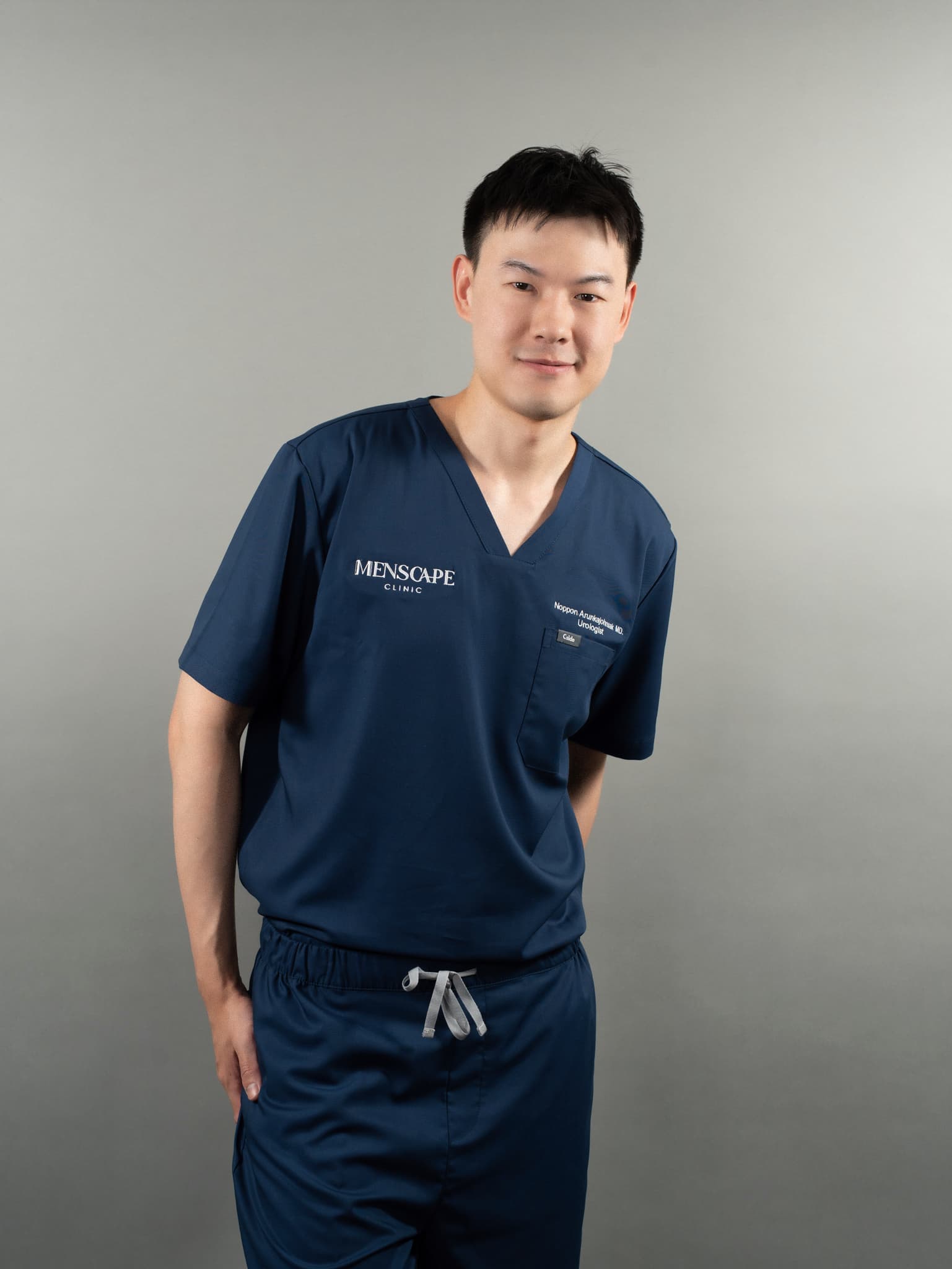
At Menscape, men receive an individual assessment and a treatment plan matched to their stage and goals, rather than a one-size-fits-all package. If Peyronie's disease is affecting your confidence or your sex life, the most useful next step is a private consultation where a urologist can examine you, measure the curve, and talk you through the realistic options and costs. Treatment decisions, prescriptions, and any procedure all require that in-person medical assessment.
Frequently Asked Questions
Can Peyronie's disease be cured without surgery?
Mild or early Peyronie's can often be managed without surgery using intralesional injections, traction, and pain-focused therapies, and some men improve enough that they never need an operation. However, non-surgical treatment usually reduces a curve rather than removing it completely. In the phase 3 collagenase trials, the average improvement was about 34 percent, not full correction. Severe, stable curves that prevent sex generally need surgery to straighten properly. A consultation and examination are needed to say which applies to you.
How do I know if I need surgery?
Surgery is usually considered once the disease is stable, meaning the curve and any pain have not changed for at least three to six months, and the deformity still interferes with sex. Common triggers are a severe curve (often quoted above 60 degrees), an hourglass or hinge effect that buckles during penetration, pain, or curvature combined with erectile dysfunction that no longer responds to medication. A urologist will measure the curve and assess your erections before recommending an operation.
Should I wait before treating Peyronie's disease?
It depends on the phase. In the active phase, when pain is present and the curve is still changing, doctors usually avoid surgery because the deformity is not yet final, and they focus on managing pain and limiting scarring. Once the disease has been stable for several months, it is the right time to consider surgical correction if needed. Waiting forever is not ideal either, since established plaques do not reverse on their own, so an early assessment helps you time treatment well.
How effective is each treatment at straightening the penis?
Roughly speaking, collagenase injections improved curvature by about 34 percent on average in trials, plication straightened more than 90 percent of cases in most studies, plaque incision or excision with grafting corrected curvature in most series above 80 percent, and penile implants achieved straightening above 80 percent with patient satisfaction reported between 72 and 100 percent. Non-surgical options give partial improvement with little downtime, while surgery gives a more complete correction with a recovery period.
How long is recovery after Peyronie's surgery?
Most men are cleared to resume sexual activity at around six to eight weeks, sometimes a little longer after grafting. The first week involves swelling, bruising, and discomfort, weeks two to four allow gradual return to normal daily activity, and tissues continue to strengthen through weeks four to six. Final results, including how the penis looks and feels when erect, settle over the following months. Non-surgical treatments such as injections and shockwave involve minimal downtime.
What does Peyronie's treatment cost in Bangkok?
As indicative ranges to confirm at consultation, shockwave runs about 5,000-10,000 THB per session, injection courses roughly 30,000-260,000 THB depending on the drug, plication surgery about 90,000-180,000 THB, plaque excision with grafting around 180,000-320,000 THB, and an inflatable penile implant about 450,000-650,000 THB. These are often 60-75 percent below US prices. The final quote depends on the technique, the device for implants, anaesthesia, and hospital stay.
Is a penile implant a good option for Peyronie's disease?
For men who have both a significant curve and erectile dysfunction that no longer responds to medication, an implant can be an excellent single solution because it corrects the curvature and restores erections at the same time. Published satisfaction rates are high, between 72 and 100 percent. The main trade-off is that some loss of length is common, so thorough counselling before surgery is important. For men with good erections, plication or grafting is usually preferred over an implant.
What are the warning signs I should seek urgent care?
Seek urgent medical care if you notice a sudden popping or snapping sensation with rapid swelling and bruising, which can signal a corporal rupture or penile fracture, an erection lasting more than four hours, spreading redness, pus, fever, or worsening pain after a procedure, which can indicate infection, or an inability to pass urine. These events are uncommon but time-sensitive, and prompt treatment protects your long-term function.
Are regenerative treatments like PRP and exosomes proven for Peyronie's?
PRP and exosome therapies are biologically plausible and widely offered, and some men report benefit, particularly for pain and erectile quality. However, high-quality long-term evidence specifically for reducing Peyronie's curvature is still limited, so they are best viewed as adjuncts under investigation rather than proven curvature correctors. Be cautious of any clinic that guarantees straightening from regenerative therapy alone, and ask what the realistic, evidence-based expectation is for your case.
Does Peyronie's surgery affect penis size?
It can. Plication straightens by shortening the longer, unaffected side, so some loss of length is expected. Grafting lengthens the short side and is often chosen partly to preserve length in severe curves. After implant surgery, length loss is the most commonly reported complaint, noted in up to 54 percent of men in one review. A good surgeon will discuss this openly beforehand and may recommend traction therapy as part of the plan to help maintain length.
)
/)
/)
/)
/)
/)