/)
/)
/)
/)
/)
/)
Enlarged Prostate (BPH) Treatment in Bangkok
Improve Urine Flow, Reduce Nighttime Urination & Restore Bladder Comfort
Benign Prostatic Hyperplasia (BPH) is a common condition where the prostate enlarges and blocks urine flow. At Menscape, we offer modern diagnostics and personalized treatment plans, from medication to minimally invasive procedures, to help men regain strong urine flow, reduce nighttime urination, and protect long-term bladder health.
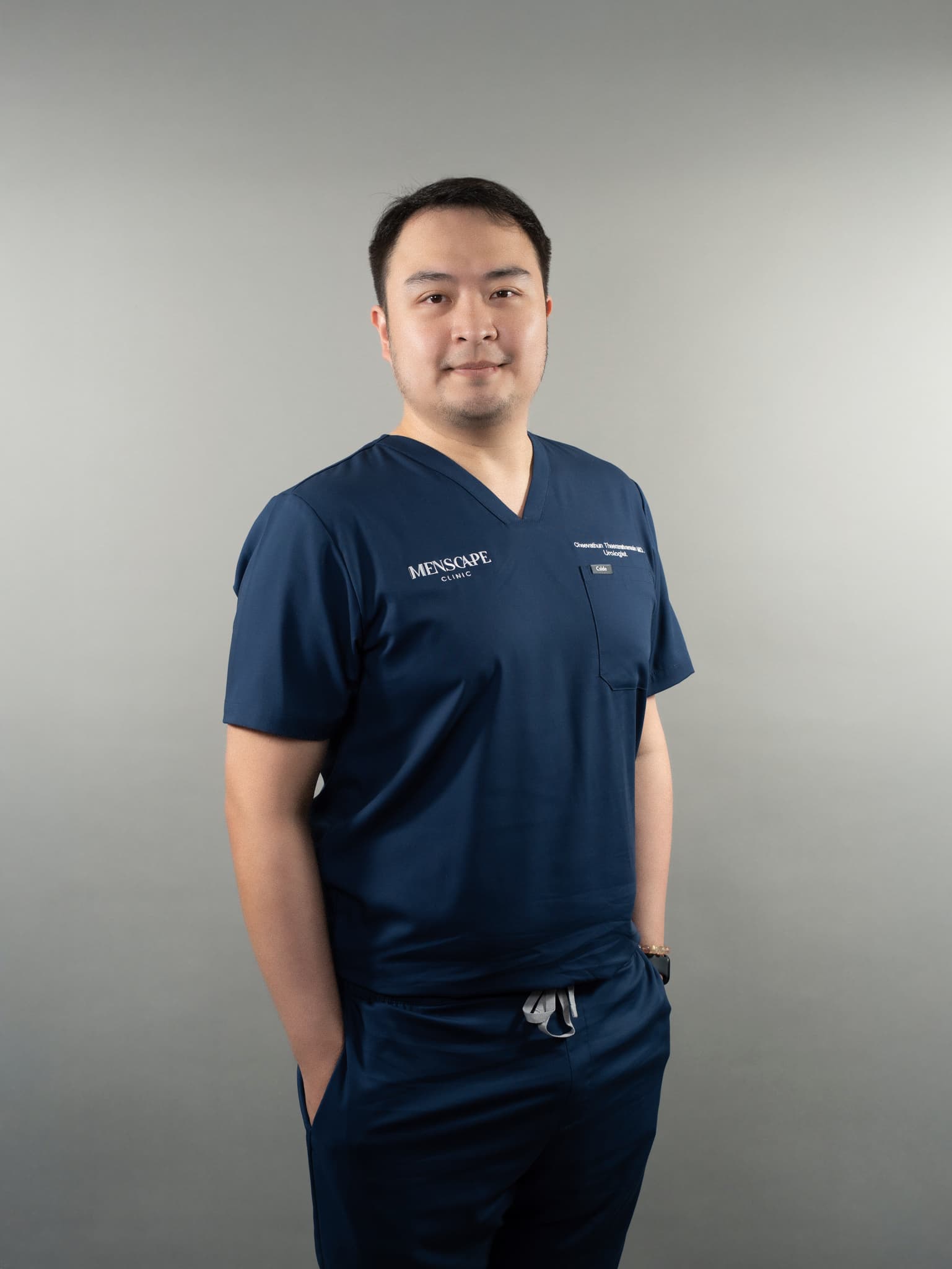
Medically reviewed by Dr. Cheevathun Theeraratvarasin (Big), Board-certified Urologist
7 years of experience
What are the options?
What Our Patients Say
Urology Consultation
I went from waking up four times a night to sleeping straight through. It changed my whole day.
Somchai, 58
Urology Consultation
I thought my weak stream was just aging. After treatment, the difference was immediate. Real relief.
Kittipong, 61
Book your consultation today.
/)
Preparation
Bring previous medical records (if any)
Avoid caffeine before your uroflow test
Drink water before your appointment (for bladder tests)
List all medications you are currently taking
Inform the doctor if you have burning or blood in urine
/)
Diagnostic Process
Prostate Ultrasound
Measures prostate size and checks bladder function.Uroflowmetry
Determines the strength of your urine flow.Post-Void Residual (PVR)
Checks how much urine stays in the bladder after urinating.Digital Rectal Exam (DRE)
Quick assessment of prostate texture and size.PSA Blood Test
Screening for prostate-related risks (if needed).
/)
Treatment Pathway
Mild Symptoms → Medication
Relaxes prostate muscles or shrinks the gland.Moderate Symptoms → Minimally Invasive Procedures
Rezum™, UroLift®, or iTind™ to improve flow without major surgery.Severe or Large Prostate → TURP
Gold standard surgery for complete obstruction relief.
/)
Explore our topics
About Enlarged Prostate (BPH) Treatment
/)
Specialized BPH Experts
Experienced urologists diagnosing and treating prostate enlargement daily.
Modern Diagnostic Tools
Uroflow, ultrasound, PSA, cystoscopy, and comprehensive bladder evaluation.
Minimally Invasive Options
Rezum™, iTind™, UroLift®, and other tissue-sparing treatments.
Private, Discreet Men’s Clinic
Confidential consultations + WhatsApp follow-up for comfort.
Frequently asked questions
What causes BPH?
Age, hormones, genetics, and inflammation cause the prostate to enlarge.
Is BPH dangerous?
Untreated BPH can lead to kidney damage, bladder stones, and chronic retention.
Will treatment affect sexual function?
Medication may affect ejaculation in some men; minimally invasive options often preserve it.
How do I know if I need surgery?
Surgery is recommended when medication and minimally invasive devices are no longer effective.
Does BPH increase cancer risk?
BPH itself is not cancer, but both conditions can coexist, so PSA testing is important.
IMPROVE YOUR URINE FLOW & SLEEP TODAY
IMPROVE YOUR URINE FLOW
& SLEEP TODAY
/)
)
Dr. Cheevathun Theeraratvarasin (Big)
Board-certified Urologist
- Experience
- 7 years
Dr. Cheevathun is a board-certified urologist trained at Siriraj Hospital, Mahidol University, with over 7 years of experience. He focuses on prostate care and general urology, providing professional, discreet, patient-centered care.