/)
/)
/)
/)
/)
Urethral Stricture Surgery in Bangkok
Permanent, Expert Repair for Scar Tissue Blocking the Urethra
Urethral stricture surgery: the definitive treatment for urethral narrowing caused by scar tissue. It restores strong, steady urine flow and prevents long-term bladder or kidney damage. Performed by expert reconstructive urologists using minimally invasive or open techniques depending on the severity of the stricture.
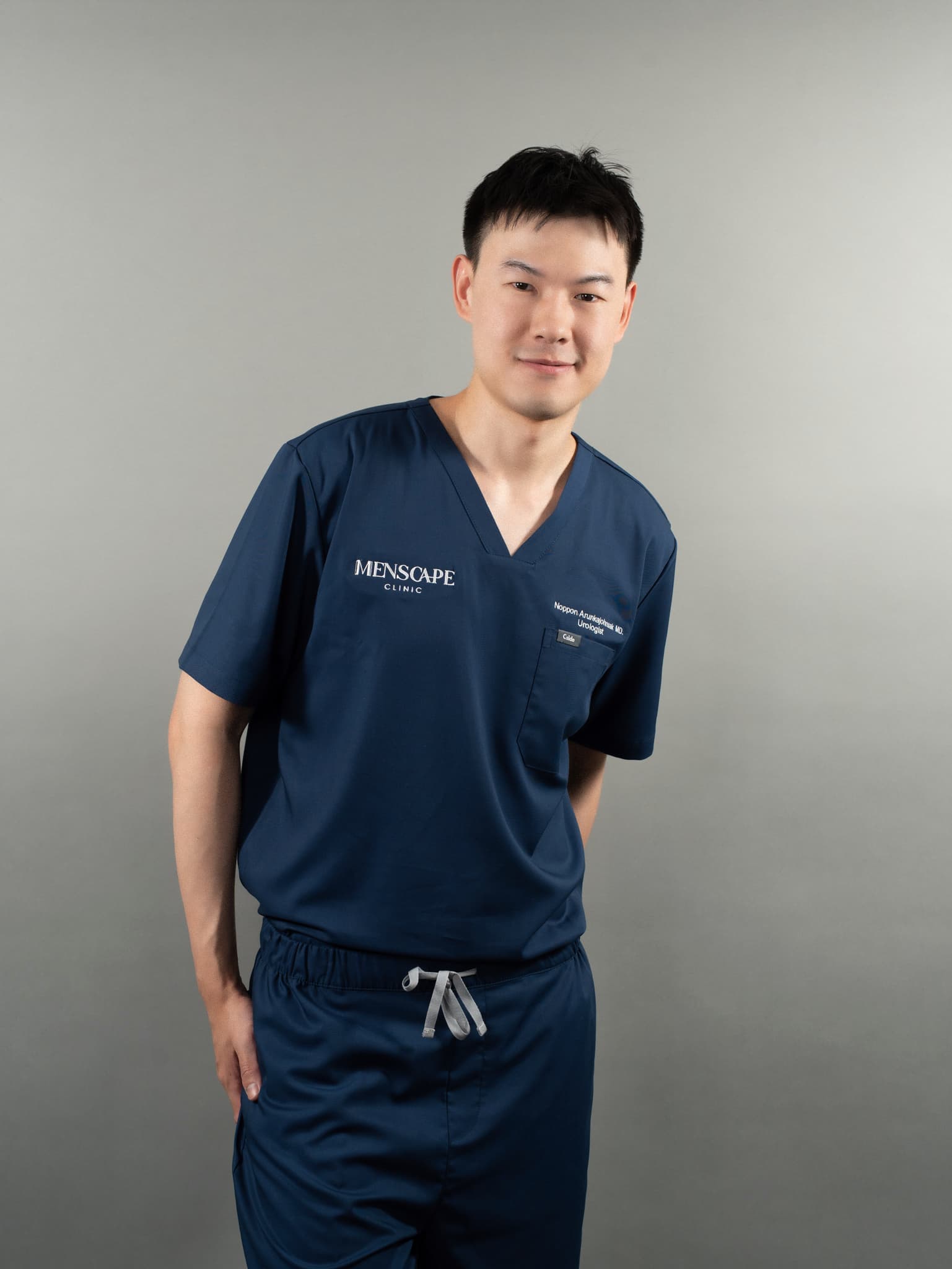
Medically reviewed by Dr. Noppon Arunkajohnsak (Win), Board-certified Urologist
9 years of experience
Our solutions
What are the options?
What Our Patients Say
Male Surgery
I didn’t realize how restricted my life had become until after surgery. The difference in my flow was instant.
Daniel, 58
Male Surgery
After two failed procedures elsewhere, this repair finally solved the problem. No more burning, no more stops.
Chanon, 55
Book your consultation today.
/)
Preparation
Cystoscopy to confirm stricture location
Uroflowmetry & ultrasound
Pre-op blood tests
Stop blood thinners (only with doctor approval)
Fast for 6-8 hours pre-surgery
Bring previous imaging if available
/)
Treatment Process
Consultation & Imaging
The surgeon maps the stricture’s length, depth, and severity.Surgical Technique Selection
Short strictures → OIU or EPA Long strictures → Graft urethroplastySurgery (45–120 minutes)
Performed under general or spinal anesthesia.Catheter Placement
A small catheter is left in place for 7–14 days depending on repair type.Recovery
Back to desk work: 5–10 days
Exercise: after 3–4 weeks
Full healing: 6–12 weeks
Flow typically improves immediately once catheter is removed
/)
Explore our topics
About Urethral Stricture Surgery
/)
Reconstructive Urology Specialists
Surgeons with specific expertise in urethral reconstruction.
Advanced Surgical Techniques
EPA, graft urethroplasty, minimally invasive DVIU.
High Long-Term Success Rates
Up to 98% depending on the technique.
Private, Discreet Men’s Clinic
Confidential care tailored to sensitive male health issues.
Frequently asked questions
Does surgery fix the problem permanently?
Yes, especially with EPA or graft urethroplasty.
Is OIU a long-term solution?
More effective for first-time or short strictures; high recurrence for long or complex ones.
How long do I have a catheter?
Typically 7–14 days depending on the technique.
Will surgery affect erections?
No, erectile nerves are not involved.
How soon will flow improve?
Often immediately after catheter removal.
RESTORE NORMAL URINE FLOW FOR GOOD
RESTORE NORMAL URINE
FLOW FOR GOOD
/)
)
Dr. Noppon Arunkajohnsak (Win)
Board-certified Urologist
- Experience
- 9 years
Dr. Noppon is a board-certified urologist trained at Siriraj Hospital, Mahidol University. With over 9 years of experience, he focuses on urological consultation and men's health, providing discreet, evidence-based, patient-centred care.