/)
A penile implant is the treatment men reach for when nothing else has restored a usable erection. Tablets stopped working, or never worked. Injections became a chore, or the rigidity faded. The vacuum pump sits in a drawer. For that group, a penile prosthesis is not a last resort to be ashamed of, it is the option with the highest reliability and the highest satisfaction of anything in the erectile dysfunction toolkit. Once it is in place, an erection is available on demand, every time, for as long as you want.
This guide is written for men considering implant surgery in Bangkok. It covers what the device actually is, the inflatable-versus-malleable decision, transparent Thailand pricing in THB and USD against US and UK figures, who is and is not a candidate, the step-by-step procedure and recovery, the results you can realistically expect with real numbers, the risks including the ones that mean you call the clinic immediately, and how to vet a surgeon so you do not end up with a complication that could have been avoided.
One thing to be clear about from the start: a penile implant is permanent. Placing it removes the spongy tissue inside the penis that fills with blood during a natural erection. There is no going back to natural erections afterward. That is why it is reserved for men who have genuinely run out of simpler options, and why it always begins with a proper medical consultation, not an online order. A urologist must examine you and confirm you are a suitable candidate before anything is scheduled.
What a penile implant is
A penile implant, also called a penile prosthesis, is a medical device placed entirely inside the penis during a single operation. Nothing is visible from the outside. The implant takes over the mechanical job that disease, surgery or nerve damage has taken away, producing rigidity firm enough for penetration whenever the man chooses.
There are two broad families of device, and the choice between them shapes cost, the feel of the result and how the device is operated.
Inflatable implants (the premium standard)
The three-piece inflatable penile prosthesis is the most widely used and the most natural-feeling option. It has three connected parts: two cylinders placed inside the erection chambers of the penis, a small pump tucked into the scrotum, and a fluid reservoir hidden behind the abdominal wall. To get an erection, you squeeze the scrotal pump a few times, which moves saline from the reservoir into the cylinders. To return to a soft state, you press a release valve on the pump and the fluid drains back. The penis looks and hangs naturally when flaccid, which is the main advantage over bendable rods.
The two market-leading devices are the Coloplast Titan and the Boston Scientific AMS 700 (available in CX and LGX cylinder designs, the LGX adding some length expansion). Both carry infection-retardant or hydrophilic coatings on the device surface to lower the risk of bacterial colonisation. A two-piece inflatable (combining pump and reservoir) exists for men in whom a separate abdominal reservoir is undesirable, but it produces somewhat less rigidity and a less natural flaccid state.
Malleable (semirigid) implants
A malleable implant is a pair of bendable silicone rods placed in the same erection chambers. There is no pump and no fluid. The penis stays permanently semi-firm; you bend it up for sex and down for concealment. It is mechanically simpler, has fewer parts to fail, costs less, and is easier to operate for men with limited hand strength or dexterity (for example, after a stroke or with severe arthritis). The trade-off is a less natural flaccid appearance and constant partial rigidity. The Coloplast Genesis and the malleable line from Boston Scientific are common examples.
Penile implant cost in Bangkok (THB and USD)
Bangkok has become a recognised destination for prosthetic urology because the same FDA-cleared devices and similarly trained surgeons are available at a fraction of US pricing. The single largest line item is the device itself, which is why an inflatable package costs roughly double a malleable one. The figures below are indicative all-inclusive package ranges for 2026 and should be confirmed at consultation, because the final number depends on the exact device model, hospital tier and length of stay.
Implant type | Bangkok package (THB) | Bangkok package (USD approx) | Typical US price (self-pay) | Typical UK price (self-pay) | Thailand saving vs US |
Malleable (semirigid) | THB 350,000 - 550,000 | USD 10,600 - 16,700 | USD 16,000 - 22,000 | GBP 11,000 - 16,000 | ~25-50% |
3-piece inflatable (Coloplast Titan / AMS 700) | THB 650,000 - 950,000 | USD 19,700 - 28,800 | USD 18,000 - 35,000 | GBP 14,000 - 20,000 | up to ~40%, narrows at the top |
USD conversions use an approximate rate near THB 33 per USD and will move with the exchange rate. US figures reflect self-pay totals for the device, surgeon, anaesthesia and facility, with the high end representing the uninsured ceiling rather than the typical case; many US men pay far less through insurance, and flat-fee self-pay packages often sit toward the lower end of the range. These are indicative ranges, not a quote. Your consultation will produce the actual figure. The saving over US self-pay pricing is real for most cases but narrows at the top of the inflatable range, where a premium Bangkok package and a discounted US self-pay deal can land close together.
What a Bangkok package usually includes
The implant device itself (the dominant cost)
Surgeon and anaesthetist fees
Operating theatre and hospital facility fees
One to two nights of inpatient stay
Pre-operative workup and post-operative follow-up visits
Device activation training once healing allows
What drives the final cost
Device family and model. Inflatable costs roughly double malleable; within inflatable, premium cylinder designs add to the bill.
Surgeon experience and case volume. High-volume prosthetic surgeons command higher fees and tend to have lower complication rates, which is value, not waste.
Hospital tier. A JCI-accredited private hospital costs more than a smaller facility, and the ranges above reflect premium hospital and device tiers; smaller facilities or entry devices can sit below these floors.
Length of stay and any complications. Most packages assume a straightforward course; extended stays add cost.
Whether you need a complex or revision procedure (for example, scarred tissue from a prior infection or Peyronie's disease correction at the same time).
Ask any clinic for an itemised, written quote and confirm whether the device, anaesthesia and follow-up are all included or billed separately.
Who is a candidate, and who is not
Implant surgery is appropriate for men with erectile dysfunction that has not responded to, or is not suited to, less invasive treatment. The American Urological Association guideline frames this as informed choice rather than a strict last resort: men should be told about the prosthesis option, with its benefits and burdens, and it is reasonable to choose it directly, though in practice most men reach it after other treatments have failed.
You may be a good candidate if you have:
Erectile dysfunction that no longer responds to PDE5 inhibitor tablets (sildenafil, tadalafil), penile injections or a vacuum device
ED after radical prostatectomy or pelvic surgery where nerve damage limits other options
Severe diabetes-related or vascular ED
Peyronie's disease with significant curvature plus ED, where an implant can straighten and restore function in one operation
A clear understanding that the result is permanent and that natural erections will not return
Who it is not for, and absolute contraindications
This procedure is not right for everyone, and some situations make it unsafe to operate. The AUA guideline is explicit that prosthetic surgery should not be performed in the presence of a systemic, skin or urinary tract infection, because the implant is a foreign body that infection will readily colonise. Implant surgery is generally inappropriate or must be deferred when there is:
Any active infection (systemic, urinary tract, or skin infection in the genital or groin area). This is an absolute reason to postpone.
Poorly controlled diabetes with high HbA1c, which raises infection risk; control should be optimised first.
ED that has a reversible or untreated cause (low testosterone, medication side effect, untreated psychological factors) that has not yet been addressed.
Unrealistic expectations, for example expecting added length or that the implant will increase sexual desire or sensation. It restores rigidity, nothing more.
Inability to operate or care for the device, unless a malleable implant is chosen.
Significant bleeding disorders or unfit for anaesthesia until medically optimised.
A thorough consultation exists precisely to catch these issues before surgery, not after.
Step-by-step: the procedure
Penile implant surgery is a planned, single operation, usually under general or spinal anaesthesia, taking about one to two hours according to Cleveland Clinic.
Anaesthesia and antibiotics. You are anaesthetised, and intravenous antibiotics are given to lower infection risk. The surgical field is cleaned thoroughly, often with a careful skin prep, because infection prevention starts here.
Incision. A small incision is made, commonly where the penis meets the scrotum, or in the lower abdomen. It is positioned to stay discreet once healed.
Preparing the chambers. The surgeon gently dilates the two erection chambers (the corpora cavernosa) to the correct length and width, measuring carefully so the cylinders fit your anatomy.
Placing the device. The cylinders are inserted into the chambers. For an inflatable implant, the pump is positioned in the scrotum and the reservoir is placed behind the abdominal wall, then the three parts are connected and tested.
Testing and closing. The surgeon inflates and deflates the device to confirm correct function and a natural result, then closes the incision. The device is usually left partly inflated initially to limit scarring around the cylinders.
Recovery timeline
Recovery is staged. Rushing it is the single most common way men get into trouble.
First 24-48 hours: Inpatient or short-stay observation. Expect swelling, bruising and soreness of the penis and scrotum. Pain is managed with medication. A catheter may be used briefly.
Week 1: Pain and swelling begin to settle. Most men with desk-based work can return after about a week. Keep the area clean and follow wound-care instructions.
Weeks 2-4: Continued healing. Physically demanding jobs need two to four weeks off. Tenderness can persist for up to six weeks. Avoid sexual activity entirely during this window.
Around week 6: Most men are cleared to resume sexual activity roughly six weeks after surgery, once the surgeon confirms healing. This is also when device activation training typically happens, so you learn to inflate and deflate it confidently.
Beyond: The device gradually feels more natural with use. Full comfort and confident operation often take a few months.
If you are travelling to Bangkok for surgery, plan to stay in Thailand for follow-up before flying. Many men are comfortable to travel home around 5 to 7 days after surgery, but confirm timing with your surgeon, as it depends on your individual healing.
Results you can realistically expect
The reason inflatable implants dominate the field is that the outcome data are genuinely good, provided expectations are set correctly. Here are the numbers, not adjectives.
Satisfaction: Cleveland Clinic reports that over 90 percent of people with a penile implant are satisfied with the result. Published series back this up: a study of inflatable prostheses in elderly men found 80 percent rated overall satisfaction in the top two categories, 91 percent said they would undergo the procedure again, and 83 percent would recommend it to a friend. A comparison study of the AMS 700 CX and Coloplast Titan found 79 percent reported great satisfaction and 82 percent would have the same operation again.
Reliability over time: The same AMS 700 CX versus Coloplast Titan study reported five-year mechanical survival of 91 percent and 87 percent respectively, with no significant difference between devices. Broader data put AMS 700 mechanical reliability around 90 to 93 percent at five to six years. Modern implants commonly last well over a decade; Cleveland Clinic cites an average lifespan of around 20 years before replacement may be needed, though individual results vary.
Function: Once healed and activated, the device produces a reliable, on-demand erection sufficient for intercourse essentially every time, which is what sets it apart from tablets and injections.
Two honest caveats. First, two-piece inflatable devices show lower satisfaction in some series (one study reported 73 percent patient and 59 percent partner satisfaction for a two-piece device), which is one reason the three-piece is usually preferred. Second, an implant does not change sensation, orgasm or desire, and it does not add length. Men who understand this going in are the most satisfied afterward.
Risks and side effects
Penile implant surgery is well established and most men do well, but it is still surgery on a device that will live inside the body, so the risks deserve plain description.
Common, usually self-limiting:
Swelling, bruising and soreness for days to a few weeks
Temporary altered sensation
A short period of difficulty operating the device while you learn it
Less common but important:
Infection. This is the most serious early complication because an infected implant usually must be removed. Modern coated devices and strict antibiotic protocols keep primary infection rates broadly in the low single digits in experienced hands. Diabetics and revision cases carry higher risk.
Mechanical failure. Pumps, cylinders or tubing can fail over years, requiring revision surgery. Reliability data above show this is uncommon in the first five years but rises with time.
Erosion or extrusion, where part of the device wears against or through tissue.
Auto-inflation or positioning issues with inflatable devices.
Have a question about your treatment?
Message our Bangkok clinic on WhatsApp and a doctor replies within minutes during clinic hours.
Seek urgent medical care if you have
Fever, chills, or spreading redness, warmth or worsening pain around the surgical site (possible infection)
Pus or foul-smelling discharge from the wound
Severe or rapidly increasing swelling, or the device feeling exposed at the skin
A penis that becomes painful, discoloured or cold to the touch
Inability to urinate
These warrant contacting your surgeon or attending an emergency department the same day. Early treatment of an infection gives the best chance of saving the device.
How to choose a safe clinic in Bangkok
Outcomes in prosthetic surgery track closely with surgeon experience and infection control. Use this checklist, and treat any red flags as a reason to walk away.
Verify the surgeon. Confirm a board-certified urologist with specific, documented experience in penile prosthesis surgery and a meaningful annual case volume. Ask how many implants they place each year and how familiar they are with your preferred device. In Thailand, urologists hold a medical licence number you can ask to see.
Confirm the device is genuine. Insist on an FDA-cleared device from Coloplast (Titan, Genesis) or Boston Scientific (AMS 700, malleable line). Ask for the implant's model and serial documentation, which also matters for warranty.
Check the facility. Surgery should be performed in a properly equipped hospital, ideally JCI-accredited, with full sterile theatre standards and anaesthesia cover. Ask whether a private room and overnight monitoring are included.
Confirm follow-up. Proper aftercare includes wound checks, device activation training, and a clear route to emergency support if something goes wrong after you return home.
Red flags to avoid
A clinic that cannot or will not confirm the surgeon's credentials and case volume
Prices that look too good to be true, which can mean non-genuine devices or corner-cutting on theatre standards
No urology specialist actually performing the implant
No structured follow-up or activation training
Pressure to book immediately without a proper examination
How a penile implant compares to other ED treatments
Treatment | How it works | Reliability | Invasiveness | Reversible |
PDE5 tablets (sildenafil, tadalafil) | Boost blood flow, need natural arousal | Works for many, fails in severe ED | None | Yes |
Penile injections | Self-injected drug produces erection | High when effective, can sting or scar | Minor | Yes |
Vacuum erection device | Pump draws blood in, ring holds it | Moderate, can feel unnatural | None | Yes |
Malleable implant | Bendable rods, permanent semi-rigidity | Very reliable, simple | Surgery | No |
Inflatable implant | Pump-driven rigid-and-flaccid device | Very reliable, most natural feel | Surgery | No |
The implant sits at the bottom of this list deliberately. It is the most invasive and the only permanent option, which is why it is chosen after the reversible treatments have been tried or ruled out. In exchange, it delivers the most consistent, natural-feeling result.
Why men choose Menscape for implant surgery
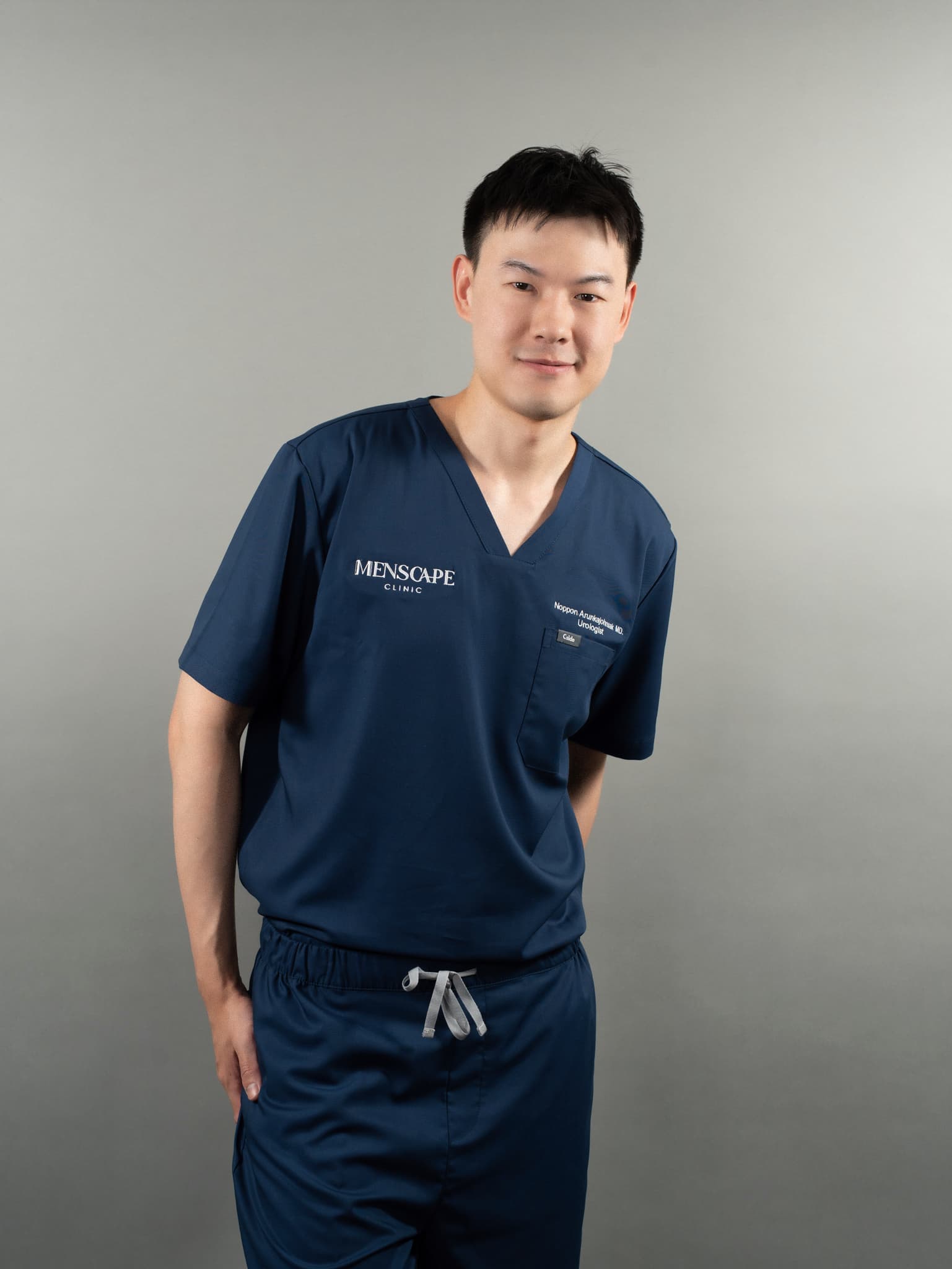
Menscape is a men's health clinic in Bangkok focused specifically on male sexual and urological health. Implant candidates are assessed by urologists experienced in prosthetic surgery, with access to the full range of Coloplast and Boston Scientific devices so the choice is matched to your anatomy and goals rather than to whatever is in stock. Pricing is set out transparently before you commit, care is delivered in a discreet, male-focused environment, and follow-up includes the activation training and post-operative support that make the difference between a device you tolerate and one you forget is there.
Penile implant surgery is a medical procedure that requires a consultation and a prescription from a qualified urologist. It cannot be ordered or self-prescribed. If you are considering it, the next step is a private assessment to confirm you are a candidate and to discuss which device fits you best.
Book a confidential consultation with a Menscape urologist, or learn more about erectile dysfunction treatment options before deciding whether an implant is right for you.
Frequently Asked Questions
Will anyone be able to tell I have a penile implant?
No. The entire device, including the cylinders, pump and reservoir, sits inside the body. With an inflatable implant the penis looks and hangs naturally when deflated, so it is not visible or obvious to a partner, and nothing shows in everyday situations such as the gym or beach.
How long does a penile implant last?
Modern implants are durable. Published comparison data show roughly 87 to 91 percent of inflatable devices are still working mechanically at five years, and Cleveland Clinic cites an average lifespan of around 20 years before replacement may be needed. Individual results vary, and a worn device can be replaced with revision surgery.
Does a penile implant feel natural during sex?
Three-piece inflatable implants produce a firm, natural-feeling erection and a natural soft state afterward, which is why patient satisfaction exceeds 90 percent in several series. The implant does not change skin sensation, orgasm or ejaculation; those depend on your own nerves and are usually preserved.
Is the surgery reversible if I change my mind?
No. Placing the implant removes the spongy erectile tissue inside the penis, so natural erections cannot return even if the device is later removed. This permanence is the main reason an implant is reserved for men who have exhausted reversible treatments, and why a full consultation is essential first.
When can I have sex again after the operation?
Most men are cleared to resume sexual activity around six weeks after surgery, once the surgeon confirms healing. Tenderness can persist up to six weeks, and trying too early risks complications, so follow your surgeon's specific timeline rather than a generic one.
How much does penile implant surgery cost in Bangkok?
Indicative all-inclusive 2026 packages run roughly THB 350,000 to 550,000 for a malleable implant and THB 650,000 to 950,000 for a three-piece inflatable, about USD 10,600 to 28,800 at current exchange rates. That is commonly 30 to 50 percent below comparable US self-pay pricing, though the saving narrows at the top of the inflatable range. The device model, hospital tier and length of stay drive the final figure, which is confirmed at consultation.
Can I travel home soon after implant surgery?
Many men feel ready to fly roughly 5 to 7 days after surgery, but this depends on individual healing and your surgeon's clearance. Plan to stay in Bangkok for at least the first follow-up so any early wound issues can be checked before you travel.
What is the difference between an inflatable and a malleable implant?
An inflatable implant uses a hidden pump to produce an erection on demand and a natural flaccid state when deflated, giving the most natural result. A malleable implant is a pair of bendable rods that keep the penis permanently semi-firm; it is simpler, cheaper, easier to operate with limited hand strength, but looks and feels less natural.
Is penile implant surgery safe for men with diabetes?
Many diabetic men with severe ED do very well with implants, and it is often the most reliable option for them. However, poorly controlled diabetes raises infection risk, so blood sugar should be optimised before surgery. A urologist will assess your overall health and infection risk during the consultation.
Do I need a prescription or consultation for a penile implant?
Yes. A penile implant is a surgical medical device that cannot be ordered online or self-prescribed. A board-certified urologist must examine you, confirm you are a suitable candidate, rule out contraindications such as active infection, and select the appropriate device before any surgery is scheduled.
/)
/)
/)
/)
/)