/)
If you have tried tablets, injections, or a vacuum device and your erections still are not reliable enough for the sex life you want, a penile implant is usually the next honest conversation to have. Among the inflatable devices, the AMS 700 LGX (made by Boston Scientific, formerly American Medical Systems) sits in a specific niche: it is engineered to expand in both length and girth when you inflate it, rather than firmness alone. For men who are anxious about the penile shortening that often follows years of erectile dysfunction (ED), pelvic surgery, or Peyronie's disease, that "lengthening" behavior is the reason the LGX gets requested by name.
This guide explains what the LGX actually is, who it suits and who it does not, exactly what the operation and recovery involve, the quantified results from published studies, the real risks, and transparent Bangkok pricing in both Thai baht and US dollars with a comparison to the US and UK. An implant is a permanent, irreversible procedure that removes your natural erectile tissue, so it is only ever recommended after a urologist has assessed you in person. Nothing here is a prescription or a substitute for that consultation.
What the AMS 700 LGX actually is
The AMS 700 LGX is a three-piece inflatable penile prosthesis (often shortened to "IPP"). Three-piece means it has three connected parts hidden entirely inside the body:
Two cylinders placed inside the erection chambers of the penis (the corpora cavernosa). These replace the spongy tissue that no longer fills with blood.
A pump and deflation valve tucked into the scrotum, between the testicles, where you can reach it discreetly.
A fluid reservoir (sterile saline) positioned behind the abdominal wall or in the pelvis.
To get an erection, you squeeze the scrotal pump several times. That moves saline from the reservoir into the cylinders, and the penis becomes firm. When you are finished, you press the deflation valve and the fluid drains back, so the penis returns to a soft, natural-looking flaccid state. Nothing is visible from the outside, and the device stays inert until you choose to use it.
The "LGX" stands for the length-and-girth expansion design. Most inflatable cylinders firm up mainly by getting wider. The LGX cylinders are built to grow in length as well as width during inflation, which is why men focused on preserving or recovering length tend to ask for this specific model. The cylinders carry InhibiZone, a coating of the antibiotics rifampin and minocycline that releases at the surgical site to lower the risk of device infection. Boston Scientific also uses a parylene coating on the cylinders that published work links to better long-term mechanical durability.
It helps to be clear about what an implant is for. The LGX treats *erectile dysfunction*, meaning the inability to get or keep an erection firm enough for sex. It is a functional device, not a cosmetic enlargement procedure. It is different in purpose from cosmetic implants such as Penuma or Himplant, which are placed under the skin to add girth in a man whose erections still work. If your erections are fine and you only want more size, an IPP is the wrong tool. See our Penuma vs Himplant vs Titan vs AMS comparison to understand which lane you are in.
How the LGX compares to other implant options
There is more than one IPP on the market, and the malleable (bendable rod) implants are a separate category again. The table below frames the LGX against the alternatives men in Bangkok most often weigh up.
Device | Type | Best for | Length/girth behavior | Flaccid concealment | Typical lifespan |
AMS 700 LGX | 3-piece inflatable | ED with concern about length loss | Expands in length and girth | Very natural, soft | ~10-15+ years |
AMS 700 CX | 3-piece inflatable | ED wanting maximum girth and rigidity | Expands in girth, controlled length | Natural | ~10-15+ years |
Coloplast Titan | 3-piece inflatable | ED wanting strong rigidity | Expands mainly in girth | Natural | ~10-15+ years |
Malleable (semi-rigid) rod | 2 bendable rods | ED where dexterity or cost is the priority | Fixed firmness, no inflation | Always semi-firm, harder to hide | ~10+ years |
Penuma / Himplant | Cosmetic subcutaneous | Cosmetic girth, erections already work | Adds girth only | Adds bulk when flaccid | Varies |
The honest summary: if you want maximum out-of-the-box rigidity, surgeons often discuss the Titan or the CX. If your priority is the most natural feel and protecting length, the LGX is the model built for that brief. A skilled implanter will recommend based on your anatomy, your hand dexterity, and your goals, not on brand loyalty.
Who is a candidate, and who is not
The LGX is generally considered for men who:
Have moderate to severe ED that has not responded to, or is not suited to, less invasive options (PDE5 tablets like sildenafil or tadalafil, injections, a vacuum erection device).
Have ED after radical prostatectomy, pelvic radiation, or other pelvic surgery.
Have Peyronie's disease with a degree of curvature that an inflatable device can help straighten, sometimes alongside additional correction.
Are particularly concerned about penile shortening and want the length-expanding cylinder design.
Have good manual dexterity to operate the pump, and are willing to accept that the procedure is permanent.
The AUA's erectile dysfunction guideline supports informing men with ED about implant surgery, including its benefits and burdens, as a legitimate treatment path once other options have been considered.
The implant is not the right choice, or needs to wait, for men who:
Still get adequate erections with tablets, injections, or a vacuum device. An IPP destroys the natural erectile tissue, so it removes the ability to ever go back to those methods.
Want cosmetic enlargement but have normal erections. That is a different procedure entirely.
Have an active infection anywhere relevant. The AUA guideline is explicit that prosthetic surgery should not be done in the presence of a systemic, skin, or urinary tract infection, because infection of the device is the most serious complication.
Have poorly controlled diabetes, an uncontrolled bleeding disorder, or are an unacceptable anesthetic risk. These do not always rule surgery out, but they need to be optimized first.
Cannot realistically operate the pump (significant hand arthritis or limited dexterity), where a malleable rod may be the better fit.
Absolute and relative contraindications are decided at consultation. A reputable surgeon will sometimes tell you that you are not ready, and that is a sign of good care, not a sales tactic.
The procedure, step by step
The operation is a well-established day-case or single-overnight procedure performed by a urologist trained in prosthetics.
Anesthesia. Most LGX implants are done under general or spinal anesthesia. You feel nothing during surgery.
Incision. The surgeon usually makes a single small incision, either at the base of the penis where it meets the scrotum (penoscrotal) or in the lower abdomen (infrapubic). It is small and positioned to be discreet once healed.
Preparing the chambers. The two corpora cavernosa are gently dilated and measured so the cylinders are sized precisely to your anatomy. Correct sizing is what makes the result feel natural.
Placing the cylinders. The two length-and-girth cylinders are inserted into the erection chambers.
Placing the pump. The pump and deflation valve are positioned in the scrotum where you will reach them.
Placing the reservoir. The saline reservoir is set behind the abdominal wall or in the pelvic space.
Testing. The surgeon inflates and deflates the device to confirm it works, sits correctly, and gives a straight, natural erection.
Closing. The incision is closed, usually with dissolvable sutures, and a light dressing is applied.
The surgery itself typically takes about 60 to 120 minutes. Cleveland Clinic describes most penile implant procedures as lasting one to two hours, with many patients going home the same day. In Bangkok, one overnight stay is common so the team can monitor swelling and pain.
Recovery timeline, week by week
Recovery is gradual but predictable. The device is left deflated while everything heals.
Days 0-3: Expect swelling, bruising, and soreness in the penis and scrotum. Ice, a scrotal support, rest, and prescribed pain relief manage this. You take a course of antibiotics. Light walking from day one helps.
Week 1-2: Swelling and discomfort steadily ease. Most men are back to a desk job and gentle daily activity. Cleveland Clinic notes pain and swelling generally settle within a week, though tenderness can linger.
Week 3-4: Many men feel close to normal day to day. No sexual activity yet. Some surgeons begin teaching you to inflate and deflate the device around this point to keep the chambers supple.
Week 4-6: First proper "activation" training, where you learn to confidently operate the pump. Cleveland Clinic advises avoiding sex for at least four weeks; most surgeons set the green light around six weeks.
Week 6-8: Most men resume sexual activity once the surgeon confirms healing is complete. This is the point most patients are waiting for.
2-3 months: Full recovery. The device feels familiar, scrotal swelling has resolved, and use becomes routine.
Healing pace varies with age, diabetes control, and whether the case was a first implant or a revision. Follow your own surgeon's timeline over any generic schedule.
Quantified results: what the evidence shows
This is where the LGX earns its reputation, and the numbers are worth seeing rather than vague reassurances.
Length. In a single-center study of 342 men published in *BMC Urology* (2019), mean stretched flaccid penile length rose from 11.1 cm at baseline to 11.9 cm at 3 months, 12.0 cm at 6 months, and 12.2 cm at 12 months, all statistically significant. The LGX did not just avoid the shortening men feared; on average it preserved and modestly recovered length without a separate lengthening operation. A smaller prospective study reported roughly a 10 percent (about 1.3 cm) increase in inflated length by 12 months.
Satisfaction. Boston Scientific's outcome data for the AMS 700 line report that around 95 percent of men were satisfied with intercourse, and 97 percent would recommend a penile implant to a friend. Cleveland Clinic notes that over 90 percent of penile implant recipients are happy with the result, one of the highest satisfaction rates of any ED treatment.
Durability. Three-piece inflatable implants commonly last 10 to 15 years or longer, and parylene-coated cylinders are associated with improved long-term mechanical survival. Most failures, when they happen, are mechanical and the device can be replaced.
Infection control. Antibiotic-coated devices have transformed safety. A review in the *International Journal of Impotence Research* documents the device infection rate dropping by more than half, to under 1 percent in experienced implanter hands, with the lowest reported series around 0.46 percent. In the coated-versus-uncoated comparison the same review highlights, infection fell from 5.3 percent to 2.0 percent once antibiotic coating became standard.
These figures come from published studies and the manufacturer's clinical data. Your own outcome depends on your anatomy, your health, and your surgeon's volume and technique.
Risks and complications
A penile implant is considered very safe, but it is still surgery on an implanted device, so the risks are specific and worth understanding plainly.
More common, usually temporary:
Pain, swelling, and bruising in the first weeks (expected, not a complication).
Temporary numbness or altered sensation.
A small change in penile length perception compared with a man's best-ever natural erection.
Less common but important:
Device infection. The most serious complication, now uncommon with antibiotic-coated devices and good technique, but if it occurs the implant usually has to be removed.
Mechanical failure of a part over the years, which is the main reason a device is eventually replaced.
Erosion of a component through tissue, or migration of a part.
Urethral injury during surgery (rare).
Scar tissue or persistent pain (uncommon).
Seek urgent medical care if, after surgery, you have: a fever, spreading redness, increasing warmth, worsening or severe pain, foul-smelling discharge or pus from the incision, the scrotum becoming hard, hot, and very swollen, or an erection you cannot deflate. These can signal infection or a device problem and need same-day assessment, not a wait-and-see. Choosing a high-volume implant surgeon and following the antibiotic and wound-care instructions are the two biggest levers you control for keeping risk low.
Have a question about your treatment?
Message our Bangkok clinic on WhatsApp and a doctor replies within minutes during clinic hours.
Bangkok pricing: THB and USD, vs the US and UK
Bangkok has become a recognized destination for penile implant surgery because the cost is substantially lower than in the West while the device (the same Boston Scientific or Coloplast hardware) is identical. The price is driven mostly by the implant itself, which is a major-cost medical device, plus surgeon fees, anesthesia, and hospital time.
The figures below are indicative all-inclusive ranges for a three-piece inflatable implant in Bangkok and should be confirmed at consultation, because final cost depends on the exact device, your anatomy, and whether it is a first implant or a revision. As a real-world anchor, published Bangkok clinic packages for a three-piece inflatable (such as a Coloplast Titan) sit around 14,000 USD, in line with the ranges below.
Item | Bangkok (THB) | Bangkok (USD approx.) | US / UK equivalent | Indicative saving |
Three-piece inflatable (AMS 700 LGX), all-inclusive | ~450,000-620,000 | ~14,000-19,000 | US $15,000-40,000 / UK £13,000-20,000 | ~50-65% less |
Malleable (semi-rigid) implant, all-inclusive | ~260,000-360,000 | ~8,000-11,000 | US $16,000-25,000 | ~50-60% less |
Consultation and pre-op workup | ~3,000-12,000 | ~90-370 | Often billed separately abroad | Varies |
All-inclusive packages typically cover the branded device, the surgeon's fee, anesthesia, and the standard one-night hospital stay. Always ask in writing what is and is not included (device brand and model, follow-up visits, activation training, and what a revision would cost). These prices are indicative and not a quote, and the USD figures use a mid-2026 rate of roughly 32-33 THB per USD, so they move with the exchange rate. Some Bangkok clinics offer staged payment or financing; ask during your consultation. Final pricing is confirmed only after a urologist has examined you.
Choosing a clinic safely, and red flags
An implant is a once-in-a-decade decision, so the surgeon and facility matter more than the marketing. Look for:
A urologist with specific, high-volume experience in inflatable penile prosthetics, not a generalist who does the occasional case. Implant infection and revision rates fall measurably with surgeon volume.
Named, licensed surgeons you can verify, ideally with a visible Thai medical license, and a facility with recognized accreditation.
Transparent, written pricing that states the device brand and model and what a revision would cost.
A consultation that includes a proper ED workup and an honest discussion of alternatives, including telling you if you are not a candidate.
Clear aftercare and activation training, and a defined plan for what happens if a complication occurs.
Red flags worth walking away from: pressure to decide on the day, refusal to name the exact device, no in-person examination before booking, a price that looks far below everyone else (the device alone has a real floor cost), and vague or absent answers about infection rates and revision policy.
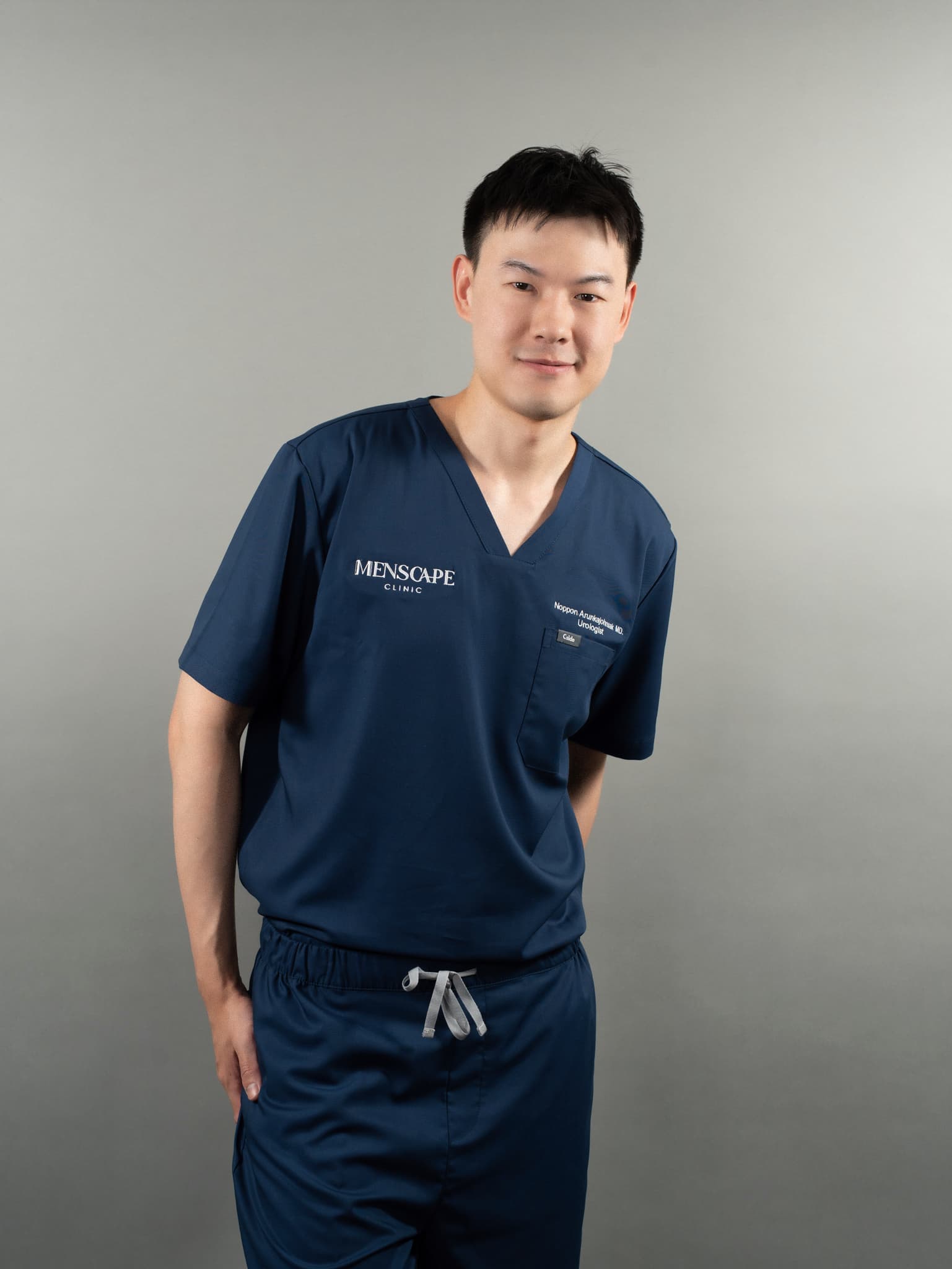
At Menscape in Bangkok, assessments are private, the device and pricing are stated upfront, and the focus is on confirming whether an implant is genuinely the right step for you before anything is booked.
Booking a consultation
Deciding on a penile implant starts with an honest assessment, not a sales pitch. A consultation covers your ED history, a physical examination, a review of what you have already tried, device selection, and a frank conversation about the permanence of the procedure and realistic results. Because the LGX permanently removes natural erectile tissue and cannot be reversed, it is only recommended after that evaluation, and it requires a urologist's assessment.
To explore whether the AMS 700 LGX or another option fits your situation, book a confidential consultation with Menscape Bangkok. You can also read our related guides on the Coloplast Titan implant and the broader penile implant options in Bangkok.
*This article is for general education and does not replace a medical consultation. Penile implant surgery is a prescription procedure that requires assessment by a qualified urologist.*
*Medically reviewed for general accuracy. Last reviewed June 2026.*
Frequently Asked Questions
Does the AMS 700 LGX make my penis longer?
It is designed to expand in length as well as girth when inflated, and it is the IPP men ask for when length matters most to them. In a 342-man study, average stretched length rose from 11.1 cm at baseline to 12.2 cm at 12 months. The practical goal is preserving and modestly recovering length lost to ED or Peyronie's, not large cosmetic enlargement. Your own result depends on your anatomy.
Will an erection with the implant feel and look natural?
When properly sized, yes, most men and partners report a natural look and feel. You control firmness with the scrotal pump, and when deflated the penis returns to a soft, natural flaccid state that is not visible to others. The glans (head) is not part of the device, so its firmness comes from your own blood flow.
How long does the AMS 700 LGX last?
Three-piece inflatable implants commonly last 10 to 15 years or longer. Most eventual failures are mechanical rather than infections, and the device can usually be replaced when that happens. Parylene-coated cylinders are associated with better long-term durability.
When can I have sex again after surgery?
Most surgeons clear sexual activity around 6 to 8 weeks, once healing is confirmed. Cleveland Clinic advises avoiding sex for at least four weeks. You will typically have activation training at around 4 to 6 weeks to learn to operate the pump confidently before that point.
How much does the AMS 700 LGX cost in Bangkok?
An all-inclusive three-piece inflatable implant in Bangkok typically runs about 450,000 to 620,000 THB, roughly 14,000 to 19,000 USD at a mid-2026 rate of around 32-33 THB per USD, commonly 50 to 65 percent less than comparable surgery in the US ($15,000-40,000) or UK (£13,000-20,000). These are indicative ranges; confirm the exact figure and what is included at consultation.
Is the procedure reversible?
No. Placing the cylinders removes and replaces the natural spongy erectile tissue, so the ability to get a natural erection or use tablets, injections, or a vacuum device is lost. If the device is ever removed without replacement, natural erections generally do not return. This is why it is reserved for ED that has not responded to less invasive options.
What is the risk of infection?
With today's antibiotic-coated devices (the LGX carries InhibiZone) and an experienced surgeon, the device infection rate has fallen by more than half to under 1 percent, with some series around 0.46 percent. One widely cited comparison saw infection drop from 5.3 percent to 2.0 percent once antibiotic coating became standard. Infection remains the most serious complication, so seek urgent care for fever, spreading redness, severe pain, or pus from the incision.
Can the LGX help with Peyronie's disease?
It can help in selected cases. An inflatable implant can straighten milder curvature, and surgeons sometimes combine it with additional correction for more pronounced bends. Whether it is suitable for your specific curvature is decided after an in-person examination.
Is the AMS 700 LGX a penis enlargement procedure?
No. It is a functional treatment for erectile dysfunction in men whose erections no longer work reliably. It is different from cosmetic implants like Penuma or Himplant, which add girth in men whose erections are already adequate. If you want size alone and your erections are fine, an IPP is not the right procedure.
/)
/)
/)
/)
/)