/)
When erectile dysfunction (ED) is severe and no longer responds to tablets, injections, vacuum devices, shockwave or PRP, a penile implant becomes the most reliable way to restore on-demand erections. The Coloplast Titan is one of the two most widely used inflatable penile prostheses (IPP) in the world, alongside the Boston Scientific AMS 700.
This guide explains exactly what the Titan is, who it is (and is not) for, what it costs in Bangkok versus the US and UK, the step-by-step procedure, a week-by-week recovery timeline, the real risks, and how to choose a safe clinic. It is written for men weighing up a serious, mostly one-way decision.
This is elective surgery, not a quick fix. A penile implant is considered only after less invasive ED treatments have been tried or ruled out, and it requires an in-person consultation, examination and medical clearance. Nothing here replaces a personalised assessment by a urologist.
the 30-second answer
What it is: a three-piece inflatable prosthesis (two cylinders in the penis, a pump in the scrotum, a fluid reservoir behind the pubic bone). You squeeze the pump to inflate, press a release to deflate.
Who it's for: men with severe, treatment-resistant ED, often from diabetes, vascular disease, prostate-cancer surgery, Peyronie's disease or spinal injury.
Bangkok cost: roughly 550,000–700,000 THB (~USD 15,000–19,000) all-in, about 50–70% less than the US (~USD 20,000–30,000+).
The trade-off: an implant permanently replaces the natural erection mechanism, you can no longer get a spontaneous erection without the device. Sensation, orgasm and ejaculation are normally preserved.
Recovery: desk work in ~1–2 weeks; sex usually at 6–8 weeks.
Satisfaction: published patient-satisfaction figures for inflatable implants are high (commonly ~85–95%); mechanical durability is strong, with breakage-free survival commonly around 75–80% at 10 years (overall revision-free survival is somewhat lower once all causes are counted).
Book a private ED consultation to find out whether you are a candidate.
What is the Coloplast Titan penile implant?
The Titan is an inflatable penile prosthesis (IPP), a hydraulic device implanted entirely inside the body that lets a man create and reverse an erection on demand. It has three connected parts:
Two cylinders placed inside the erectile chambers (the corpora cavernosa) running the length of the penis.
A pump and one-touch deflation valve hidden inside the scrotum, between the testicles.
A fluid reservoir placed behind the pubic bone (the retropubic space, sometimes called the space of Retzius, the older description "in the abdomen" is loose).
How it works: squeezing the scrotal pump moves sterile fluid from the reservoir into the cylinders, producing a firm, controllable erection. Pressing the release valve returns the fluid to the reservoir, and the penis becomes flaccid again. When deflated, the whole device is hidden and undetectable to others.
What makes the Titan distinct
Bioflex outer layer. The cylinders use Coloplast's Bioflex, a multi-layer fabric that holds high pressure and is engineered for rigidity and durability.
Hydrophilic coating. The Titan surface absorbs and binds the antibiotic solution the surgeon dips it in before implantation, which is intended to reduce bacterial colonisation and infection risk, a genuine engineering feature, not marketing.
One-touch release (OTR) pump. A single squeeze deflates the device, which many men find easier than older two-step designs.
Girth-focused expansion. Because the cylinders expand mainly in girth at high pressure, the Titan is often described as giving a notably firm erection.
The main alternative, the AMS 700 (Boston Scientific), uses a layered silicone cylinder and a factory-applied antibiotic coating (InhibiZone). Both are excellent, mainstream devices; the "right" one depends on your anatomy and surgeon preference, not on which brand markets harder. See the comparison table below.
Who is a candidate, and who is NOT
A penile implant is a last-line ED treatment. It is generally considered when:
ED is severe and persistent, and
Tablets (PDE5 inhibitors such as sildenafil/tadalafil), injections, a vacuum pump, shockwave or PRP have failed, been poorly tolerated, or are not suitable, and
The cause is unlikely to reverse, for example diabetes-related nerve/vessel damage, vascular ED, prostate-cancer surgery, Peyronie's disease, or spinal-cord injury.
It can also be the right first choice in specific situations (for example, established severe Peyronie's disease, or men who simply do not want to depend on medication or injections), but that is a decision for the consult.
Who is NOT a good candidate (contraindications)
This is the section the original article was missing, and it matters for your safety:
Any active infection. Major urology guidance is clear that prosthesis surgery should not proceed in the presence of a systemic, skin, or urinary-tract infection. Surgery is deferred until the infection is fully treated and resolved.
Uncontrolled diabetes. Poorly controlled blood sugar materially raises the risk of device infection and erosion. Most surgeons want diabetes optimised before booking; some defer surgery when blood sugar is grossly uncontrolled on the day. (Note: a single HbA1c cut-off is debated in the literature, your surgeon assesses overall control, not one number alone.)
Significant immunosuppression (e.g. high-dose steroids, certain transplant or chemotherapy regimens), which raises infection risk.
Active, untreated genitourinary infection or skin breakdown at the surgical site.
Unrealistic expectations, for example, expecting the implant to add length or to restore the exact feel of a natural spontaneous erection. An implant restores *function*, not your original physiology.
Inability to operate the device (severe cognitive or manual-dexterity limitations) without a carer to assist.
Diabetics and men needing revision/redo surgery carry a higher infection risk than first-time, low-risk patients, so the "infection is rare" line you see online is only true for the lowest-risk group. Your individual risk is part of what the consultation establishes.
The most important thing to understand before you decide
An inflatable implant works by placing cylinders inside the erectile chambers. To do this, the surgeon dilates (reams) the corpora and the cylinders occupy that space. The practical consequence:
After implantation, you will no longer be able to get a natural, spontaneous erection. Your erections will come from the device. This is effectively permanent, if the implant is ever removed and not replaced, natural erectile function usually does not return.
The reassuring counterpoint, and another fact the original article omitted:
Penile sensation, the ability to orgasm, and ejaculation are normally preserved. The implant does not touch the nerves responsible for sensation or climax. The glans (head) is not inflated by the device, so some men notice it stays softer than the shaft, your surgeon will explain this.
If you want a treatment you can stop or reverse, an implant is not it, start instead with non-surgical ED options such as oral medication, shockwave therapy or PRP.
Titan penile implant cost in Bangkok (2026)
The original article claimed Bangkok is "more affordable than the West" but gave no numbers. Here are realistic, research-based ranges. All figures are indicative and must be confirmed at consultation, your final quote depends on the exact device model, your anatomy, hospital tier and whether any complicating factors are present.
Item | Bangkok (indicative) | What it usually covers |
Titan 3-piece inflatable, all-in package | ~480,000–700,000 THB (~USD 13,000–19,000), with most genuine Titan packages clustering around 550,000–650,000 THB | Coloplast Titan device, surgeon's fee, anaesthesia, operating theatre, 1–2 night hospital stay, standard post-op medication and early follow-up |
Malleable / semi-rigid implant (lower-cost alternative) | ~280,000–420,000 THB (~USD 7,700–11,500) | Non-hydraulic device + surgery; firmer, simpler, no pump |
Typically excluded | , | Flights/hotel, extended stay, treatment of pre-existing infection, revision surgery, complications, items outside the quoted package |
Premium international (JCI-accredited) hospitals and premium configurations (e.g. Titan Touch) can run higher than the typical range.
Bangkok vs the US, UK and Australia
Country | Typical all-in cost (3-piece inflatable) | Vs Bangkok |
Bangkok / Thailand | ~USD 13,000–19,000 | , |
United States | ~USD 20,000–30,000+ | ~50–70% more |
United Kingdom (private) | ~£14,000–20,000+ | Materially more |
Australia | ~AUD 25,000–35,000+ (private) | Materially more |
The savings are not a quality compromise: the device is the same Coloplast Titan, and the price gap reflects lower theatre, hospital and labour costs in Thailand. Independent medical-tourism data consistently puts Thailand at roughly 50–70% below US pricing for this procedure.
What influences the final price
Device model and configuration (Titan vs Titan Touch; cylinder length/girth).
Hospital tier (international JCI-accredited hospital vs standard private hospital).
Surgeon volume and experience, high-volume implant surgeons command higher fees, and that experience is exactly what lowers your complication risk.
Complexity, Peyronie's correction, scarring/fibrosis, or revision of a previous implant adds cost.
Length of stay and any extra diagnostics or diabetes optimisation needed before surgery.
Many Bangkok clinics offer financing or instalment plans, ask during the consult. For a tailored figure, request a private quote.
The Titan implant procedure, step by step
1. Consultation and assessment
A urologist reviews your ED history and prior treatments, examines you, and runs blood work (including blood-sugar/HbA1c if diabetic) and a urine test to rule out infection. You discuss device choice, sizing, realistic outcomes and informed consent, including the permanent loss of natural erection. Medical tourists should plan a consult before the surgery date and budget time for results.
2. Pre-operative preparation
Confirm there is no active infection anywhere; treat first if found.
Optimise diabetes and review medication (some blood thinners may need pausing on medical advice).
A surgical-site antiseptic skin prep and intravenous antibiotics are standard to lower infection risk.
3. The surgery
Performed under general or spinal anaesthesia, usually via a small incision at the base of the penis/upper scrotum (penoscrotal) or just below the pubic bone (infrapubic).
The surgeon dilates the corpora, sizes and places the two cylinders, positions the pump in the scrotum and the reservoir behind the pubic bone, then tests inflation/deflation.
The device is dipped in antibiotic solution (the Titan's hydrophilic coating binds it).
A temporary urinary catheter may be placed and is usually removed before discharge; a small drain is sometimes used.
Operating time is typically about 45–90 minutes for a straightforward case (longer for complex, Peyronie's-correction or revision cases).
4. Immediately after
You stay 1–2 nights. Expect the device to be left partially inflated initially to reduce swelling and scarring, with pain and swelling managed by medication. You go home with wound-care instructions and antibiotics.
Recovery timeline (week by week)
Phase | What's happening | What you can do |
Days 1–7 | Swelling, bruising and tenderness of the penis and scrotum peak. Ice, scrotal support, prescribed pain relief. | Rest; gentle walking; keep the wound clean and dry. |
Weeks 1–2 | Swelling subsides; most men return to desk/light work. | No heavy lifting, cycling, straddling or strenuous exercise. |
Weeks 4–6 | Surgeon teaches "cycling", inflating and deflating the pump daily to stretch tissues and master the device. | Resume most normal activity as cleared. |
Weeks 6–8 | Tissues have healed enough for sexual activity to resume (the widely used guideline is ~6 weeks; many surgeons say 6–8). | Begin intercourse once your surgeon confirms. |
~3 months | Full healing; you are comfortable and confident operating the implant. | Normal sex life and exercise. |
Seek urgent medical care if you develop any of these red flags, they can signal infection or device problems and need same-day review:
Spreading redness, increasing pain, warmth or pus at the incision
Fever or chills
A part of the device eroding through the skin, or the device becoming exposed
An erection you cannot deflate (the implant stuck inflated)
Worsening rather than improving swelling after the first week
Have a question about your treatment?
Message our Bangkok clinic on WhatsApp and a doctor replies within minutes during clinic hours.
Results and what to expect (quantified)
Mechanical reliability: modern three-piece inflatable implants are durable. Published series commonly report breakage-free (mechanical) survival around 75–80% at 10 years, for example, one large multi-thousand-implant series found roughly 79% freedom from mechanical breakage at 10 years, with overall revision-free survival (counting all causes) somewhat lower. Lifespan is commonly cited at 10–15 years, after which replacement may be needed.
Patient satisfaction: across the literature, satisfaction with inflatable implants generally runs ~85–95%; some Titan-specific series report figures at the higher end (manufacturer-cited data quotes ~98% patient and ~96% partner satisfaction, interpret manufacturer figures with appropriate caution).
Partner satisfaction: commonly reported above ~80%, reflecting the natural feel and reliability of an on-demand, fully concealed device.
What it does and doesn't change: it restores rigidity and on-demand erections; it does not add length, and the erect penis may be slightly shorter than your best natural erection in the past. Sensation, orgasm and ejaculation are normally preserved.
Practical benefits men value: erections whenever you want them, no pills or injections to time, nothing visible or detectable when deflated, and a device designed to last many years.
Risks and complications
Penile implant surgery is well established, but like any surgery it carries risks. Being honest about them is part of informed consent.
Infection, the most serious complication, because an infected device usually has to be removed. Modern antibiotic protocols and coated devices keep rates low for first-time, low-risk patients (commonly in the low single-digit percent), but the risk is higher in diabetics, revision/redo cases and immunocompromised men.
Mechanical failure, pumps, tubing or cylinders can fail over the device's lifetime. This is a cumulative, lifetime risk (published series report roughly 20–25% of devices needing revision for mechanical reasons by ~10 years), and is corrected by replacing the device. It does not mean a large share fail soon after surgery.
Pain and swelling during healing, expected and temporary.
Erosion, the device pressing through tissue or skin (more likely with poor diabetic control or infection).
Scar tissue / fibrosis and rare changes such as glans cooling or slight length loss.
Auto-inflation or difficulty operating the device, usually managed with technique adjustment or minor revision.
You reduce these risks by choosing a high-volume, board-certified implant surgeon, controlling diabetes beforehand, ensuring no active infection, and following aftercare to the letter.
Titan vs other ED treatments and implant brands
Titan vs other ED treatments
Treatment | Best for | Pros | Cons |
Coloplast Titan (inflatable implant) | Severe, treatment-resistant ED | Reliable on-demand erections; concealed; long lifespan | Surgery; permanently replaces natural erection; highest cost |
Malleable/semi-rigid implant | Men wanting a simpler, lower-cost device or with dexterity limits | Cheaper; no pump; very durable | Permanently semi-firm; less natural/concealable |
PRP / regenerative therapy | Mild-moderate ED, earlier intervention | Non-surgical; regenerative aim | Variable evidence; multiple sessions; not for severe ED |
Mild-moderate vascular ED | Non-invasive; may improve blood flow | Multiple sessions; not for severe/end-stage ED | |
PDE5 tablets (sildenafil/tadalafil) | First-line ED | Cheap, easy, effective for many | Temporary; needs planning; side effects; not for non-responders |
Titan vs AMS 700 (the two main inflatable implants)
Feature | Coloplast Titan | Boston Scientific AMS 700 |
Cylinder material | Bioflex multi-layer fabric (high-pressure, firm) | Layered silicone (soft, natural feel) |
Antibiotic strategy | Hydrophilic coating dipped in antibiotic at surgery | Factory InhibiZone antibiotic coating |
Deflation | One-touch release (OTR) pump | Tactile/touch-pad pump |
Reputation | Often described as firmer girth expansion | Often described as more natural softening when flaccid |
Bottom line | Both are mainstream, well-supported devices; choice is individualised to your anatomy and surgeon | Same |
Why Bangkok, and how to choose a safe clinic
Bangkok is a leading destination for penile-implant surgery because you get the same Coloplast Titan device, experienced urologists, internationally accredited hospitals and strong after-care, at roughly half to a third of US prices. But this is implant surgery, so vet the clinic properly.
Green flags to look for:
A named, board-certified urologist with verifiable Thai medical-license credentials and real implant volume (ask how many they do per year).
An accredited hospital (JCI or major Thai private-hospital standard) with a sterile operating theatre and proper infection protocols.
Genuine Coloplast (or Boston Scientific) devices with serial numbers and a warranty, not unbranded or grey-market prostheses.
A transparent quote that states what is included and excluded, and clear after-care and complication policy.
A proper pre-op work-up (infection screen, diabetes control) rather than a same-day "just book it" approach.
Red flags:
Prices that look too good to be true (a real Titan device alone is a large share of the cost).
No named surgeon, no license, or vague claims of "specialists."
Pressure to skip pre-op screening, or no infection/diabetes check.
No warranty or no plan for revision/complications.
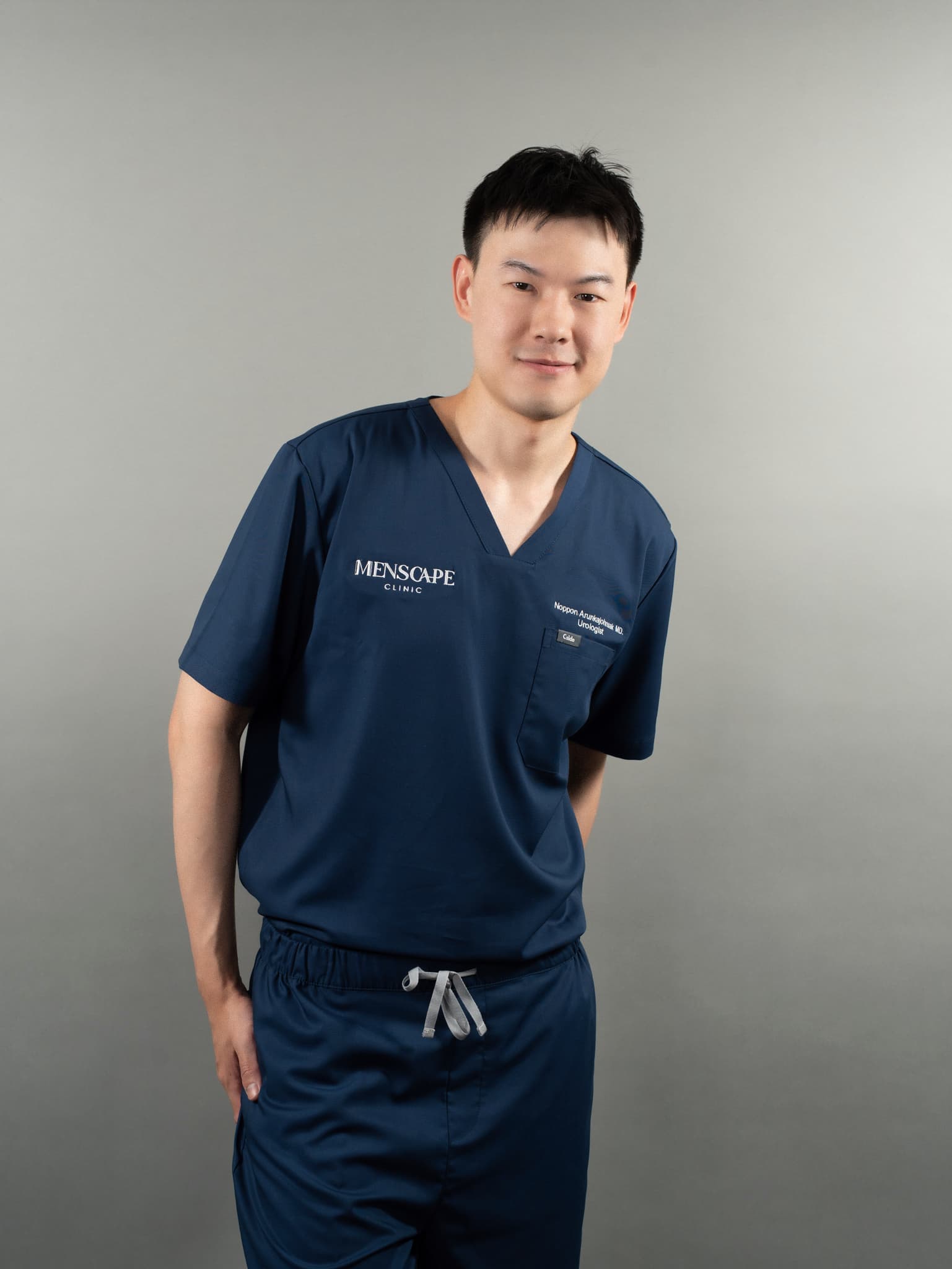
At Menscape, penile-implant surgery is performed by a board-certified urologist in an accredited hospital setting, with genuine Coloplast devices and structured follow-up. Our men's-health team handles the assessment, surgery and recovery discreetly from start to finish.
Before you book, a quick checklist
You have tried or discussed non-surgical ED options.
You understand the implant permanently replaces natural erections.
Your diabetes (if any) is controlled and you have no active infection.
You have a named, board-certified urologist and an accredited hospital.
You have a written quote with inclusions/exclusions and an after-care plan.
You have realistic expectations: function restored, not length added.
This procedure requires an in-person medical consultation, examination and clearance. Book a confidential assessment with Menscape's men's-health specialists to find out whether the Coloplast Titan is right for you.
Book your private ED consultation in Bangkok
Frequently Asked Questions
How much does a Coloplast Titan penile implant cost in Bangkok?
An all-in Titan three-piece inflatable package in Bangkok typically runs around 550,000–700,000 THB (roughly USD 15,000–19,000), covering the genuine Coloplast device, surgeon, anaesthesia, theatre, a 1–2 night stay and early follow-up; most genuine Titan packages cluster around 550,000–650,000 THB. That is about 50–70% less than the US (~USD 20,000–30,000+). Figures are indicative, confirm your exact quote at consultation, as device model, hospital tier and any complexity affect the price.
Will I still be able to get a natural erection after the implant?
No. An inflatable implant works by placing cylinders inside the erectile chambers, which permanently replaces the natural erection mechanism. You will get firm, on-demand erections from the device instead. This is effectively one-way, which is why the decision is made carefully at consultation.
Does a penile implant affect sensation, orgasm or ejaculation?
Normally no. The implant does not touch the nerves responsible for penile sensation or climax, so sensation, the ability to orgasm and ejaculation are typically preserved. Some men notice the glans (head) stays softer than the shaft, since the device does not inflate it.
How long does a Titan implant last?
Modern three-piece inflatable implants are durable, with breakage-free (mechanical) survival commonly reported around 75–80% at 10 years in published series, and a commonly cited lifespan of 10–15 years. Overall revision-free survival is somewhat lower once all causes are counted. If the device eventually fails mechanically, it can be replaced with revision surgery.
When can I have sex again after the surgery?
Most men resume sexual activity at about 6 weeks, and many surgeons advise 6–8 weeks to allow full healing. Around weeks 4–6 you begin 'cycling' the device, inflating and deflating it daily, to stretch the tissue and learn to operate it confidently. Always wait for your surgeon's clearance.
Who should NOT get a penile implant?
Implant surgery should be postponed or avoided with any active systemic, skin or urinary-tract infection, in poorly controlled diabetes, or with significant immunosuppression, all of which raise infection risk. It is also not suitable for men with unrealistic expectations (for example expecting added length) or who cannot operate the device. These factors are assessed at the consultation.
How risky is the surgery, and what is the infection rate?
For first-time, low-risk patients, infection rates with modern antibiotic protocols and coated devices are low (commonly low single-digit percent). The risk is higher for diabetics, revision cases and immunocompromised men. The most serious complication is device infection, which usually requires removal; mechanical failure is a cumulative lifetime risk (roughly 20–25% of devices needing revision for mechanical reasons by about 10 years) corrected by replacement. Choosing a high-volume surgeon and controlling diabetes beforehand reduces risk.
Is the Titan better than the AMS 700?
Both are mainstream, well-supported inflatable implants. The Titan uses Coloplast's Bioflex fabric and a hydrophilic antibiotic-binding coating and is often described as firmer in girth; the AMS 700 uses layered silicone with a factory InhibiZone coating and is often described as softer when flaccid. The best choice depends on your anatomy and your surgeon's recommendation, not on brand marketing.
Will my partner be able to tell I have an implant?
When deflated, the device is fully concealed inside the body and is not visible. Erections are firm and natural-feeling, and reported partner satisfaction is commonly above 80%. The pump sits discreetly in the scrotum.
How long should I plan to stay in Bangkok for the procedure?
Beyond the 1–2 night hospital stay, most patients plan additional time for the pre-op consultation and tests, wound checks and an early follow-up before flying. Discuss an exact itinerary with the clinic, as long-haul flights soon after surgery should be cleared by your surgeon.
/)
/)
/)
/)
/)