/)
If you had a vasectomy and your circumstances have changed, you are not stuck. Microsurgical vasectomy reversal can reconnect the tubes that were cut, allowing sperm to return to the ejaculate so you have a realistic chance of conceiving naturally again. It is precise, delicate surgery performed under an operating microscope, and when it is done well the results can be very good. It is not guaranteed, though, and the honest picture depends on a few factors that are worth understanding before you book anything.
This guide walks through how the procedure actually works, who is a good candidate (and who is not), what it costs in Bangkok compared with the US and UK, the recovery you should plan for, the real success numbers from the published literature, and the risks you should know about. The aim is to give you the kind of straight, clinically grounded picture you would get in a good consultation, so you can decide whether reversal or an alternative is the better path for you.
A quick note before we go further: vasectomy reversal is a surgical procedure that requires an in-person medical consultation and assessment. Nothing here replaces that. Pricing and success estimates are indicative and should be confirmed at your consult.
What microsurgical vasectomy reversal is
A vasectomy works by cutting and sealing the vas deferens, the two muscular tubes that carry sperm from each testicle toward the urethra. A reversal undoes that. The surgeon locates the cut ends on each side, checks whether sperm are still flowing through, and stitches the tubes back together so the pathway is open again.
The word "microsurgical" is the part that matters. The vas deferens has an inner channel (the lumen) that is roughly the width of a pin, and the wall around it has distinct layers. To line those layers up accurately, the surgeon works under a high-powered operating microscope and uses sutures finer than a human hair (typically 9-0 or 10-0 nylon). Reconnecting the vas without magnification is possible but tends to produce lower patency, which is why current guidance treats microsurgery as the standard of care. The 2026 American Urological Association vasectomy guideline goes further and states that surgeons offering reversal should have the microsurgical skill to perform the more complex bypass procedure as well, not just the straightforward repair.
There are two operations that fall under "reversal," and which one you need is often decided during surgery rather than beforehand.
Vasovasostomy (vas-to-vas)
This is the simpler and more common repair. The two cut ends of the vas deferens are reconnected directly to each other. It is the right operation when fluid sampled from the testicular end of the vas still contains sperm, which tells the surgeon the upstream plumbing (the epididymis) is open.
Vasoepididymostomy (vas-to-epididymis)
Over time, the back-pressure from a vasectomy can cause a secondary blockage in the epididymis, the coiled tube where sperm mature. When that happens, joining vas to vas would simply reconnect to a blocked segment. Instead the surgeon bypasses the blockage by joining the vas directly to the epididymis above it. This is technically harder, takes longer, and has somewhat lower success rates. It becomes more likely the more years that have passed since your vasectomy.
The decision between the two hinges on what the surgeon finds when they examine the vas fluid under the microscope during the operation. The AUA guideline calls the presence of sperm at the planned reconnection site the best single intraoperative predictor of whether the repair will work. This is precisely why you want a surgeon who can do both procedures: if they can only do vas-to-vas and discover mid-operation that you need the bypass, you may be left with a repair that was never going to succeed.
Vasectomy reversal cost in Bangkok (THB and USD)
Pricing for reversal varies with the hospital tier, the surgeon's experience, the anesthesia used, and whether you end up needing the simpler repair or the more complex bypass. The table below gives indicative Bangkok ranges alongside typical private-pay pricing in the US and UK so you can see where the savings sit. These are planning figures, not quotes. Confirm the exact number at consultation, because the final price depends on findings that cannot be known until you are assessed.
Procedure | Bangkok (THB) | Bangkok (USD approx.) | Typical US / UK private | Indicative saving vs US/UK |
Microsurgical vasovasostomy (standard repair) | 150,000 - 300,000 | 4,600 - 9,200 | US 8,000 - 15,000; UK GBP 3,500 - 5,500 | Often 40-65% |
Microsurgical vasoepididymostomy (complex bypass) | 200,000 - 350,000 | 6,100 - 10,700 | US 10,000 - 16,000+ | Often 35-55% |
Combined / crossover repair (one side each) | 220,000 - 360,000 | 6,700 - 11,000 | US 12,000 - 18,000 | Varies |
Sperm banking / cryopreservation (optional add-on) | 15,000 - 35,000 | 450 - 1,100 | Comparable or higher | Modest |
USD conversions use an approximate rate near 33 THB to 1 USD and will move with the exchange rate. US figures reflect typical private self-pay ranges; vasectomy reversal is generally not covered by insurance in the US or by the NHS in the UK, so most patients pay out of pocket in all three countries. For a fuller local breakdown, see our dedicated guide to vasectomy reversal costs in Bangkok.
What is usually included
A typical Bangkok reversal package generally covers the surgeon's fee, the operating microscope and theatre, anesthesia, standard pre-operative blood work, and at least one follow-up semen analysis to check the result. Always ask for this in writing.
What is often quoted separately
Watch for items that may sit outside the headline price: additional semen analyses beyond the first, sperm banking at the time of surgery, an overnight stay if you prefer one, treatment of unexpected findings, and any imaging or specialist consults. A transparent clinic will spell out inclusions and exclusions before you commit.
What drives the cost up or down
Three things move the number most. First, which operation you need: the bypass is more expensive than the straight repair. Second, the surgeon and hospital tier, since high-volume microsurgeons and JCI-accredited hospitals price above smaller centers. Third, complexity from a long interval since vasectomy or scarring from a prior failed reversal, both of which lengthen operating time. Anesthesia choice (sedation versus spinal versus general) and whether you bank sperm on the day round out the picture.
Who is a good candidate, and who is not
Reversal suits a man who had a vasectomy, now wants the chance to conceive, and is in good enough general health for a day-surgery procedure under anesthesia. Beyond that baseline, a few factors shape how good a candidate you are and whether reversal is even the right tool.
The strongest candidates tend to share some features. A shorter interval since vasectomy helps, because secondary epididymal blockage is less likely and sperm are more often still flowing in the vas. A female partner who is younger and without significant fertility issues of her own matters enormously, since her age is one of the biggest drivers of whether a successful reversal actually leads to pregnancy. A surgeon who reviews your history, examines you, and can perform both reversal operations is part of being a good candidate too, because it means the plan can adapt to what is found.
Reversal is often not the best first choice in several situations. If your partner already needs IVF for her own reasons, retrieving sperm directly and going straight to IVF may be more efficient than reversing and then still needing assisted reproduction. If decades have passed since your vasectomy and the odds of a straightforward repair are low, that changes the calculus, though reversal can still work. If you have had a previous failed reversal, scarring makes a second attempt harder and you will want a surgeon experienced in redo cases. And if natural conception is not actually the goal, sperm retrieval paired with IVF or microTESE sperm retrieval may fit better.
Contraindications and reasons to pause
Some situations make reversal inadvisable or require sorting out first. Active genital or urinary infection should be treated before any surgery. Bleeding disorders or blood-thinning medication need to be managed in advance. Conditions that make anesthesia unsafe must be addressed. A known testicular or epididymal problem that would block sperm production or transport regardless of the reversal should be evaluated, because reopening the vas will not help if sperm are not being made or cannot get through. And if your partner has a fertility barrier that reversal cannot solve, the couple's plan as a whole needs rethinking. A proper consultation exists partly to catch these things.
Step by step: what happens during surgery
Reversal is usually a same-day, outpatient procedure. From arrival to discharge you are typically at the hospital for most of the day, with the operation itself often running two to four hours depending on whether one or both sides need the more complex bypass.
Anesthesia. Most reversals are done under spinal anesthesia or total intravenous sedation, sometimes general anesthesia. You will be comfortable and still throughout. Your team will discuss which is most appropriate for you.
Access. The surgeon makes one or two small incisions in the scrotum to reach the vas deferens on each side and identifies the cut ends from your original vasectomy.
Fluid check. Fluid is taken from the testicular end of the vas and examined under the microscope. This is the decisive moment. If sperm are present, a vas-to-vas repair will work. If the fluid is thick, pasty and sperm-free, it points to a downstream blockage and the surgeon prepares for the bypass instead.
The reconnection. Working under the microscope, the surgeon stitches the tube back together with ultra-fine sutures, lining up the inner channel precisely. For the bypass, the vas is connected to the epididymis above the blockage. Each side is done in turn.
Closure. The incisions are closed with absorbable stitches, a supportive dressing is applied, and you are moved to recovery.
Discharge. Most men go home the same day. You cannot drive yourself, so arrange a ride and ideally someone to stay with you the first night.
Recovery, stage by stage
Recovery from reversal is generally straightforward, but the tissue you had repaired is delicate and needs time to heal without strain. Rushing back to activity is the most common way men put their result at risk. Use the timeline below as a guide and follow your surgeon's specific instructions, which take priority.
Stage | What to expect | What to do |
Day 0 (surgery day) | Soreness, swelling, bruising; same-day discharge | Rest, ice intermittently, wear supportive underwear, arrange a ride home |
Days 1-3 | Peak discomfort and swelling; manageable with simple pain relief | Stay off your feet, keep the area supported, avoid getting the wound wet per instructions |
Week 1 | Discomfort easing; you may feel restless | Light activity only; no heavy lifting, no strenuous exercise, often time off work |
Weeks 2-3 | Most soreness resolving | Gradual return to desk work and gentle movement; still avoid heavy exertion |
Weeks 3-4 | Feeling close to normal | Sexual activity and exercise usually resume around this point if your surgeon agrees; ejaculation timing is set individually |
Months 3+ | Healing complete internally | First follow-up semen analysis, often at around 3 months, then repeated to track sperm return |
Wearing snug, supportive underwear for the first couple of weeks genuinely helps by limiting movement of the healing tissue. Most men take roughly a week off work for a desk job, longer if the work is physical. Sperm do not reappear immediately; it commonly takes a few months, and your team confirms success with semen analyses over time rather than a single test.
What the results actually look like
This is where honesty matters most, because two different numbers get blurred together: patency and pregnancy. Patency means sperm are flowing again in the ejaculate, which is the surgical success. Pregnancy means a baby, which depends on far more than the surgery, especially the female partner. A reversal can be a technical success and still not lead to pregnancy.
The single biggest driver of both, on the surgical side, is the time since your vasectomy. The landmark study from the Vasovasostomy Study Group, which reviewed 1,469 microsurgical reversals, mapped this out clearly.
Years since vasectomy | Patency (sperm return) | Pregnancy |
Less than 3 years | 97% | 76% |
3 to 8 years | 88% | 53% |
9 to 14 years | 79% | 44% |
15 or more years | 71% | 30% |
Those pregnancy figures are from an era and population that may not match yours, and they are averages, so treat them as a guide to the trend rather than a personal forecast. Across the whole study, sperm returned in about 86% of first-time procedures and pregnancy occurred in roughly 52% of couples.
More recent evidence is broadly consistent on patency. A meta-analysis of 31 studies covering 6,633 patients found pooled patency of about 89% and pregnancy of about 73% after microsurgical vasovasostomy, with men whose obstructive interval was under 10 years doing noticeably better than those past 10 years. That meta-analysis pregnancy figure pools more recent and often selected series, so it sits higher than the older Belker cohort above; the two are measuring somewhat different populations and are not directly comparable, which is a good reminder that pregnancy numbers in particular vary widely by study. A 2024 single-surgeon series using a simplified single-layer technique reported patency of about 86%. For the more complex bypass, success is lower: published vasovasostomy series report patency approaching or above 90%, while vasoepididymostomy typically runs roughly 60-70%.
A few predictors beyond the time interval are worth knowing. The presence of a sperm granuloma (a small lump where sperm leaked at the vasectomy site) is associated with better patency. And the female partner's age weighs heavily on pregnancy: reported pregnancy rates after reversal fall off substantially once the partner is past 40. This is why the best consultations assess the couple, not just the man.
How reversal compares with sperm retrieval and IVF
Reversal is not the only route to fatherhood after a vasectomy. The main alternative is surgical sperm retrieval combined with IVF, usually with ICSI, where sperm taken directly from the testicle or epididymis are used to fertilize eggs in the lab. Neither option is universally better; the right one depends on your partner's fertility, your timeline, your budget, and how many children you hope for.
Factor | Microsurgical reversal | Sperm retrieval + IVF/ICSI |
Who it treats | The man only | Primarily the female partner (egg retrieval, hormones) plus sperm retrieval |
Conception | Natural, in your own time once patent | Lab-based, one cycle at a time |
Best when | Shorter interval, partner without major fertility issues, wanting more than one child | Partner already needs IVF, very long interval, reversal failed, want a single defined attempt |
Cost pattern | One-off surgical cost | Per-cycle cost; repeat cycles add up |
Chance of more than one child | Possible from a single successful reversal | Needs further cycles or frozen embryos |
Partner's involvement | Minimal | Significant medical input |
A practical way many couples think about it: if the reversal odds look good and you might want more than one child, a single successful reversal can give you years of natural fertility, which is hard for IVF to match on cost per child. If your partner already faces a fertility hurdle that needs IVF anyway, retrieving sperm and going straight to IVF can be the more direct route. Many men explore sperm retrieval options in parallel so they understand both paths before deciding.
Have a question about your treatment?
Message our Bangkok clinic on WhatsApp and a doctor replies within minutes during clinic hours.
Risks and side effects
Reversal is generally safe, and serious complications are uncommon, but it is still surgery and you should go in with clear expectations. Most men have nothing worse than temporary soreness and swelling.
Common and usually self-limiting:
Pain, swelling and bruising of the scrotum in the first days to weeks
Minor oozing or a small amount of blood from the incision early on
Temporary firmness or a small lump at the surgical site as it heals
Less common:
Hematoma, a collection of blood in the scrotum, which occasionally needs drainage
Wound infection, usually treatable with antibiotics
Chronic scrotal pain, uncommon but a recognized possibility
Late failure, where sperm return at first but the reconnection scars over and closes months later, sometimes requiring a repeat procedure
Failure to achieve patency, where sperm do not return despite a technically sound operation, more likely with long intervals or when a bypass was needed
Pregnancy not achieved even with a patent result, because conception also depends on the female partner
When to seek urgent care
Contact your surgeon or seek prompt medical attention if you develop any of the following after surgery:
Rapidly increasing or severe scrotal swelling, or a tense, hard scrotum
Spreading redness, significant warmth, or pus from the wound
Fever or chills
Heavy or persistent bleeding from the incision
Severe pain not controlled by your prescribed medication
These can signal a hematoma or infection that needs attention. Acting early almost always makes them easier to treat.
How to choose a safe clinic, and the red flags
Because outcomes track so closely with the surgeon's microsurgical skill, who operates on you matters more than where. A high-volume microsurgeon working in a modest facility will usually beat an occasional operator in a prestigious one. Use these as your filter.
What good looks like:
A surgeon with genuine microsurgical training and experience, who performs reversals regularly rather than occasionally
The ability to perform both vasovasostomy and vasoepididymostomy, and to decide between them during surgery based on the vas fluid
An operating microscope used as standard, not loupes alone
A clear, written quote with inclusions and exclusions, and follow-up semen analyses built in
Honest, individualized counseling about your likely odds given your interval and your partner's situation, including when an alternative might suit you better
A clean facility with proper anesthesia support and a clear plan for complications
Red flags worth walking away from:
A guarantee of pregnancy, or quoted success rates that seem too good and ignore your specific factors
A surgeon who only offers vas-to-vas and has no plan if a bypass turns out to be needed
No operating microscope, or vague answers about technique and case volume
Pricing that keeps changing, or large add-ons revealed only after you commit
Pressure to book immediately with no proper assessment of you and your partner
Bangkok is a well-established destination for this kind of microsurgery, with experienced English-speaking urologists and internationally accredited hospitals, which is part of why the pricing can be substantially lower than private care in the US or UK without cutting corners on quality. The savings come from the local cost base, not from doing less.
Booking a consultation in Bangkok
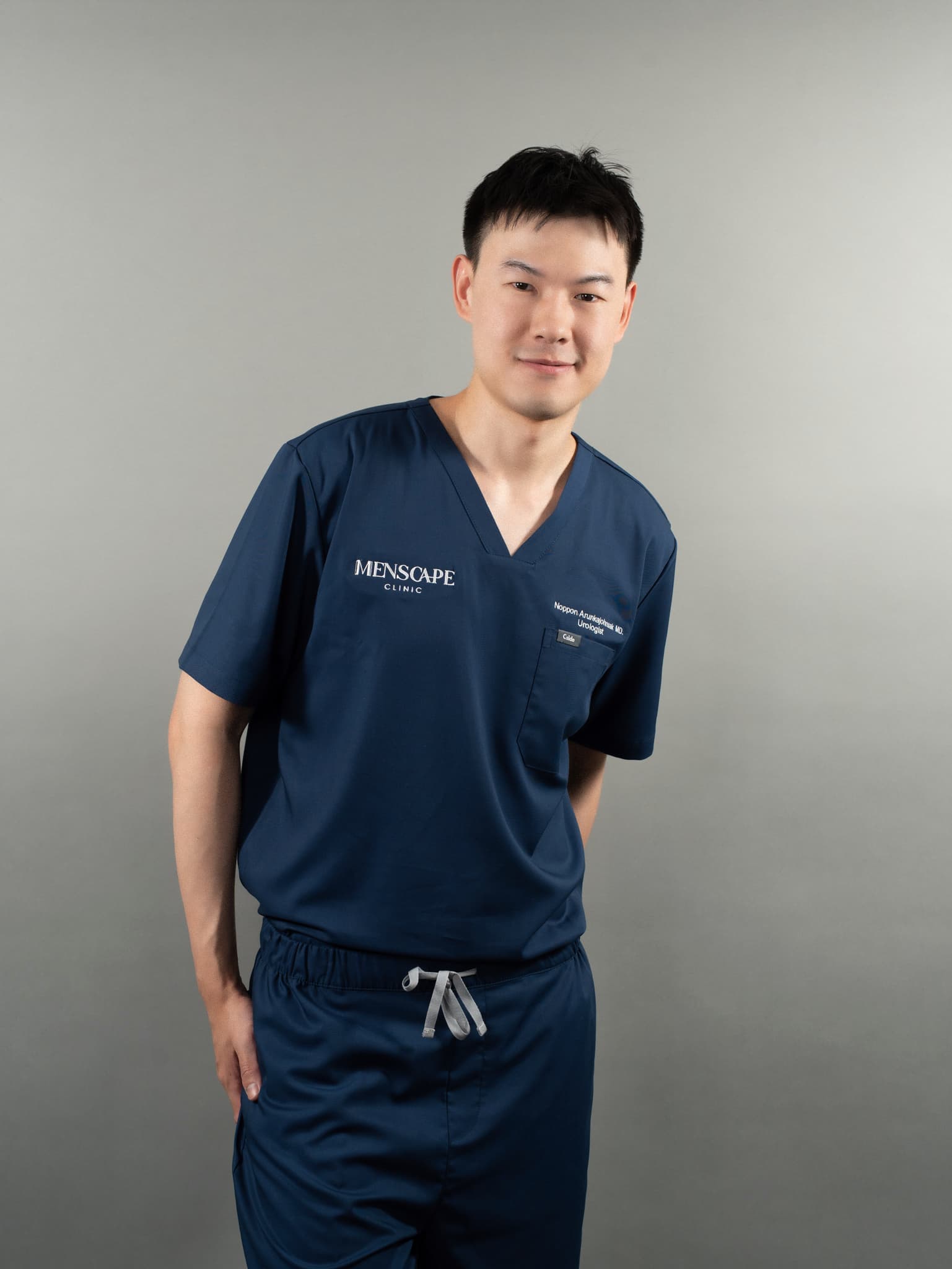
If you had a vasectomy and want to understand whether reversal is realistic for you, the next step is a proper consultation: a review of your history, an examination, a frank discussion of your likely odds given your interval and your partner's situation, and a clear quote. At Menscape, our urology team focuses on male fertility and microsurgery, performs both reversal procedures, and will tell you honestly when reversal is the right path and when sperm retrieval with IVF might serve you better.
Book a vasectomy reversal consultation to talk through your options, get an individualized assessment, and receive transparent pricing before you decide anything. Reversal requires an in-person medical consultation and assessment; the figures in this guide are indicative and confirmed at consult.
Frequently Asked Questions
How successful is microsurgical vasectomy reversal?
In experienced hands, the simpler vas-to-vas repair (vasovasostomy) restores sperm to the ejaculate in roughly 85-95% of men, and a large meta-analysis put pooled patency near 89%. The more complex bypass (vasoepididymostomy) is lower, around 60-70%. Pregnancy is a separate question and depends heavily on the female partner's age and the years since your vasectomy, so a technically successful reversal does not guarantee a baby.
How much does a vasectomy reversal cost in Bangkok?
A standard microsurgical vasovasostomy in Bangkok typically runs about THB 150,000-300,000 (roughly USD 4,600-9,200), and the more complex vasoepididymostomy bypass runs higher. That is generally well below comparable private pricing in the US (around USD 8,000-15,000) and the UK. These are indicative planning figures; the final price depends on which operation you need and is confirmed at consultation.
Does the time since my vasectomy affect the result?
Yes, significantly. The landmark Vasovasostomy Study Group data showed patency of 97% when the reversal was done under 3 years after vasectomy, falling to about 71% at 15 or more years, with pregnancy rates declining similarly. Longer intervals also raise the chance you will need the more complex bypass procedure. Reversal can still work after many years, but the odds shift, which is why an individual assessment matters.
Will I need vasovasostomy or vasoepididymostomy?
That is usually decided during surgery, not before. The surgeon examines fluid from the testicular end of the vas under the microscope. If sperm are present, a vas-to-vas repair (vasovasostomy) is done. If the fluid is sperm-free and pasty, it signals a downstream blockage and a vas-to-epididymis bypass (vasoepididymostomy) is needed instead. This is why you should choose a surgeon who can perform both.
How long is recovery after a vasectomy reversal?
Most men go home the same day and take roughly a week off a desk job, longer for physical work. Discomfort and swelling peak in the first few days and ease over one to two weeks. Strenuous exercise and sexual activity usually resume around three to four weeks if your surgeon agrees. Sperm typically reappear over a few months, confirmed by follow-up semen analyses rather than a single test.
Is vasectomy reversal better than IVF with sperm retrieval?
Neither is universally better. Reversal treats the man and offers natural conception over time, which can be cost-effective if the odds are good and you may want more than one child. Sperm retrieval with IVF can be the more direct route when your partner already needs IVF for her own reasons, when the interval since vasectomy is very long, or after a failed reversal. The right choice depends on your partner's fertility, timeline, and budget, and is best decided together at consultation.
What are the risks of a vasectomy reversal?
Most men have only temporary soreness, swelling, and bruising. Less common issues include hematoma (a blood collection that may need draining), wound infection, uncommon chronic scrotal pain, and late failure where sperm return then stop because the reconnection scars closed. Seek urgent care for rapidly worsening swelling, spreading redness or pus, fever, heavy bleeding, or severe uncontrolled pain, as these can signal a hematoma or infection.
Is vasectomy reversal covered by insurance?
In most cases, no. Vasectomy reversal is generally treated as elective and is not covered by most insurance in the US, nor by the NHS in the UK, so patients typically pay out of pocket. This is part of why Bangkok's lower pricing is attractive to many international patients. Confirm coverage with your own insurer, and ask any clinic for a written quote with inclusions and exclusions.
Do I need a consultation before booking surgery?
Yes. Vasectomy reversal requires an in-person medical consultation that includes a history, a physical examination, and a discussion of your likely odds based on your interval since vasectomy and your partner's fertility. The choice between procedures, your candidacy, and the final price all depend on that assessment. Any reputable clinic will insist on it rather than booking surgery sight unseen.
)
/)
/)
/)
/)
/)