/)
Being told there is no sperm in your semen sample is a heavy moment. It does not, on its own, mean you cannot father a biological child. Azoospermia, the complete absence of sperm in the ejaculate, affects about 1% of all men and roughly 10-15% of men evaluated for infertility, and in a large share of those cases sperm can still be found and removed directly from the testicle. That sperm is then used with IVF and ICSI (intracytoplasmic sperm injection), where a single sperm is injected into an egg in the laboratory.
This article focuses on the surgical side of that path, and in particular on MicroTESE (microdissection testicular sperm extraction), the technique that major urology guidelines recommend first when the testes themselves are the problem. We will walk through how the different retrieval methods work, who each one suits, transparent Bangkok pricing in THB and USD with a comparison against US and UK costs, what actually drives the bill, who is and is not a candidate, the step-by-step procedure and staged recovery, the numbers you can realistically expect, the risks, and how to tell a safe clinic from a risky one. For a deeper cost-only breakdown, see our companion piece on MicroTESE and sperm retrieval costs in Bangkok.
One thing to set straight at the outset: sperm retrieval is never a walk-in procedure. It requires a consultation, blood hormone tests, genetic screening in many cases, and a prescription from a urologist or andrologist. The right technique depends entirely on why the sperm are missing, and that has to be worked out before anyone books an operating theatre.
What surgical sperm retrieval actually is
Surgical sperm retrieval is a group of techniques used to collect sperm directly from the testis or the epididymis when none can be obtained by ejaculation. Depending on the method, it is done under local anesthesia with sedation, total intravenous anesthesia (TIVA), or general anesthesia, almost always as a day case. You go home the same day.
The reason there is more than one technique is that azoospermia has two very different mechanisms, and they call for different approaches.
In obstructive azoospermia, the testicles make sperm normally but a blockage stops it from reaching the ejaculate. Common causes include a previous vasectomy, scarring after infection, or congenital absence of the vas deferens (the tube that carries sperm), which is linked to cystic fibrosis gene changes. Because production is intact, retrieval here is usually straightforward and highly successful.
In non-obstructive azoospermia (NOA), the problem is production itself. The testicular tissue makes little or no sperm, often in scattered pockets rather than evenly. Causes include genetic conditions such as Klinefelter syndrome or Y-chromosome microdeletions, prior chemotherapy or radiation, undescended testicles in childhood, certain hormone problems, and a large group of cases where no cause is ever found. NOA is the harder scenario, and it is the reason MicroTESE exists.
The retrieval techniques, from least to most involved
PESA (percutaneous epididymal sperm aspiration)
A fine needle is passed through the scrotal skin into the epididymis, the coiled tube behind the testicle where mature sperm are stored, and fluid is drawn off and checked for sperm. No incision, quick recovery. PESA is used for obstructive azoospermia only, where stored sperm is plentiful.
TESA (testicular sperm aspiration)
A needle goes directly into the testicle to aspirate small amounts of tissue and fluid. Slightly more involved than PESA but still needle-only. TESA works reasonably well for obstructive cases but has low yield in NOA, because it samples tissue more or less at random and the sperm-bearing pockets are easy to miss.
MESA (microsurgical epididymal sperm aspiration)
The microsurgical counterpart to PESA. Through a small scrotal incision and under an operating microscope, the surgeon selects individual epididymal tubules and aspirates them precisely. It is the reference method for obstructive azoospermia when large numbers of high-quality sperm are wanted, for example to freeze several straws for future IVF cycles.
TESE (conventional testicular sperm extraction)
An open biopsy: the surgeon opens the testis and removes one or more small pieces of tissue, which the lab then searches. It retrieves sperm in many NOA cases but works somewhat blindly, so it can mean removing more tissue while still missing the productive areas.
MicroTESE (microdissection testicular sperm extraction)
The microsurgical refinement of TESE and the focus of this guide. The testis is opened more widely, and under 15-25x magnification the surgeon inspects the seminiferous tubules directly. Tubules that are wider and more opaque are statistically more likely to contain sperm; thin, wispy tubules usually do not. The surgeon harvests only the promising tubules. The payoff is twofold: a better chance of finding sperm, and far less tissue removed, which protects testosterone production and blood supply. This is why guidelines from the American Urological Association and the American Society for Reproductive Medicine direct clinicians to perform MicroTESE for men with non-obstructive azoospermia rather than conventional TESE or aspiration.
Bangkok pricing: THB, USD, and how it compares
The figures below are indicative ranges for the surgical retrieval only. They do not include the IVF/ICSI laboratory cycle, embryo culture, or egg-side costs, which a fertility centre quotes separately. Confirm everything at your own consultation, because the final number depends on the technique, anesthesia, and whether one or both testicles are explored.
Technique | Bangkok (THB) | Bangkok (USD approx.) | Typical US / UK self-pay | Indicative saving vs US/UK |
PESA | 35,000-70,000 | 1,000-2,000 | 3,000-6,000 USD | up to ~65% |
TESA | 50,000-90,000 | 1,400-2,600 | 3,500-7,000 USD | up to ~60% |
TESE (conventional) | 85,000-153,000 | 2,500-4,500 | 6,000-12,000 USD | ~50-65% |
MESA | 150,000-200,000 | 4,300-5,800 | 9,000-15,000 USD | ~50-60% |
MicroTESE | 180,000-350,000 | 5,200-10,000 | 6,000-15,000 USD (up to ~18,000 bundled) | often lower; ranges overlap |
Sperm freezing + 1-year storage | 20,000-30,000 | 600-900 | 1,000-2,500 USD | varies |
Bangkok's appeal is the combination of microsurgical capability, JCI-accredited hospitals, and prices that are often below Western self-pay rates. Independent medical-travel listings put surgical sperm retrieval in Thailand at roughly 600-1,500 USD for simpler techniques, rising into the five-figure range for full MicroTESE, against roughly 3,000-12,000 USD in the United States for comparable work. Treat the savings column as directional, not a promise. Quoted Western prices vary enormously by city, surgeon, and whether anesthesia and the laboratory search are bundled in, and at the lower end the US/UK and Bangkok ranges for MicroTESE genuinely overlap. The clearer advantages in Bangkok are often capacity, scheduling, and the ability to combine the trip with the rest of a treatment plan, rather than a dramatic headline discount on the surgery alone.
What drives the cost
Technique and microscope time. MicroTESE and MESA need an operating microscope and a longer, more skilled procedure, so they sit at the top of the range. Needle methods are cheaper.
Unilateral vs bilateral. Exploring both testicles takes longer and may cost more than one side.
Anesthesia type. General anesthesia or TIVA with an anesthetist costs more than local anesthesia with light sedation.
Embryologist standby. For NOA, an embryologist examines the tissue in real time so the surgeon knows whether to keep searching. That theatre-side lab support is part of a proper MicroTESE and is reflected in the price.
Freezing and storage. Cryopreserving retrieved sperm and storing it for a year is usually billed on top.
Synchronisation with IVF. Some couples retrieve sperm fresh on the same day the partner's eggs are collected, which adds coordination but avoids a freeze-thaw step.
Who is a candidate, and who is not
Surgical sperm retrieval is considered for men with confirmed azoospermia, ideally documented on at least two separate semen analyses with centrifugation of the sample, since occasional men have a handful of sperm that only appear after the lab spins the specimen down.
Before any NOA retrieval, a proper workup is expected. The AUA/ASRM guideline recommends karyotype testing and Y-chromosome microdeletion analysis for men with azoospermia accompanied by raised FSH, small testes, or a production problem. This matters for real, practical reasons. Men with complete deletions of the AZFa or AZFb regions of the Y chromosome almost never have retrievable sperm, so surgery is generally not advised for them; men with AZFc deletions, by contrast, often do have sperm and are reasonable candidates. Hormone testing (FSH, LH, testosterone, sometimes prolactin) helps clarify the picture, and in some men optimising hormones for a few months before surgery is worthwhile.
Good candidates typically include:
Men with obstructive azoospermia from vasectomy, infection, or congenital blockage (PESA, TESA, or MESA).
Men with non-obstructive azoospermia after genetic and hormonal evaluation, including many with Klinefelter syndrome or AZFc microdeletion, where MicroTESE offers a real chance.
Men banking sperm before chemotherapy or radiation, or before gender-affirming or other surgery that will end sperm production.
Who it is usually not for, or who needs caution:
Men with complete AZFa or AZFb microdeletions, where retrieval almost always fails and surgery is generally not recommended.
Men who have not completed the diagnostic workup; operating before genetics and hormones are known risks an avoidable, unsuccessful procedure.
Anyone whose partner's reproductive plan (egg retrieval, IVF cycle) is not yet in place, since retrieved sperm needs somewhere to go.
Contraindications to the surgery itself are mostly the standard ones for a minor scrotal operation: an active scrotal or skin infection at the site, an uncorrected bleeding disorder or current anticoagulation that cannot be safely paused, and any medical condition that makes anesthesia unsafe until it is stabilised. These are reasons to delay and treat first, not usually permanent barriers. Your surgeon and anesthetist will weigh them at the pre-operative assessment.
Step by step: what MicroTESE involves
Consultation and workup. History, examination, two semen analyses, hormone panel, and genetic testing where indicated. The urologist confirms whether the picture is obstructive or non-obstructive and recommends a technique. This is also where you discuss freezing and coordinate with the IVF side.
Day of surgery. You arrive fasted. Anesthesia is usually general or TIVA for MicroTESE; the procedure commonly takes one to two hours, sometimes longer if both sides are explored.
Accessing the testis. A small midline scrotal incision is made and the testis is delivered. The surgeon opens the tunica to expose the seminiferous tubules.
Microdissection. Under the operating microscope, the surgeon systematically examines the tubules and selectively removes the fuller, more opaque ones most likely to contain sperm, sparing the rest.
Real-time lab check. An embryologist examines the harvested tissue while you are still in theatre. If sperm are found, the search can stop; if not, the surgeon continues or explores the other testicle.
Closure. The testis is returned and the layers are closed, usually with dissolvable sutures. A dressing and scrotal support are applied.
Handling the sperm. Retrieved sperm is either frozen for a later ICSI cycle or used fresh that day if the partner's eggs are collected simultaneously.
Staged recovery
Day 0: Home the same day once you are awake and comfortable. Expect grogginess from anesthesia; arrange a ride and an early night. Use the scrotal support and apply ice intermittently.
Days 1-3: Mild to moderate ache, swelling, and bruising of the scrotum are normal and usually peak now. Simple analgesia (paracetamol, and an anti-inflammatory if your surgeon agrees) generally covers it. Keep the area clean and dry; rest more than you think you need to.
Week 1-2: Discomfort settles steadily. Avoid heavy lifting, cycling, gym work, and sexual activity. Many desk-based workers return to work within a few days to a week; physically demanding jobs need longer.
Week 2-4: Most men are back to normal daily activity and, around this point, to sexual activity, once any tenderness has resolved. Follow-up confirms healing, and for NOA cases the team discusses the lab result and next steps for IVF.
Recovery after the needle techniques (PESA, TESA) is quicker, often just a day or two of mild soreness, because there is no incision.
What results to realistically expect
The single most useful number is the sperm retrieval rate, the chance of finding any usable sperm, and it depends heavily on the diagnosis.
For obstructive azoospermia, retrieval approaches 100% with PESA, TESA, or MESA, because production is normal and it is simply a matter of reaching the sperm.
For non-obstructive azoospermia, the realistic range with MicroTESE is roughly 40-60%. Pooled meta-analysis data (originally from Bernie and colleagues in 2015 and carried forward in later reviews, including Esteves 2022) found sperm retrieval of about 52% with MicroTESE versus 35% with conventional TESE across direct-comparison studies, making MicroTESE around 1.5 times more likely to succeed. An earlier systematic review by Deruyver and colleagues reported retrieval of 42.9-63% with MicroTESE against 16.7-45% with conventional TESE. Bangkok hospitals quoting "up to 60%" for MicroTESE are broadly in line with this literature.
Outcome also tracks with what the testicular tissue looks like under the microscope. Retrieval is highest when biopsy shows hypospermatogenesis (reduced but present production), intermediate with maturation arrest, and lowest with a Sertoli cell-only pattern. It is worth knowing that the picture is still evolving: some recent work questions whether MicroTESE is always superior to careful needle or combined approaches, and reports comparable results from less invasive methods in selected men. That nuance is exactly why an individual assessment beats any single headline figure.
Two caveats keep expectations honest. First, finding sperm is not the same as a baby; the retrieved sperm still has to fertilise an egg and produce a healthy embryo through ICSI, and live-birth rates depend on the female partner's age and egg quality as much as on the sperm. Second, if a first MicroTESE finds nothing, a repeat attempt months later occasionally succeeds, but the odds are lower the second time.
Have a question about your treatment?
Message our Bangkok clinic on WhatsApp and a doctor replies within minutes during clinic hours.
Risks and side effects
MicroTESE is generally safe, and because it removes so little tissue its complication rate is low. In the comparative literature, MicroTESE carried an overall complication rate around 2.6%, and in controlled comparisons fewer complications than conventional TESE (about 1.3% vs 3.0%), with most events minor. Still, it is surgery, and you should know what to watch for.
Common and expected (usually settle on their own):
Scrotal pain, aching, or tenderness for several days.
Swelling and bruising of the scrotum and base of the penis.
A small amount of oozing from the wound in the first day or two.
Less common:
Infection of the wound or scrotum.
Hematoma, a collection of blood that can cause marked swelling.
A temporary dip in testosterone after extensive bilateral dissection, usually recovering over months; this is one reason the tissue-sparing approach matters.
Testicular atrophy (shrinkage), uncommon with MicroTESE precisely because blood supply is preserved.
The procedure finding no sperm despite a thorough search, the hardest outcome to prepare for emotionally, which is why counselling beforehand is part of good care.
Seek urgent medical care if you have:
Spreading redness, increasing pain, or pus from the wound, or a fever above 38°C, which can signal infection.
Rapidly worsening scrotal swelling or a hard, expanding lump, which may indicate bleeding or hematoma.
Severe, unrelenting pain not controlled by your prescribed medication.
Feeling generally very unwell, shivery, or faint, which in rare cases can point to a serious infection.
How to choose a safe clinic, and the red flags
MicroTESE is operator-dependent. The same patient can get a very different result depending on the surgeon's microsurgical skill and the laboratory's ability to find and handle a few fragile sperm. So vet both.
Green flags to look for:
A urologist or andrologist with specific, sustained microsurgical experience and a genuine MicroTESE case volume, not a generalist doing it occasionally.
A real operating microscope and an embryologist examining tissue in theatre during the procedure, which is the whole point of MicroTESE.
Genetic and hormonal workup offered and discussed before surgery, not skipped.
A clear, itemised quote that states what the price covers and, crucially, that the IVF/ICSI cycle is separate.
Honest, individualised success figures that match the published ranges, alongside a frank discussion of the chance of finding nothing.
Accreditation (for example JCI), proper consent, and a named surgeon you actually meet beforehand.
Red flags that should give you pause:
Guaranteed success, or quoted retrieval rates well above the literature with no reference to your specific diagnosis.
Pressure to book MicroTESE before any genetic testing, especially if AZF microdeletion status is unknown.
"MicroTESE" offered without an operating microscope or without theatre-side embryology; that is conventional TESE by another name.
A single all-in price with no breakdown, or vagueness about whether the IVF cycle, anesthesia, and freezing are included.
No named surgeon, no credentials, and reluctance to discuss complications.
How MicroTESE compares with the alternatives
Technique | Best for | Invasiveness | Approx. retrieval rate | Notes |
MicroTESE | Non-obstructive azoospermia | Open, microscope, day case | ~40-60% in NOA | Guideline-preferred for NOA; spares most tissue |
Conventional TESE | NOA where microscope unavailable | Open biopsy, day case | ~17-45% in NOA | Works more blindly; removes more tissue |
TESA | Obstructive; limited NOA use | Needle only | Near 100% obstructive; low in NOA | Quick, but poor yield when production is impaired |
PESA | Obstructive azoospermia | Needle, no incision | Near 100% obstructive | Simple, fast recovery; not for NOA |
MESA | Obstructive, when banking many sperm | Open, microscope, day case | Near 100% obstructive | High yield; ideal for freezing multiple cycles |
The short version: if the blockage is the problem, the simpler methods win on speed and recovery and still succeed almost every time. If production is the problem, MicroTESE gives the best documented chance while protecting the testicle, which is why it is the default recommendation for NOA.
Booking a consultation in Bangkok
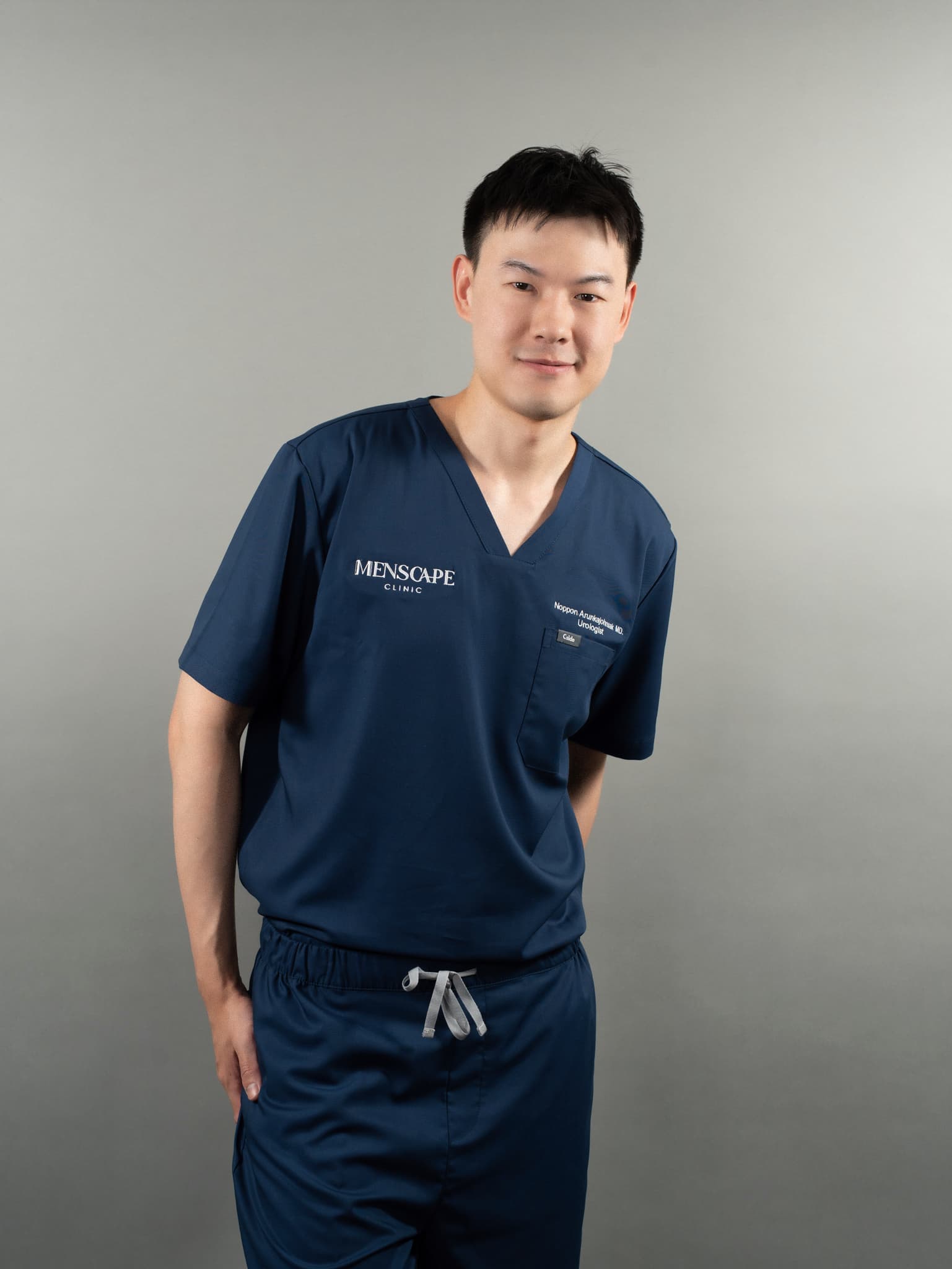
If you have been diagnosed with azoospermia and want to understand your real options, the next step is an assessment, not an operation. At Menscape, our urology and andrology team evaluates the underlying cause, arranges the hormonal and genetic testing that should precede any NOA retrieval, and talks through which technique fits your situation, the realistic chance of success, and a transparent, itemised quote. We coordinate with established Bangkok IVF centres so the path from retrieval to ICSI is joined up rather than fragmented.
To recap the essentials: MicroTESE is the guideline-preferred approach for non-obstructive azoospermia, with realistic retrieval of roughly 40-60%; obstructive azoospermia is handled with simpler, highly successful aspiration techniques; Bangkok pricing for MicroTESE sits around 180,000-350,000 THB (about 5,200-10,000 USD) for the retrieval alone, often below typical Western self-pay costs though the ranges overlap; and every route requires a medical consultation, appropriate testing, and a prescription before surgery. Book a sperm retrieval consultation to get a personalised plan.
*This article is for general education and is not medical advice. Surgical sperm retrieval requires an in-person consultation, diagnostic testing, and a prescription from a qualified clinician. Pricing is indicative and should be confirmed at consultation.*
Frequently Asked Questions
Is MicroTESE painful, and what anesthesia is used?
The procedure itself is not felt, because MicroTESE is done under general anesthesia or total intravenous anesthesia (TIVA). Afterwards, most men have mild to moderate scrotal aching, swelling, and bruising for several days, which simple painkillers usually control. The needle techniques (PESA, TESA) can sometimes be done under local anesthesia with sedation and cause less discomfort afterwards.
What are the real chances MicroTESE finds sperm?
For non-obstructive azoospermia, where the testes make little sperm, the realistic range is about 40-60%. Pooled studies report roughly 52% with MicroTESE versus 35% with conventional TESE. The odds depend heavily on the cause and on what the tissue looks like under the microscope: highest with hypospermatogenesis, lower with a Sertoli cell-only pattern. For obstructive azoospermia, retrieval approaches 100%. Your urologist can give a figure tailored to your hormone and genetic results.
How much does MicroTESE cost in Bangkok?
As an indicative range, MicroTESE in Bangkok is roughly 180,000-350,000 THB (about 5,200-10,000 USD) for the surgical retrieval only. Simpler techniques are cheaper: PESA around 35,000-70,000 THB and TESA around 50,000-90,000 THB. These figures exclude the IVF/ICSI laboratory cycle, which is quoted separately, and should be confirmed at your consultation, since the final price depends on the technique, anesthesia, and whether one or both testicles are explored.
Does MicroTESE cost less than in the US or UK?
Often, but the gap is smaller than it looks. MicroTESE in the United States or UK self-pay commonly runs around 6,000-15,000 USD, and up to roughly 18,000 USD for fully bundled hospital cases that include anesthesia and the laboratory search, while Bangkok ranges from about 5,200 to 10,000 USD for the retrieval. At the lower end the ranges overlap, so the saving is modest and varies widely by city and surgeon rather than guaranteed. Bangkok's clearer advantages are often scheduling and combining care, plus simpler aspiration techniques being notably cheaper. Confirm both quotes in detail and check what each includes.
What is the difference between MicroTESE and conventional TESE?
Both open the testicle to remove tissue, but conventional TESE takes biopsies fairly blindly, whereas MicroTESE uses a high-powered operating microscope to identify and remove only the tubules most likely to contain sperm. The result is a higher chance of finding sperm and much less tissue removed, which better preserves testosterone production and blood supply. For non-obstructive azoospermia, AUA/ASRM guidelines recommend MicroTESE over conventional TESE.
How long is recovery, and when can I have sex again?
After MicroTESE, expect a few days of soreness and swelling, with most men returning to desk work within a few days to a week and to normal activity by two to four weeks. Sexual activity is usually resumed around two to four weeks, once tenderness has settled. Recovery after needle methods like PESA or TESA is faster, often just a day or two of mild soreness. Follow your surgeon's specific advice.
Do I need genetic testing before sperm retrieval?
For non-obstructive azoospermia, usually yes. Guidelines recommend karyotype and Y-chromosome microdeletion testing when azoospermia comes with raised FSH, small testes, or a production problem. It matters practically: men with complete AZFa or AZFb deletions almost never have retrievable sperm, so surgery is generally not advised, whereas men with AZFc deletions often do. Testing helps you avoid an operation unlikely to succeed and sets realistic expectations.
What happens to the sperm after it is retrieved?
Retrieved sperm is either frozen (cryopreserved) for a later ICSI cycle or used fresh on the same day if the partner's eggs are collected at the same time. With ICSI, a single sperm is injected directly into an egg in the laboratory. Sperm freezing with a year of storage in Bangkok costs roughly 20,000-30,000 THB. Because so few sperm may be found, the embryology laboratory's skill in handling them is an important part of the result.
What should make me seek urgent care after the procedure?
Contact your clinic or seek urgent care if you develop spreading redness, increasing pain or pus from the wound, a fever above 38°C, rapidly worsening or hard scrotal swelling, severe pain not controlled by your medication, or you feel very unwell, shivery, or faint. These can signal infection or bleeding. Mild swelling, bruising, and aching for a few days are expected and not a cause for alarm.
)
/)
/)
/)
/)
/)