/)
If you have been told you have a varicocele and that surgery might help with fertility or a persistent dull ache, the next practical question is usually about money. What does a microsurgical varicocelectomy actually cost in Bangkok, and how does that compare with having it done at home in the US, the UK, or Australia?
This guide gives you real Bangkok price ranges in both Thai baht and US dollars, explains exactly what makes one quote higher than another, and walks through candidacy, recovery, and the published success figures so you can judge whether the procedure is worth it for your situation. Prices here are indicative and meant for planning. A varicocele repair is a medical procedure, so a firm quote can only follow an in-person consultation, a scrotal examination, and usually a semen analysis.
A quick note on terms. A varicocele is an enlargement of the veins inside the scrotum, similar to a varicose vein in the leg. A varicocelectomy is the operation that ties off those faulty veins. The word microsurgical means the surgeon works under a high-powered operating microscope to see and protect the tiny artery and lymphatic channels that sit alongside the veins.
How much a microsurgical varicocelectomy costs in Bangkok
Across Bangkok hospitals and men's-health clinics, a microsurgical varicocelectomy generally falls between THB 80,000 and THB 180,000, or roughly USD 2,400 to USD 5,500, when quoted as a package. The lower end usually reflects a single-side (unilateral) repair under local anaesthesia with sedation at a mid-tier private hospital. The upper end reflects a both-sides (bilateral) repair under general anaesthesia at a premium international hospital, sometimes with a night's admission and semen-analysis follow-up bundled in.
For context, medical-tourism listings price the microsurgical procedure itself in Thailand at about THB 61,200 to 108,800 (USD 1,900-3,300), while all-inclusive packages from named Bangkok providers have been quoted from roughly USD 2,450 up to USD 6,300 depending on inclusions and hospital tier (Bookimed, Thailand varicocelectomy listings).
Bangkok price table (THB and USD) with Thailand-vs-abroad savings
Item | Bangkok (THB) | Bangkok (USD approx.) | Typical US self-pay (USD) | You may save vs US |
Microsurgical varicocelectomy, one side | 80,000-130,000 | 2,450-4,000 | 7,000-12,000 | 55-70% |
Microsurgical varicocelectomy, both sides | 120,000-180,000 | 3,650-5,500 | 9,000-15,000+ | 50-65% |
Specialist consultation + scrotal ultrasound | 3,000-9,000 | 90-275 | 300-800 | 60-70% |
Semen analysis (per test) | 1,500-3,500 | 45-105 | 100-300 | 50-65% |
THB/USD converted at roughly 33 baht to the dollar (mid-2026); exchange rates move, so treat dollar figures as approximate. US self-pay ranges are drawn from published cost guides; insured US patients who qualify on medical-necessity grounds often pay less out of pocket. Figures are indicative for planning. Confirm your own package at consultation.
Why is Bangkok cheaper without being lower quality? Lower facility overheads, lower staffing costs, and a competitive private-hospital market let internationally trained urologists offer microsurgery at a fraction of US or UK list prices. In the US, self-pay varicocele surgery commonly runs from about USD 7,000 at an outpatient surgery centre to USD 15,000 or more at a hospital, with the microsurgical technique sitting at the higher end because it needs a microscope and longer theatre time. UK private quotes and Australian out-of-pocket costs sit in a broadly similar band to the US.
What a varicocele is and when repair is worth considering
Varicoceles are common. Roughly 15% to 20% of all adult men have one, and they are found in up to 40% of men evaluated for infertility (StatPearls, NIH; Cleveland Clinic). They occur far more often on the left side because of how the left testicular vein drains. Many men never notice them, and plenty of varicoceles never need treatment at all.
The leading theory is that pooled, sluggish blood raises the temperature around the testicle and exposes it to back-flowing waste products, which over time can blunt sperm production and, in some men, cause the testicle to shrink. That is why the decision to operate is driven by symptoms and test results, not by the mere presence of a varicocele on a scan.
Repair is generally worth considering when several of the following line up:
A palpable varicocele (one your doctor can feel on examination), graded small, medium, or large.
Abnormal semen parameters, such as low sperm count or motility, in a couple trying to conceive.
Persistent scrotal pain or a dragging ache that has not settled with supportive measures.
Testicular shrinkage (atrophy) on the affected side, which matters most in adolescents and younger men.
Major guidelines align on this. The AUA/ASRM male infertility guideline states that surgical varicocelectomy should be considered in men trying to conceive who have a palpable varicocele, infertility, and abnormal semen parameters (AUA/ASRM guideline).
The surgical options, and where microsurgery fits
Not all varicocele repairs are the same operation, and the differences explain both the price and the results.
Microsurgical subinguinal varicocelectomy (the reference standard)
The surgeon makes a small incision low in the groin, below the inguinal canal, and works under an operating microscope at high magnification. This lets them tie off every faulty vein while deliberately sparing the testicular artery and the lymphatic channels. Sparing the artery protects blood supply; sparing the lymphatics is what keeps the hydrocele (a fluid collection around the testicle) rate so low. This is the technique most fertility-focused urologists recommend, and it is the version this guide prices.
Inguinal (open) varicocelectomy
A similar idea performed slightly higher in the groin, sometimes with surgical loupes rather than a full microscope. It works, but artery and lymphatic preservation is harder, so recurrence and hydrocele rates tend to be higher than with the microscope. Some Bangkok hospitals describe this open inguinal approach, performed through a small groin incision under general anaesthesia, as their standard varicocelectomy (Bumrungrad International).
Laparoscopic varicocelectomy
Keyhole surgery inside the abdomen that clips the testicular vein high up. Operative time is short, but the retroperitoneal/laparoscopic route carries a notably higher recurrence rate, reported around 15% (StatPearls, NIH), and exposes the patient to the small risks of abdominal access.
Percutaneous embolisation
A radiologist threads a catheter into the testicular vein through a small puncture (usually in the groin or neck) and blocks it with coils or a sclerosing agent. There is no surgical incision and recovery is quick, but it is technically not always feasible, and recurrence can be higher than with microsurgery.
How they compare on the numbers that matter
A pooled cost-effectiveness analysis comparing the main approaches is a useful reference point (PMC cost-effectiveness analysis):
Approach | Pregnancy rate | Recurrence | Hydrocele |
Microsurgical repair | ~44.8% | ~2.1% | ~0.7% |
Non-microsurgical (open/lap) | ~30.1% | ~15.7% | ~7.5% |
Percutaneous embolisation | ~31.9% | ~4.3% | ~0.0% |
The headline is consistent across the literature: microsurgery delivers the highest pregnancy rate with the lowest recurrence and the lowest hydrocele rate. Embolisation avoids an incision and hydrocele entirely but trails on pregnancy outcomes. That trade-off, more than any other single factor, is why a microsurgical repair commands a modest premium and is usually worth it for a man whose main goal is fertility.
What drives the price up or down
Three factors move a varicocelectomy quote more than anything else.
One side or both. A bilateral repair addresses two separate sites and adds roughly 50% to operative time, so it costs more than a single-side procedure. Whether you need one or both is decided on examination and ultrasound.
Anaesthesia type. Subinguinal microsurgery can often be done under local anaesthesia with light sedation (sometimes called TIVA, total intravenous anaesthesia), which is generally cheaper and lets you go home the same evening. General anaesthesia adds anaesthetist time, monitoring, and sometimes a night's admission, which raises the total.
Hospital tier and surgeon. A premium JCI-accredited international hospital prices higher than a mid-tier private hospital for the same operation. A surgeon with dedicated microsurgical training and high case volume may also carry a skill premium, which is reasonable given that microsurgical recurrence and complication rates are so much lower.
Smaller line items include the operating microscope and consumables, pathology if any tissue is sent, pre-operative blood tests, and the number of follow-up visits and semen analyses included. Always ask which of these are inside the package and which are billed separately.
What a complete quote should include
A transparent Bangkok package usually covers the surgeon's fee, the anaesthetist's fee, operating-room and recovery-room charges, in-theatre supplies and medication, and at least one post-operative review. Ask specifically whether the following are inside or outside the number you are given:
Pre-operative consultation, scrotal ultrasound, and baseline semen analysis
Anaesthesia (and which type)
Any overnight stay
Take-home medication
Follow-up semen analyses (fertility results take months to show, so you may need two or three)
Who is a candidate, and who should not rush into surgery
Microsurgical varicocelectomy is well suited to men with a palpable varicocele plus either documented abnormal semen parameters, a meaningful ache, or testicular atrophy on the affected side. Adolescents with a clear size difference between the testicles (commonly cited as more than a 20% discrepancy) are another recognised group.
It is not the right first step, or sometimes any step, for several men:
Varicoceles seen only on ultrasound that cannot be felt on examination. Guidelines specifically advise against operating on these subclinical varicoceles found by imaging alone (AUA/ASRM guideline).
Men with no fertility goal, no pain, and normal testes. A varicocele that causes no problem usually needs monitoring, not surgery.
Couples where the female partner has not been assessed. Fertility is a two-person equation; operating before the couple is evaluated can mean treating the wrong factor.
Men with non-obstructive azoospermia (no sperm in the ejaculate). Repair may occasionally help, but the evidence is limited and only a minority regain usable sperm, so this needs a frank specialist discussion before committing.
Absolute and relative contraindications include active scrotal or skin infection at the surgical site (treat first), an untreated bleeding disorder or anticoagulation that cannot be safely paused, and any acute illness that makes anaesthesia unsafe. These are checked at your pre-operative work-up. None of this can be settled online; it requires an examination and tests, which is also why a precise price cannot be quoted before consultation.
Step-by-step: what the day and the weeks after look like
Before the day. You will have a consultation, a scrotal examination, usually an ultrasound, and a semen analysis if fertility is the goal. Routine blood tests and an anaesthetic check follow. You will be told when to stop eating and which medicines to pause.
On the day. The procedure typically takes around 45 minutes to 1.5 hours for one side, longer for both. Most subinguinal microsurgical repairs are done under local anaesthesia with sedation or under a short general anaesthetic, often as a day case, with some patients staying one night.
Staged recovery (typical, individual recovery varies):
Days 1-3. Expect soreness, mild bruising, and swelling. Ice packs, supportive underwear, and simple pain relief help. Keep the wound dry per your team's instructions and rest.
Days 4-7. Discomfort eases. Many men return to desk work or light duties around the end of the first week. Short walks are encouraged; heavy lifting is not.
Weeks 2-4. Stitches (if not dissolvable) are reviewed or removed, and you gradually resume normal activity. Avoid strenuous exercise and heavy lifting until cleared.
Around 6 weeks. Most patients reach full recovery and can return to vigorous exercise and sex once comfortable (Cleveland Clinic).
3-6 months. This is when fertility results show. Sperm takes roughly three months to mature, so semen analyses are repeated at about three and six months rather than immediately.
Have a question about your treatment?
Message our Bangkok clinic on WhatsApp and a doctor replies within minutes during clinic hours.
What results to expect, in real numbers
Most men who have a microsurgical repair for fertility see measurable improvement in their semen, though not everyone, and improvement does not guarantee conception.
Semen parameters. A meta-analysis found statistically significant gains after repair of a clinical varicocele, on the order of about 9 to 10 million per millilitre in sperm concentration and roughly 10% in motility (as summarised in the AUA/ASRM evidence base).
Pregnancy. Pooled data put spontaneous pregnancy at roughly 42-45% after subinguinal microsurgical repair, against about 17% with no treatment (AUA/ASRM guideline; PMC cost-effectiveness analysis).
Recurrence. Microsurgery has the lowest recurrence of the common techniques, commonly reported around 1-2% (PMC cost-effectiveness analysis), versus roughly 15% for the laparoscopic/retroperitoneal route (StatPearls, NIH).
Pain relief. For men operated on mainly for ache rather than fertility, most report meaningful relief, though a minority have ongoing or recurrent discomfort.
These are population averages. Your own outcome depends on your baseline semen quality, your partner's fertility, your age, and the varicocele grade.
Risks and side effects
Microsurgical varicocelectomy is a low-risk operation in trained hands, and the microscope is precisely what keeps the complication rates down. Still, no surgery is risk-free.
Common and usually minor: bruising, swelling, and soreness for a few days; a small risk of wound infection; temporary numbness near the incision.
Less common: hydrocele (fluid around the testicle), which occurs in only about 0.7% of microsurgical repairs but up to roughly 5-7% with non-microsurgical techniques (PMC cost-effectiveness analysis); persistent or recurrent varicocele (about 1-2%); and, very rarely, injury to the testicular artery. Even when the artery is inadvertently affected, testicular atrophy is uncommon because of collateral blood supply (StatPearls, NIH).
Seek urgent medical care if you notice any of the following after surgery:
Fever, spreading redness, or pus from the wound, which may signal infection.
Severe or worsening scrotal pain or rapid, marked swelling.
A scrotum that becomes hard, very tender, or discoloured, or a sudden cold, numb, or severely painful testicle.
Heavy bleeding from the incision that does not stop with gentle pressure.
Calf pain or swelling, chest pain, or breathlessness, which need emergency assessment.
When in doubt, contact your surgical team or attend an emergency department. It is always better to have a concern checked early.
How to choose a safe clinic in Bangkok, and red flags
Bangkok has excellent options, but the quality gap between providers is real. Use these markers.
Look for:
A urologist with specific microsurgical training and a track record in varicocele repair, who will confirm in writing that an operating microscope (not just loupes) is used.
A clear, itemised quote in THB stating one side or both, anaesthesia type, what is included, and what is extra.
A proper work-up before any price is finalised: examination, ultrasound, and semen analysis where relevant.
An accredited facility (for example JCI accreditation) with English-speaking staff and a written consent and complications discussion.
A realistic conversation about expected results, including the chance that semen does not improve.
Treat as red flags:
A fixed price quoted before anyone has examined you or seen test results.
Vagueness about whether a true microscope is used, or "microsurgery" used loosely to describe loupe-only surgery.
Pressure to book immediately or to add procedures you did not come for.
Guarantees of pregnancy or "100%" success. No reputable surgeon promises that.
No clear plan for follow-up semen analyses or for managing complications.
For international patients, also ask about how follow-up is handled once you fly home, since fertility results are assessed over months, not days.
Booking a consultation at Menscape
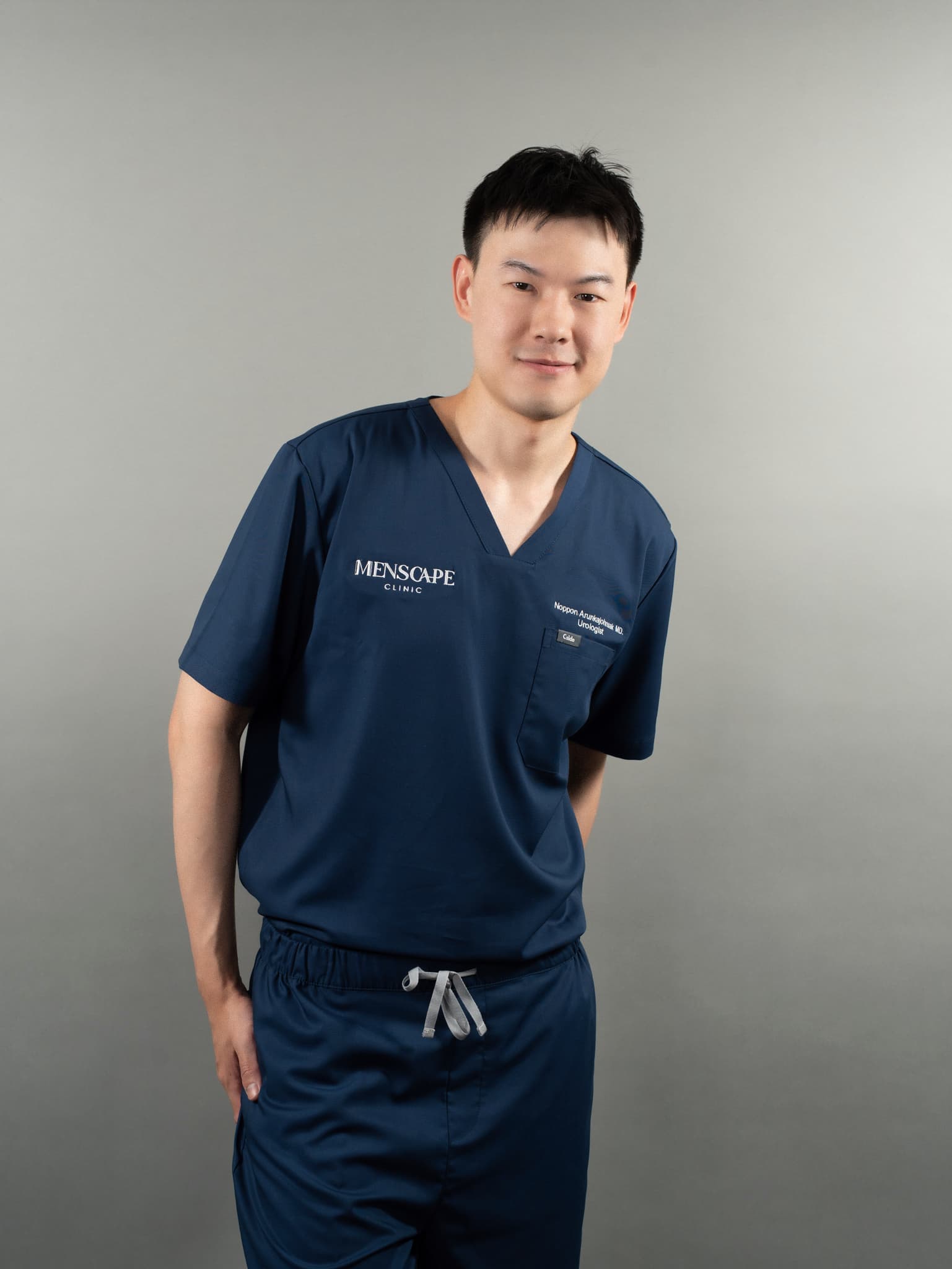
Menscape is a men's-health clinic in Bangkok, and our urology team focuses on male fertility and scrotal surgery, including microsurgical varicocelectomy under an operating microscope. A first visit covers a scrotal examination, ultrasound where needed, and a semen analysis if fertility is your goal, after which you receive a personalised, itemised quote rather than a guess. We will also tell you honestly if surgery is not the right step for you.
To discuss whether a microsurgical varicocelectomy fits your situation, you can book a consultation or reach the clinic on WhatsApp or LINE. Bring any recent semen analyses or ultrasound reports if you have them.
A reminder that frames everything above: a varicocele repair is a medical procedure that requires an in-person consultation, an examination, and appropriate tests, and it must be recommended and quoted individually. Nothing here is a diagnosis, a treatment recommendation, or a binding price.
If you want to read around the topic, our guides on kidney stone treatment costs in Bangkok and on circumcision versus frenulectomy follow the same transparent, men's-health approach to pricing and recovery.
Frequently Asked Questions
How much does a microsurgical varicocelectomy cost in Bangkok?
Most Bangkok packages fall between about THB 80,000 and THB 180,000 (roughly USD 2,400-5,500). A single-side repair under local anaesthesia at a mid-tier private hospital sits at the lower end; a both-sides repair under general anaesthesia at a premium international hospital sits at the upper end. These are indicative planning figures. A firm quote follows an examination, ultrasound, and usually a semen analysis.
Why is it so much cheaper than in the US or UK?
Lower facility overheads, lower staffing costs, and a competitive private-hospital market let internationally trained Bangkok urologists offer microsurgery at a fraction of Western list prices. US self-pay varicocele surgery commonly runs USD 7,000-15,000 or more, so Bangkok patients often save 50-70% on the procedure, before factoring in travel. Quality at accredited hospitals is comparable.
Is microsurgical varicocelectomy better than embolisation or laparoscopic surgery?
For fertility, the microsurgical approach has the strongest published numbers: the highest pregnancy rate (around 44-45%), the lowest recurrence (about 1-2%), and the lowest hydrocele rate (under 1%). Embolisation avoids an incision and hydrocele but trails on pregnancy outcomes, and the laparoscopic route has a higher recurrence (around 15%). The best choice depends on your goal and anatomy, which is decided at consultation.
Will the surgery guarantee my partner gets pregnant?
No. Pooled data show spontaneous pregnancy in roughly 42-45% of couples after microsurgical repair, against about 17% with no treatment, so it improves the odds rather than guaranteeing them. Outcomes depend on your baseline semen quality, your age, the varicocele grade, and your partner's fertility. Any surgeon who promises a pregnancy should be treated with caution.
How long is recovery and when can I go back to work?
It is usually a day case or one-night stay. Expect soreness, bruising, and swelling for a few days. Many men return to desk work around the end of the first week, avoid heavy lifting and strenuous exercise for two to four weeks, and reach full recovery by about six weeks. Fertility results are assessed with repeat semen analyses at roughly three and six months, since sperm takes about three months to mature.
Do I really need surgery, or can a varicocele be left alone?
Many varicoceles never need treatment. Repair is generally considered only when a varicocele can be felt on examination and is accompanied by abnormal semen parameters in a couple trying to conceive, a persistent ache, or testicular shrinkage. Varicoceles seen only on ultrasound that cannot be felt are not usually operated on. A specialist examination and tests decide whether surgery is appropriate for you.
What are the main risks of the procedure?
Common effects are minor: bruising, swelling, and soreness for a few days, with a small infection risk. Less common complications include hydrocele (under 1% with the microsurgical technique), recurrence (about 1-2%), and, very rarely, injury to the testicular artery, though atrophy is uncommon thanks to collateral blood flow. Seek urgent care for fever, spreading redness or pus, severe or worsening pain, marked swelling, a hard or discoloured scrotum, or heavy bleeding.
Can the cost be covered by insurance?
Many international plans do not cover elective procedures performed abroad, so check with your insurer before travelling. In the US, private insurance and Medicare often cover varicocele surgery when it is medically necessary (documented infertility, significant pain, or testicular atrophy), which lowers out-of-pocket cost there. For self-paying patients, Bangkok clinics typically offer transparent package pricing; ask exactly what is included.
How do I tell a good Bangkok provider from a poor one?
Look for a urologist with specific microsurgical training who confirms in writing that a true operating microscope is used, an itemised THB quote that specifies one side or both and anaesthesia type, and a proper work-up before any price is finalised. Be wary of fixed prices quoted before an examination, vagueness about whether a microscope is genuinely used, pressure to book immediately, and any guarantee of pregnancy.
)
/)
/)
/)
/)
/)