/)
Deciding to undo a vasectomy is rarely a small decision. A new relationship, the loss of a child, or simply a change of heart can all lead a man back to a urologist's office asking whether his fertility can be restored. The good news is that for most men it can. A vasovasostomy, the medical name for the standard microsurgical vasectomy reversal, reconnects the cut ends of the vas deferens (the tube that carries sperm) so sperm can once again reach the ejaculate. Done well, under an operating microscope by a surgeon who performs reversals regularly, it gives many couples a real chance at natural conception without IVF.
This guide focuses on what that costs in Bangkok, why Thailand has become a destination for this surgery, and how to judge whether a clinic is genuinely equipped to do it safely. We lead with transparent pricing in both Thai baht and US dollars, then walk through what drives the final number, who is and is not a good candidate, the success rates you can realistically expect, recovery, risks, and the questions worth asking before you book. Pricing here is indicative and meant for planning; your own quote should always be confirmed at a consultation, because the right operation can only be chosen after examination and testing.
A quick note before the numbers: vasectomy reversal is elective surgery. It requires an in-person urology consultation, a physical examination, and usually some pre-operative tests. Nothing in this article is a substitute for that assessment or for a prescription where one is needed.
Vasectomy reversal cost in Bangkok: THB and USD
Below are indicative private-sector ranges for vasectomy reversal in Bangkok in 2026. They reflect microsurgical technique, surgeon fees, anaesthesia, the operating microscope, and routine pre-operative diagnostics. They are starting points for budgeting, not fixed quotes. The single biggest reason your final price can land anywhere in (or occasionally outside) these bands is that the surgeon often does not know which of the two repairs you need until the operation is underway and the vasal fluid has been inspected.
Procedure | Bangkok price (THB) | Bangkok price (USD)* | Typical US self-pay (USD) | Approx. saving vs US |
Microsurgical vasovasostomy (standard reversal) | 150,000-300,000 | ~4,600-9,200 | 5,000-15,000 | 30-65% |
Microsurgical vasoepididymostomy (complex bypass) | 200,000-350,000 | ~6,100-10,700 | 8,000-16,000+ | 30-60% |
Combined / crossover reversal (one side each technique) | 220,000-360,000 | ~6,700-11,000 | 9,000-16,000+ | varies |
Diagnostic semen analysis (per test) | 1,500-3,500 | ~45-110 | 100-300 | varies |
Hormone panel (FSH, testosterone, if indicated) | 2,500-6,000 | ~75-185 | 150-400 | varies |
Scrotal ultrasound (if indicated) | 2,500-5,000 | ~75-150 | 200-600 | varies |
Sperm banking / cryopreservation (optional, per cycle) | 15,000-30,000 | ~460-920 | 500-1,500 | varies |
*USD figures use an approximate rate near THB 32.7 per USD (June 2026) and will move with the exchange rate. US self-pay figures are broad national ranges and vary enormously by city and provider. These ranges suit premium fellowship-level microsurgery; entry-level or standard private quotes in Bangkok can start lower, around THB 90,000-150,000 (roughly USD 2,800-4,600), so it is worth confirming exactly what a quote covers.
For comparison, a 2024 study of self-pay pricing across the United States found extreme variation: a 39-fold difference between the cheapest and most expensive vasovasostomy quotes, spanning roughly USD 446 to USD 17,249, with higher prices clustered at large, for-profit, academic, and urban centres (Brant et al., 2024). Specialist microsurgery centres frequently quote USD 9,000-16,000 all-in. The Bangkok advantage is not just the headline price; it is that an experienced microsurgical team, anaesthesia, and the microscope are usually bundled into one transparent figure.
What the price usually does and does not include
A clear quote should spell out what is covered. In Bangkok, a typical reversal package generally includes the surgeon's fee, anaesthesia, use of the operating microscope and theatre, standard pre-operative blood work, and at least one follow-up semen analysis. Items that are sometimes quoted separately include additional semen analyses beyond the first, sperm banking at the time of surgery, treatment of unexpected findings, and any overnight stay if recommended. International patients should also budget for accommodation, transport, and a return visit or postal semen test, since results are checked weeks later, not on the day.
What is a vasovasostomy, and how does it differ from a vasoepididymostomy?
A vasectomy works by cutting and sealing the vas deferens on each side so sperm cannot pass. A reversal undoes that. There are two operations, and the difference matters for both success and cost.
A vasovasostomy is the standard reversal. The surgeon finds the two cut ends of the vas deferens and stitches them back together under high magnification, using sutures far finer than a human hair. This is the right operation when fluid sampled from the testicular end of the vas contains sperm, or clear fluid, which signals an open pathway behind it (Patel and Smith, 2016).
A vasoepididymostomy is the more demanding bypass. Over time, pressure behind the vasectomy can cause a secondary blockage in the epididymis, the tightly coiled tube where sperm mature. When the vasal fluid contains no sperm and is thick or pasty, simply reconnecting the vas would fail because the blockage sits further upstream. The surgeon instead connects the vas directly to the epididymis above the obstruction. It is technically harder, takes longer, and tends to cost more.
Here is the part many men find surprising: the surgeon often cannot tell which operation is needed until the procedure has started and the fluid has been examined under the microscope. That is why a good Bangkok clinic prices for the possibility of either and why you should only use a surgeon who can perform both. Being committed to a vasovasostomy-only plan and then discovering a need for a bypass mid-surgery is exactly the scenario you want to avoid.
Feature | Vasovasostomy | Vasoepididymostomy |
When it is used | Sperm or clear fluid in the vas | No sperm, thick/pasty fluid (secondary blockage) |
Technical difficulty | High microsurgery | Very high microsurgery |
Typical operating time | About 2-4 hours | Often longer |
Relative cost | Lower of the two | Higher |
When sperm typically return | Often within a few months | Can take longer, sometimes 6-12+ months |
Decided when | Usually intra-operatively | Usually intra-operatively |
What drives the cost of a reversal in Bangkok
Several factors move the final figure within the ranges above.
Which repair you need. A bilateral vasovasostomy is the lower-cost scenario. A vasoepididymostomy, or a combination where one side needs each technique, raises the price because of the added complexity and theatre time.
One side or both. Most men need both sides repaired, but if only one vas is patent or being addressed, the cost can be lower. A bilateral repair generally gives the best odds of sperm returning.
Time since the vasectomy. A longer interval raises the chance that a bypass will be needed rather than a simple reconnection, which can push the price toward the upper band. It also tends to lower success rates, discussed below.
Surgeon experience and case volume. Microsurgeons who do reversals regularly, and who are comfortable with vasoepididymostomy, command higher fees. This is one area where paying more is usually justified, because patency depends heavily on technique.
Hospital tier and anaesthesia. A premium private hospital carries higher theatre and anaesthesia fees than a smaller surgical centre. General versus local-with-sedation anaesthesia also affects the total.
Add-ons and the unexpected. Sperm banking at the time of surgery, extra semen analyses, or treating an incidental finding all add to the base package.
Who is a good candidate, and who is not
Most men who had a routine vasectomy and are otherwise healthy are candidates for reversal. The procedure tends to suit men who:
Want a chance at natural conception rather than IVF
Are in reasonable general health and fit for anaesthesia
Have a partner whose own fertility, including age, has been considered
Understand that success is likely but not guaranteed
Reversal may be the wrong first choice, or needs careful counselling, in several situations. It is not automatically the best path when:
The female partner has significant fertility issues of her own, where IVF with surgical sperm retrieval may be more direct
The female partner is over about 40, where time pressure and lower per-cycle pregnancy odds change the calculation
There was a known fertility problem before the vasectomy
The man has had multiple prior failed reversals or extensive scrotal surgery
General health makes elective surgery and anaesthesia unwise
Absolute and relative contraindications include active genital or urinary infection (which should be treated first), uncontrolled bleeding disorders, and any medical condition that makes anaesthesia unsafe until optimised. None of this can be sorted out online. A consultation, examination, and the right tests are what decide whether reversal, IVF with sperm retrieval, or a combined plan makes the most sense for a particular couple.
Success rates: what the numbers actually say
"Success" has two distinct meanings, and clinics sometimes blur them. Patency means sperm have returned to the ejaculate. Pregnancy means a couple has actually conceived. Patency rates are higher than pregnancy rates, because conception also depends on the partner.
Cleveland Clinic puts the chance of sperm returning at roughly 60% to 95%, with about half of couples going on to achieve pregnancy, and notes that effectiveness declines around 15 years after the vasectomy (Cleveland Clinic). Mayo Clinic similarly describes pregnancy rates ranging from about 30% to over 90% depending on the procedure and several patient factors (Mayo Clinic).
The most cited breakdown by time interval comes from the Vasovasostomy Study Group, summarised in a clinical review by Patel and Smith. Patency was meaningfully higher with a shorter obstructive interval (about 89% under 5 years versus 75% beyond 10 years), and while some more recent series found patency holding up even past 15 years, pregnancy rates dropped off sharply after the 15-year mark (Patel and Smith, 2016). The same review highlights how much the female partner's age matters: pregnancy was about 73% when the partner was under 40, falling to roughly 42% when she was over 40.
The AUA's vasectomy guideline frames the predictors cleanly. The best preoperative predictors of reversal success are the duration of the obstructive interval, the man's age, and the female partner's age; the best intra-operative predictor is finding sperm at the site of reconnection (AUA, 2026).
A realistic, hedged summary by interval since vasectomy:
Time since vasectomy | Typical patency (sperm return) | Notes |
Under 5 years | ~85-95% | Best odds; simple reconnection more likely |
5-10 years | ~70-90% | Still good; bypass occasionally needed |
10-15 years | ~60-85% | More variable; bypass more likely |
Over 15 years | Patency can stay high (~75-90%+) in modern microsurgical series, but pregnancy rates fall | Counselling on the IVF alternative is wise as the key decline here is in pregnancy, not patency |
These are population figures, not promises. Your surgeon should give you a personalised estimate after assessing the interval, your age, your partner's age and fertility, and the intra-operative findings.
The procedure, step by step
Knowing the sequence helps set expectations and explains why the bill is structured the way it is.
Consultation and workup. History, examination, and tests such as semen analysis and, where indicated, hormone levels or a scrotal ultrasound. This is where candidacy and the likely plan are discussed.
Anaesthesia. Reversal is usually outpatient, performed under general anaesthesia or local anaesthesia with sedation.
Accessing the vas. Small incisions in the scrotum expose the cut ends of the vas deferens on each side.
Inspecting the fluid. The surgeon samples fluid from the testicular side under the microscope. Sperm or clear fluid points to a vasovasostomy; thick fluid with no sperm points to a vasoepididymostomy.
Microsurgical reconnection. Using an operating microscope and ultra-fine sutures, the surgeon rejoins the vas to itself (vasovasostomy) or to the epididymis (vasoepididymostomy). This is the painstaking core of the operation and can take several hours.
Closure and recovery. The incisions are closed and you are observed before going home, usually the same day.
Recovery, stage by stage
Recovery from reversal is generally straightforward, but rushing it can undo careful microsurgery. The timeline below is typical; follow your own surgeon's instructions, which may be more conservative.
Days 1-3. Expect soreness, swelling, and bruising of the scrotum. Ice, supportive underwear (an athletic supporter), and simple pain relief help. Rest and avoid lifting.
Days 3-7. Many men return to desk-based work within a couple of days, though some surgeons prefer a few more days off. Keep wearing scrotal support and avoid strenuous activity.
Weeks 1-2. Continue avoiding heavy lifting and exercise. Most surgeons advise no sexual activity, including masturbation, for two to three weeks so the repair can heal.
Weeks 3-4 and beyond. Gradual return to normal activity and exercise. Some specialists advise taking it easy for the full four weeks before trying to conceive.
6-12 weeks: the first semen analysis. This is the key checkpoint. A semen analysis around six to twelve weeks after surgery shows whether sperm have returned. After a bypass (vasoepididymostomy), sperm can take longer to appear, so further tests over several months may be needed.
If sperm return and there are no other barriers, time to natural pregnancy is often quoted at roughly 12 to 17 months on average, reflecting that conception takes time even once the plumbing is fixed (Mayo Clinic; Patel and Smith, 2016).
Have a question about your treatment?
Message our Bangkok clinic on WhatsApp and a doctor replies within minutes during clinic hours.
Risks and what to watch for
Vasectomy reversal is generally safe and serious complications are uncommon, but no surgery is risk-free.
Common and usually minor:
Scrotal swelling, bruising, and discomfort for days to a couple of weeks
Minor bleeding or oozing from the incisions
Temporary tenderness
Less common:
Hematoma (a collection of blood in the scrotum) that may need drainage
Infection at the surgical site, sometimes needing antibiotics
Chronic scrotal pain, which is uncommon but possible
Failure of the reversal (no sperm return), which may prompt a repeat procedure, a bypass, or a move to IVF with sperm retrieval
Late re-blockage (scarring) that can reduce sperm counts over time
These align with the risk profiles described by Cleveland Clinic and Mayo Clinic, which list bleeding, hematoma, infection, and chronic pain as the main concerns (Cleveland Clinic; Mayo Clinic).
Seek urgent care if you develop a rapidly enlarging or very painful scrotal swelling, heavy bleeding, fever with worsening redness or discharge suggesting infection, or severe pain not controlled by your prescribed medication. These are not the normal aches of healing and need prompt review.
Choosing a safe reversal clinic in Bangkok
Because patency depends so heavily on technique, the surgeon matters more than the address. Use these questions and red flags to choose well.
Ask the surgeon:
How many vasectomy reversals do you perform each year?
Do you operate under an operating microscope (not just loupes)?
Are you able to perform a vasoepididymostomy if the fluid findings call for it on the day?
What are your patency and pregnancy rates, and how do you measure them?
What does the quoted price include, and what would change it during surgery?
How and when will sperm return be checked, and what is the plan if the first analysis shows none?
Red flags to avoid:
No operating microscope, or vague answers about magnification
A price that looks too good to be true for microsurgery
A surgeon who cannot or will not perform a bypass if needed
Reversal offered without examining the vasal fluid intra-operatively
No structured follow-up with semen analysis
Pressure to decide quickly, or reluctance to discuss IVF as an alternative
Bangkok's appeal is real: experienced microsurgeons, English-speaking men's-health services, modern theatres, and transparent bundled pricing, often at a fraction of Western self-pay costs. But those advantages only count if the specific surgeon is genuinely fellowship-level at microsurgical reversal. A discreet, men's-health-focused clinic that walks you through candidacy, both techniques, realistic odds, and a clear follow-up plan is what you are looking for.
Reversal vs IVF with sperm retrieval: a quick comparison
For some couples, surgically retrieving sperm and using IVF with intracytoplasmic sperm injection (ICSI) is an alternative to reversal. Neither is universally "better"; the right choice depends on the partner's fertility and age, the interval since vasectomy, how many children are hoped for, and budget.
Consideration | Vasectomy reversal | IVF with sperm retrieval (ICSI) |
Natural conception afterward | Yes, potentially for years | No; each pregnancy needs an IVF cycle |
Best when | Partner younger, shorter interval, wanting more than one child | Partner has fertility issues, older partner, time pressure |
Up-front cost (Bangkok, indicative) | ~THB 150,000-350,000 | Often higher per cycle, repeated as needed |
Involves the female partner medically | No | Yes, significantly |
Success driver | Surgeon technique, interval, partner age | Egg quality, partner age, lab quality |
This table is a starting point for discussion, not a recommendation. A urologist and, where relevant, a fertility specialist can model the numbers for your situation.
Booking a consultation
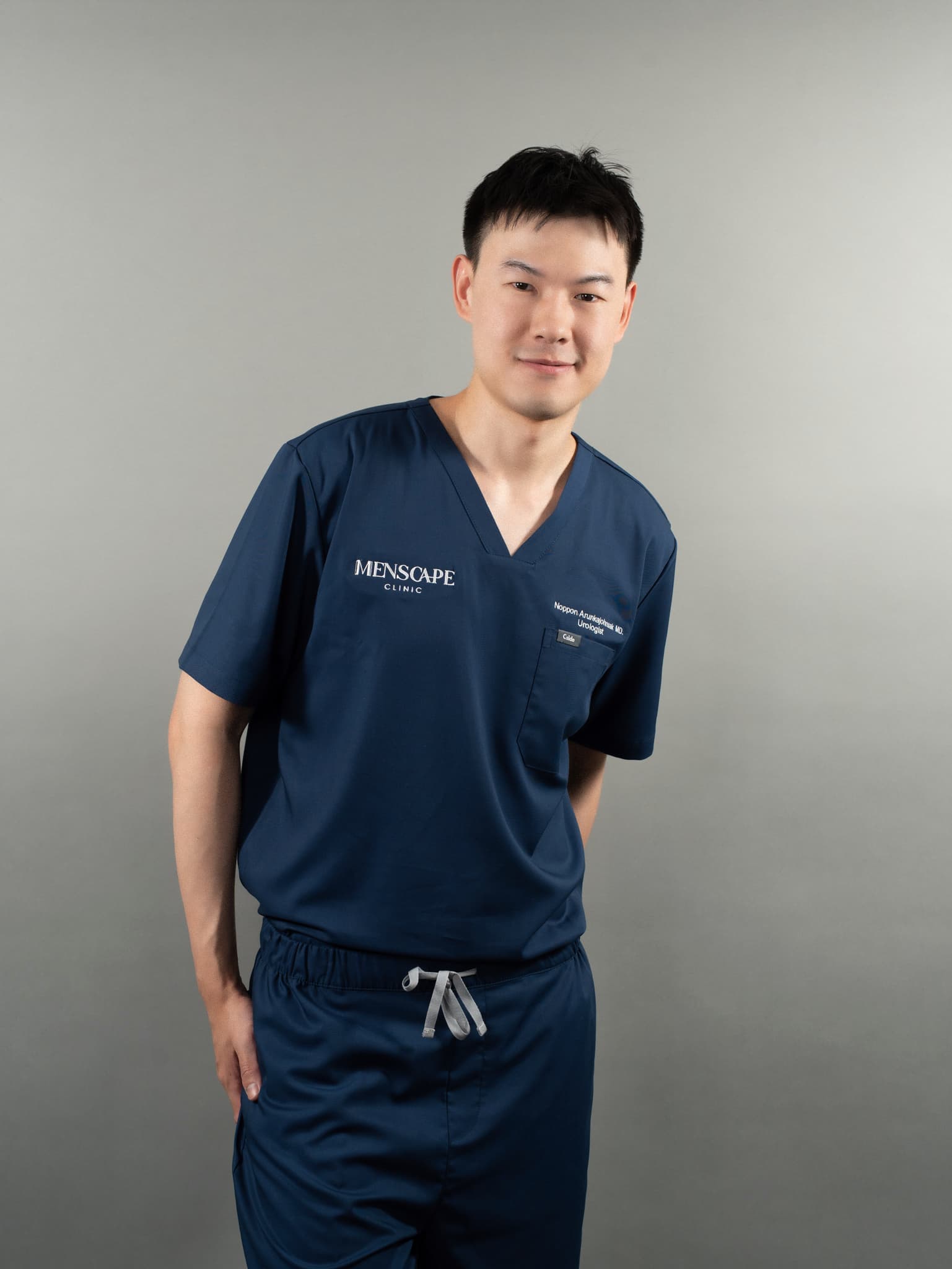
If you are weighing a vasectomy reversal in Bangkok, the next step is a confidential consultation. At Menscape, our urology team assesses your candidacy, explains both microsurgical techniques and the realistic odds for your interval and age, sets out transparent pricing before anything is booked, and supports you through recovery and follow-up semen testing. Reversal is elective surgery that requires this assessment and, where appropriate, a prescription, so the consultation is where your personal plan and quote are confirmed. You may also find our related guides on men's fertility and hormone health helpful while you decide.
Frequently Asked Questions
How much does a vasectomy reversal cost in Bangkok?
A microsurgical vasovasostomy in Bangkok typically runs THB 150,000-300,000 (roughly USD 4,600-9,200 at the June 2026 rate of about 32.7 baht to the dollar). The more complex vasoepididymostomy bypass is usually THB 200,000-350,000 (about USD 6,100-10,700). These are indicative private-sector ranges that usually include the surgeon, anaesthesia, the operating microscope, and basic pre-operative tests. Entry-level quotes can start lower, around THB 90,000-150,000. Confirm your own quote at a consultation, because the repair you need is often decided during surgery.
Why is vasectomy reversal so much cheaper in Thailand than in the US?
Bangkok clinics generally bundle the microsurgeon, anaesthesia, theatre, and microscope into one transparent price, while keeping facility and labour costs lower than Western centres. A 2024 US study found vasovasostomy self-pay prices varying nearly 39-fold (about USD 446 to 17,249), with specialist centres often quoting USD 9,000-16,000. Comparable Bangkok pricing is commonly 30-65% lower, though you should add travel, accommodation, and a follow-up visit.
What is the difference between a vasovasostomy and a vasoepididymostomy?
A vasovasostomy reconnects the two cut ends of the vas deferens and is the standard reversal. A vasoepididymostomy connects the vas to the epididymis to bypass a secondary blockage that can develop over time. The bypass is technically harder and costs more. The surgeon usually decides which is needed during the operation, after inspecting the fluid in the vas, so use a surgeon who can do both.
What is the success rate of vasectomy reversal?
Sperm return to the ejaculate (patency) in roughly 60-95% of cases, and about half of couples go on to conceive, though figures vary widely. Odds are best when the vasectomy was recent. In modern microsurgical series patency can stay high even past 15 years, but pregnancy rates fall after about that point, and they also fall when the female partner is over 40. Your surgeon should give a personalised estimate based on the interval, both partners' ages, and the findings during surgery.
How long after a reversal will sperm come back?
After a standard vasovasostomy, sperm often reappear within a few months, and a semen analysis is usually done around 6 to 12 weeks after surgery to check. After a vasoepididymostomy bypass, sperm can take longer, sometimes six months or more, so repeat testing over several months may be needed. Even once sperm return, natural pregnancy commonly takes around 12 to 17 months on average.
Does a vasectomy reversal affect erections or testosterone?
No. The vas deferens only carries sperm; it has nothing to do with the nerves and blood flow behind erections or with testosterone production in the testes. Sexual function and hormone levels are not changed by the surgery. You will be asked to avoid sexual activity for about two to three weeks afterward to let the repair heal, but that is temporary.
What are the risks of vasectomy reversal?
Most men recover without serious problems. Common, usually minor effects include scrotal swelling, bruising, and soreness for a week or two. Less common risks include a hematoma (blood collection) that may need drainage, infection, chronic scrotal pain, and failure of the reversal. Seek urgent care for a rapidly enlarging or very painful swelling, heavy bleeding, fever with spreading redness, or severe uncontrolled pain.
Is vasectomy reversal or IVF the better option?
It depends on the couple. Reversal allows natural conception, potentially for more than one child, and suits younger partners and shorter intervals since the vasectomy. IVF with surgical sperm retrieval can be more direct when the female partner has her own fertility issues, is older, or when there is time pressure. A urologist, and where relevant a fertility specialist, can compare the odds and costs for your situation.
Do I need a consultation before booking a reversal?
Yes. Vasectomy reversal is elective surgery that requires an in-person urology consultation, a physical examination, and usually some pre-operative testing before it can be planned or priced accurately. The consultation is also where alternatives such as IVF are discussed and where any necessary prescriptions are arranged. No reputable clinic should schedule surgery without this assessment.
)
/)
/)
/)
/)
/)