/)
/)
/)
/)
/)
HoLEP · Holmium Laser Enucleation of Prostate in Bangkok
A Size-Independent Gold Standard for Enlarged Prostate
HoLEP uses a holmium laser to remove obstructing prostate tissue from the inside of the capsule, the way an open surgeon would, but through a small scope with no external incision. It works on prostates of any size, including very large ones where TURP, Rezum, or UroLift are no longer effective, and delivers durable results that last 15 years or more.
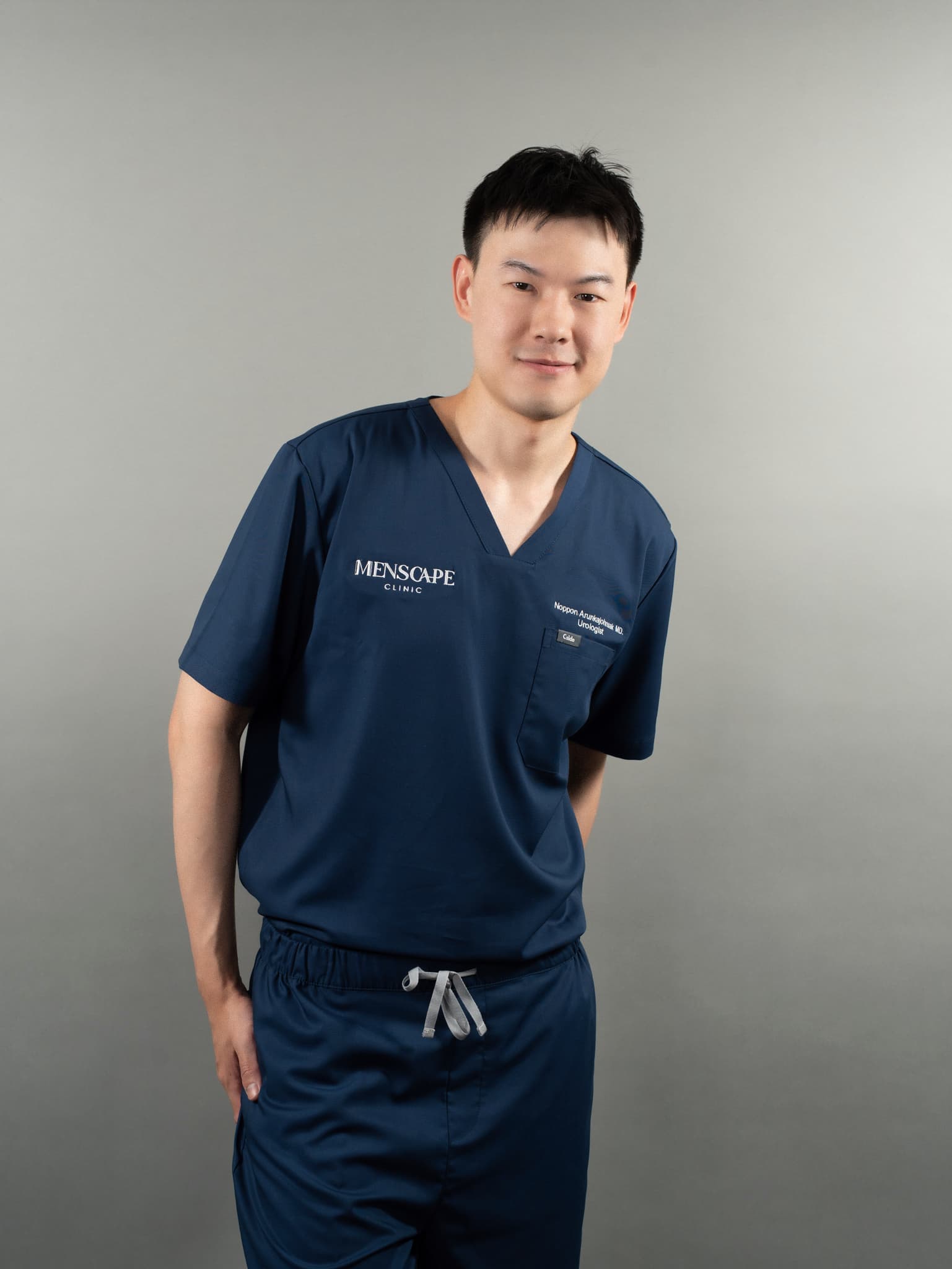
Medically reviewed by Dr. Noppon Arunkajohnsak (Win), Board-certified Urologist
9 years of experience
Our solutions
Why patients choose HoLEP
What Our Patients Say
Male Surgery
A few weeks after HoLEP, I was finally sleeping through the night. My urologist explained the change in ejaculation beforehand, so it came as no surprise.
Thanawat, 60
Male Surgery
I spent one night in hospital and went home the next morning. The relief was huge, and I wish I had done this years earlier.
Chanin, 63
Book your consultation today.
/)
How to Prepare for HoLEP
Stop blood thinners
5-7 days before surgery (aspirin, clopidogrel, warfarin, DOACs), only if cleared by your prescribing doctor.Urine culture
Pre-operative test to rule out infection; treated with antibiotics if positive.Prostate imaging
Recent ultrasound or MRI to confirm size and rule out prostate cancer.Pre-anesthesia assessment
Routine bloods, ECG, chest X-ray as indicated by age and comorbidities.Fast pre-surgery
No food or water for 6-8 hours before the procedure.Plan for overnight stay
Arrange transport home the following day.
/)
What Happens During HoLEP
Anesthesia
Spinal or general anesthesia. Most patients choose spinal for faster recovery.Stage 1 · Enucleation
A thin cystoscope is passed through the urethra. The holmium laser separates the obstructing prostate lobes from the surgical capsule, the same plane an open surgeon would use.Stage 2 · Morcellation
The enucleated tissue is pushed into the bladder, then a morcellator inside the scope cuts it into small fragments and suctions them out.Catheter placement
A urinary catheter stays in place for 24-48 hours. Most patients are discharged the morning after surgery.Pathology analysis
All removed tissue is sent to the lab to rule out incidental prostate cancer.Total operating time
Typically 60-120 minutes depending on prostate size.
/)
Explore Our Topics
About HoLEP and BPH Surgery
/)
High-Volume HoLEP Surgeon
HoLEP is technically demanding · outcomes are surgeon-dependent. Our BPH team includes urologists with dedicated holmium laser training and a focus on large-prostate enucleation.
Comprehensive BPH Diagnostics
We evaluate prostate size, residual urine, uroflowmetry, and PSA before recommending HoLEP versus alternatives. The right surgery depends on the right diagnosis.
Same-Day Imaging and Workup
Prostate ultrasound, urine flow test, and consultation in a single visit. International patients can complete pre-op workup the day before surgery.
Private, Discreet Recovery
Confidential care, dedicated WhatsApp support during recovery, and English-language follow-up. Most international patients return home within 5-7 days of surgery.
Frequently asked questions
How is HoLEP different from TURP?
TURP uses electrical energy to cut prostate tissue from the inside of your urethra and is best for prostates under 80g. HoLEP, however, utilizes a holmium laser to precisely enucleate the entire obstructing tissue from inside your prostate capsule, working effectively on prostates of any size. You'll experience significantly less blood loss, a shorter catheter time typically 24-48 hours, and more durable, long-lasting results with HoLEP. While it requires a more specialized surgeon, the benefits often outweigh this for many patients.
What prostate size is HoLEP best for?
HoLEP has no upper size limit, making it an excellent option for any prostate. It's the preferred choice for prostates over 80g where TURP becomes less effective due to increased operative time and risk. HoLEP also works exceptionally well for medium prostates (40-80g) when you desire the most durable and complete relief from BPH symptoms available. Your surgeon will discuss if HoLEP is the optimal treatment for your specific prostate size and symptoms.
Will I lose ejaculation after HoLEP?
Retrograde ejaculation, where semen flows into your bladder instead of out, occurs in 70-80% of HoLEP patients. This is a common and expected side effect, but it's not harmful to your health and your ability to achieve an erection is fully preserved. However, it does affect fertility. If preserving forward ejaculation is a high priority for you, alternative treatments like Rezum or UroLift may be better options, particularly for smaller prostates.
How long is the hospital stay and catheter time?
Most patients typically stay one night in hospital and are discharged the morning after surgery. Your urinary catheter will remain in place for a relatively short period, usually 24-48 hours. You can resume light activities within a few days, and most patients comfortably return to work and their normal routines within 7-10 days. We prioritize your comfort and a swift recovery.
How much does HoLEP cost in Bangkok?
The cost of your HoLEP procedure in Bangkok will vary based on several factors. These include your chosen anesthesia type (Spinal or General), the length of your hospital admission, and any additional procedures, such as a biopsy of removed tissue if prostate cancer is suspected. For a personalized quote tailored to your specific prostate size, overall health, and treatment plan, we recommend booking a consultation with our specialist.
What are the success rates and long-term outcomes for HoLEP?
HoLEP boasts excellent long-term success rates, with over 90% of patients experiencing significant and lasting improvement in their urinary symptoms. Studies show a re-treatment rate of less than 5% over 10 years, making it one of the most durable BPH treatments available. You can expect a dramatic reduction in symptoms like frequent urination, urgency, and weak stream, leading to a significantly improved quality of life for many years.
What anesthesia options are available for HoLEP?
For your HoLEP procedure, you'll typically have two main anesthesia options: Spinal Anesthesia or General Anesthesia. Spinal anesthesia numbs the lower half of your body while you remain awake but sedated, offering a quicker recovery for some. General anesthesia puts you completely to sleep during the procedure. Your anesthesiologist will discuss both options with you, considering your medical history and preferences, to determine the safest and most comfortable choice for your surgery.
What should I expect at the consultation?
During your consultation, you'll meet with our experienced urologist to discuss your symptoms and medical history. We'll perform a physical examination, including a DRE, and likely order tests such as a PSA blood test, urine flow study, and a prostate ultrasound to assess your prostate size and health. This comprehensive evaluation allows us to determine if HoLEP is the best treatment for you and to create a personalized treatment plan. You'll have ample opportunity to ask questions.
What are the logistics for international patients traveling for HoLEP?
We recommend arriving in Bangkok at least 1-2 days before your consultation for initial assessments. After your procedure and hospital discharge, you should plan to stay in Bangkok for approximately 7-10 days for your initial recovery and follow-up appointment. We offer virtual follow-ups via WhatsApp for your convenience once you return home. You can typically fly home safely within 10-14 days post-surgery, depending on your recovery progress.
THE DURABLE BPH SOLUTION FOR LARGE PROSTATES
THE DURABLE BPH SOLUTION
FOR LARGE PROSTATES
/)
)
Dr. Noppon Arunkajohnsak (Win)
Board-certified Urologist
- Experience
- 9 years
Dr. Noppon is a board-certified urologist trained at Siriraj Hospital, Mahidol University. With over 9 years of experience, he focuses on urological consultation and men's health, providing discreet, evidence-based, patient-centred care.