/)
/)
/)
/)
/)
ESWL · Extracorporeal Shockwave Lithotripsy in Bangkok
ESWL is the only completely non-invasive kidney stone treatment · external shockwaves fragment the stone inside your kidney, then the pieces pass naturally in your urine. No incisions, no scope, no general anesthesia required for most patients. Best for kidney and upper ureteric stones under 2 cm.
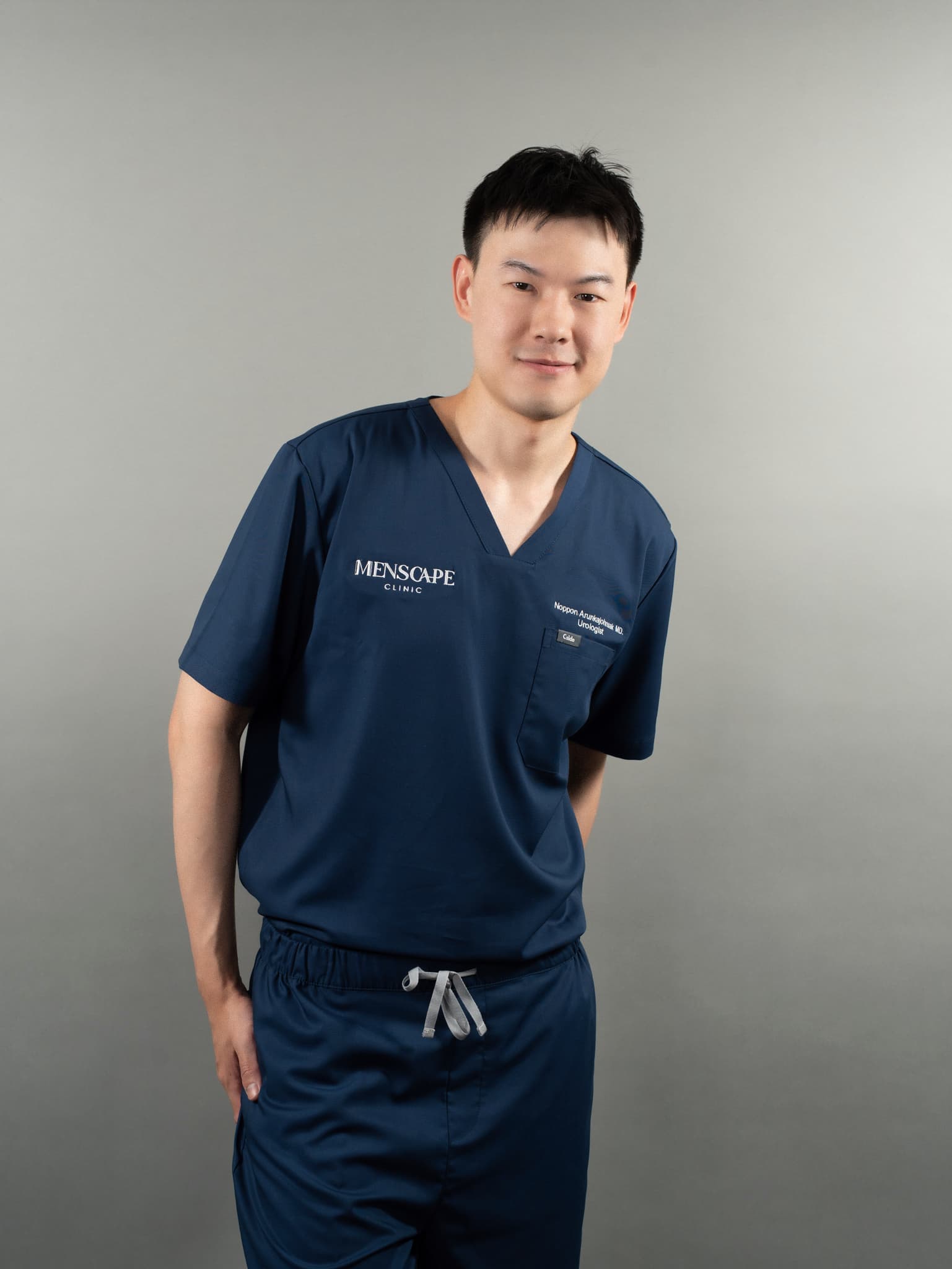
Medically reviewed by Dr. Noppon Arunkajohnsak (Win), Board-certified Urologist
9 years of experience
Our solutions
Why patients choose ESWL
What Our Patients Say
Male Surgery
No cuts and no hospital stay. I walked out the same afternoon and the fragments came out over the following weeks.
Wachirawit, 67
Male Surgery
I was nervous about the shockwaves, but with the sedation I slept through the whole session. The soreness afterwards was manageable with the tablets they gave me.
Khom, 64
Book your consultation today.
/)
How to Prepare for ESWL
Imaging confirms stone location and size
CT KUB or ultrasound to confirm the stone is appropriate for ESWL.Stop blood thinners
5-7 days before treatment only if cleared by your prescribing doctor.Urine culture
Treat any urinary infection before ESWL.Pre-anesthesia assessment
Brief screening to confirm fitness for sedation.Fast pre-procedure
No food for 6 hours before sedation.Plan for transport home
You cannot drive yourself home after sedation.
/)
What Happens During ESWL
Positioning
You lie on the ESWL table · the shockwave head is aligned with your stone using X-ray or ultrasound targeting.Sedation
TIVA or light sedation is given · most patients sleep through the procedure.Shockwave delivery
The machine delivers 2,500-4,000 shocks over 30-45 minutes. Energy increases gradually to your tolerance.Recovery
30-60 minutes in recovery as the sedation wears off.Discharge
Same day discharge with pain medication and instructions on passing stone fragments.Follow-up imaging
Repeat imaging in 2-4 weeks confirms the stone has fragmented and passed.
/)
Explore Our Topics
About ESWL
/)
High-Volume ESWL Center
Our urology team performs ESWL routinely for stones up to 2 cm · referral pathway to URS/RIRS or PCNL when stones are larger or stone characteristics are unfavorable.
Right-Stone-Right-Technique Triage
Not every stone is best treated with ESWL · we triage based on stone size, location, density (Hounsfield units), and your kidney anatomy.
Same-Day Imaging and Treatment
Stone CT, consultation, and treatment can be scheduled in close succession for international patients.
Private, Discreet Recovery
Confidential care, WhatsApp recovery support, English-language follow-up.
Frequently asked questions
What size stones does ESWL work on?
ESWL is most effective for kidney and upper ureteric stones measuring between 5-20 mm. For very small stones less than 5 mm, your body often passes them naturally without intervention. If your stone is larger than 20 mm or located in the lower ureter, other treatments like ureteroscopy (URS/RIRS) or percutaneous nephrolithotomy (PCNL) typically offer better success rates and are often recommended as primary options. We will discuss the best approach for your specific stone.
Is ESWL painful?
You will likely experience mild to moderate discomfort during the shockwave delivery itself. However, most of our patients receive light sedation (TIVA) and often sleep comfortably through the entire procedure. Some discomfort is common afterward as the stone fragments pass down your ureter, which can feel similar to kidney stone pain. We will provide pain management advice for this period.
Do I need general anesthesia?
No · general anesthesia is typically not required for ESWL. We commonly use TIVA (Total Intravenous Anesthesia) or light sedation, which allows you to remain comfortable and relaxed throughout the procedure. General anesthesia is usually reserved for specific situations, such as patients with severe anxiety, certain anatomical considerations, or if a combined procedure is planned. Your comfort is our priority.
How long until the stone is gone?
Stone fragments typically begin passing within a few days and can continue for 2-6 weeks. The exact timeline depends on your stone's size and location. We schedule follow-up imaging, usually a CT scan, at 2-4 weeks post-procedure to confirm successful fragmentation and assess if any significant fragments remain. Our goal is to ensure complete stone clearance for you.
What if ESWL doesn’t work?
If your stone doesn’t fragment adequately or if fragments fail to pass after ESWL, we will discuss alternative treatment options. The next step is usually ureteroscopy (URS/RIRS) or percutaneous nephrolithotomy (PCNL), depending on your specific situation. We assess the fragmentation status carefully at your follow-up scan and will collaboratively plan the most effective next steps to achieve stone clearance.
What are the success rates and long-term outcomes for ESWL?
ESWL has a success rate of approximately 60-80% for appropriately selected stones, meaning you can expect significant fragmentation and passage. Long-term outcomes are generally good, but there is a small risk of stone recurrence. We will discuss preventive measures to reduce this risk. Regular follow-up and lifestyle adjustments are crucial for maintaining a stone-free status and preventing future stone formation.
What anesthesia options are available for ESWL?
We offer several anesthesia options to ensure your comfort during ESWL. The most common is TIVA (Total Intravenous Anesthesia) or conscious sedation, administered by our experienced anesthesiologist, allowing you to relax or sleep. Local anesthesia can also be used in some cases. We will discuss your medical history and preferences during your consultation to recommend the safest and most effective option for you.
What should I expect at the consultation?
During your initial consultation, you will meet with our experienced urologist to discuss your symptoms and medical history. We will review any previous imaging you have, or arrange for new scans like a CT KUB. Based on this comprehensive assessment, we will explain your stone's characteristics and recommend the most suitable treatment plan, including whether ESWL is right for you. Book a consultation for a personalized quote.
What are the logistics for international patients?
We recommend arriving in Bangkok at least 2-3 days before your procedure for pre-operative assessments. You can typically fly home 1-2 days after ESWL if you are feeling well. For follow-up, we can arrange secure WhatsApp consultations to review your progress and imaging results. We aim to make your medical journey as smooth and stress-free as possible, ensuring continuity of care even after you return home.
NON-INVASIVE KIDNEY STONE TREATMENT
NON-INVASIVE KIDNEY
STONE TREATMENT
/)
)
Dr. Noppon Arunkajohnsak (Win)
Board-certified Urologist
- Experience
- 9 years
Dr. Noppon is a board-certified urologist trained at Siriraj Hospital, Mahidol University. With over 9 years of experience, he focuses on urological consultation and men's health, providing discreet, evidence-based, patient-centred care.