/)
Most men who reach this page are not actually choosing between three treatments at random. They have usually tried tablets like sildenafil or tadalafil, found them disappointing or unsuitable, and are now weighing a non-surgical regenerative option against a permanent surgical one. That is the real decision behind "penile implant vs shockwave vs PRP," and the honest answer is that these three sit at very different points on the same path.
Shockwave therapy and platelet-rich plasma (PRP) are non-surgical treatments that try to improve the underlying tissue and blood supply. A penile implant is a device placed inside the penis during surgery that produces an erection mechanically, on demand. One group aims to restore your own erections; the other replaces the mechanism entirely. They are not really competitors so much as different rungs on a ladder, and where you belong depends on how severe your erectile dysfunction (ED) is, what is causing it, and how much you want a guaranteed result versus a chance at natural recovery.
This guide lays out what each option does, what the published evidence actually shows (including where it is weak), realistic Bangkok pricing in Thai baht and US dollars, who is and is not a good candidate, recovery, risks, and how to choose a clinic safely. None of these treatments is something to start without an in-person assessment, and a penile implant in particular requires surgery, a prescription, and a formal consent process.
The three options at a glance
Before the detail, here is the shape of the decision.
Shockwave therapy (also called low-intensity extracorporeal shockwave therapy, or Li-ESWT) sends low-energy acoustic pulses through the penile tissue. The aim is to encourage new small blood vessels and improve circulation. It is non-invasive, done in short clinic visits, and most relevant for men whose ED is driven by reduced blood flow.
PRP therapy (the "P-Shot" or Priapus Shot) involves drawing your own blood, concentrating the platelets, and injecting that plasma into the penis. The theory is that growth factors in platelets stimulate tissue repair. It is minimally invasive but, as we will discuss, the evidence is genuinely mixed.
A penile implant is a surgical solution. A urologist places a device inside the erection chambers. Inflatable versions let you pump up an erection when you want one; semi-rigid (malleable) versions keep the penis permanently firm enough for sex and are bent into position. This is the most predictable option and the one reserved for more severe or treatment-resistant ED.
A useful way to frame it: shockwave and PRP try to fix the engine, while an implant installs a new one. The first approach is gentler and reversible but less certain. The second is definitive but irreversible, because the surgery removes the natural erectile tissue it replaces.
Bangkok pricing: THB, USD, and how it compares abroad
Cost is usually the deciding factor between these routes, so here it is up front. The figures below are indicative ranges drawn from Bangkok men's-health clinics and medical-tourism listings in 2026. They move with the device chosen, the surgeon, the hospital, and what a package includes, so treat them as a starting point and confirm an exact quote at your consultation.
Treatment | Typical Bangkok price (THB) | Approx. USD | Typical US price | Rough saving vs US |
Shockwave therapy (full course, ~6 sessions) | 18,000 - 50,000 | ~$500 - $1,400 | ~$3,000 - $6,000+ | ~50-75% |
PRP / P-Shot (per session) | 15,000 - 30,000 | ~$430 - $850 | ~$1,500 - $2,300 | ~35-60% |
Inflatable penile implant (all-in) | 280,000 - 650,000 | ~$8,000 - $18,000 | ~$25,000 - $40,000+ | ~60-70% |
Malleable (semi-rigid) implant | 230,000 - 450,000 | ~$6,500 - $13,000 | ~$16,000 - $25,000 | ~50-65% |
A few things worth understanding about these numbers. Shockwave and PRP look cheap per visit, but they are rarely one-and-done. A shockwave course is usually a set of sessions over a few weeks, and PRP is often repeated. Costs add up, and benefits, where they occur, tend to fade and may need maintenance. An implant is a large single outlay, but it is generally a one-time cost with a device designed to last many years, which is why some men who would need repeated regenerative cycles find the implant more economical over a long horizon.
For the implant specifically, the device itself is the biggest single line item. The rest of the price covers the surgeon, anaesthesia, the operating theatre, your hospital stay, pre-operative tests, medication, and follow-up. Bangkok pricing typically lands well below US and Australian figures for comparable inflatable devices, which is a large part of why men travel for the procedure. Ask any clinic exactly which device brand and model is included, because that drives both price and quality.
What drives the cost
The device and brand. An inflatable three-piece implant from an established manufacturer costs more than a simpler semi-rigid rod. Premium inflatable models sit at the top of the implant range.
Number of sessions. For shockwave and PRP, the quoted price may be per session or per course. Clarify which, and how many sessions are realistically recommended for you.
Hospital versus clinic, and inclusions. An implant package in a JCI-accredited hospital with named urologists and an inpatient stay differs from a bare surgical fee.
Surgeon experience. Higher-volume implant surgeons may charge more, and for surgery that is usually money well spent, as complication rates fall with experience.
Anaesthesia and length of stay. General versus spinal anaesthesia and one versus two nights affect the total.
What the evidence actually shows
This is where careful, honest reading matters, because marketing around shockwave and PRP often outruns the science.
Shockwave. Pooled analyses of randomised trials do show a real, measurable benefit for many men with blood-flow-related ED. A 2022 systematic review of 16 randomised controlled trials found that shockwave improved International Index of Erectile Function (IIEF) scores significantly versus sham treatment, with the clearest gains in men with moderate ED rather than mild or severe cases. An updated 2025 meta-analysis reached a similar conclusion but added an important caveat: the effect tends to diminish over time, and the IIEF changes are not consistently large or durable. In plain terms, shockwave can help a meaningful share of well-selected men, but it is not a permanent cure, and major bodies still classify it as investigational. The American Urological Association guideline states that low-intensity shockwave therapy "should be considered investigational," and Cleveland Clinic notes it is not FDA-approved for ED.
PRP. Here the picture is genuinely unsettled. A well-conducted 2023 randomised, double-blind, placebo-controlled trial published in the Journal of Urology found that two PRP injections in men with mild-to-moderate ED were safe but produced no greater improvement than placebo. Some other randomised trials have reported benefit. When good-quality studies disagree this sharply, the responsible position is caution: PRP appears safe, but proof that it works better than a dummy injection is not yet solid. The AUA guideline classifies PRP for ED as experimental.
Implants. By contrast, the surgical implant has decades of track record. Cleveland Clinic reports that more than 90% of people with a penile implant are satisfied with the result, and modern devices commonly last around 20 years before any revision is needed. The AUA recommends that men with ED be counselled about implants as a legitimate treatment option, not merely a last resort. The trade-off is that it is surgery, it is irreversible, and it carries the risks any implanted device does.
So the evidence ladder looks roughly like this: an implant is the most proven and predictable, shockwave is promising but modest and still investigational, and PRP is the least established of the three.
Comparison table
Feature | Penile implant | Shockwave therapy | PRP therapy |
Type | Surgical device | Non-invasive acoustic energy | Injection of your own plasma |
What it does | Replaces the erection mechanism | Aims to improve blood flow | Aims to stimulate tissue repair |
Best suited to | Severe or treatment-resistant ED | Mild-to-moderate, blood-flow ED | Milder ED (evidence mixed) |
Evidence strength | Strong, long track record | Moderate, investigational | Weak and conflicting |
Onset of effect | After ~4-8 week recovery | Gradual, over several weeks | Variable, weeks if at all |
Durability | ~20 years (device lifespan) | Often wanes, may need top-ups | Often temporary, repeat sessions |
Reversible | No (removes natural tissue) | Yes | Yes |
Anaesthesia | Yes (general or spinal) | None | Local numbing only |
Bangkok cost | ~280,000-650,000 THB | ~18,000-50,000 THB / course | ~15,000-30,000 THB / session |
Who is, and is not, a good candidate
Matching the treatment to the man is more important than the headline price.
Shockwave tends to suit men with mild-to-moderate ED caused by reduced penile blood flow (vasculogenic ED), often those who get partial benefit from tablets and want to enhance it without surgery. It is a poor fit if your ED is severe, if the cause is mainly nerve damage or very low testosterone, or if you need a guaranteed result for a fixed date. It should generally be avoided, or used only after specialist clearance, if you have an active genital infection, a penile cancer, or are on blood thinners that raise bleeding risk.
PRP appeals to men who prefer a natural, autologous approach using their own blood and who accept that it may not work. Given the conflicting evidence, it is reasonable mainly as an adjunct or an option for milder cases, and it is not a substitute for proper treatment of severe ED. Bleeding or clotting disorders, anticoagulant therapy, and active infection are reasons to pause and reassess.
A penile implant is appropriate for men with severe ED, those who have not responded to tablets, injections, shockwave, or PRP, and men whose ED stems from diabetes, vascular disease, nerve injury, or pelvic surgery such as prostate removal. It is also chosen by men who simply want a reliable, on-demand solution and are comfortable with surgery. It is not the right first step for mild ED, and it is generally avoided in the presence of active infection anywhere in the body, poorly controlled diabetes (which raises infection risk), or untreated bleeding disorders. Because the procedure is irreversible, anyone uncertain should exhaust less drastic options first.
A practical point for many men: low desire, relationship strain, depression, and poorly managed diabetes or testosterone can all sit underneath an erection problem. A good clinic screens for these before recommending any procedure, because fixing the wrong thing wastes money and time. If lack of interest rather than mechanical failure is the issue, treatment looks different, which is worth understanding from our piece on erectile dysfunction versus low libido.
The implant procedure and recovery, step by step
Because the implant is the surgical option, it deserves a clear walk-through.
Assessment and consent. You see a urologist for a history, examination, and tests. Device type (inflatable or malleable) and size are planned. You sign informed consent after the risks are explained.
Anaesthesia. Surgery is done under general or spinal anaesthesia.
Surgery. Through a small incision near the base of the penis or scrotum, the surgeon places cylinders into the two erection chambers (the corpora cavernosa). For an inflatable device, a pump goes in the scrotum and a fluid reservoir near the bladder. The operation usually takes one to two hours.
Same-day or overnight. Many patients go home the same day or after one night, depending on the clinic and device.
Recovery generally runs in stages. Expect swelling, bruising, and soreness for the first week or two, managed with pain relief. Desk-based work is often possible within about a week, while physically demanding jobs may need two to four weeks off. The important rule almost everywhere is to avoid sexual activity for at least four to six weeks, until healing is complete and the surgeon confirms the device can be used. Inflatable devices are usually "activated" and you are taught to use the pump at a follow-up visit once the area has settled. Full comfort can take six weeks or more.
Shockwave and PRP, by contrast, involve no real downtime. Shockwave sessions take around 15 minutes and you walk out straight away. PRP involves a blood draw, preparation of the plasma, and an injection under local numbing, after which most men resume normal activity quickly.
Quantified results: what to expect
Implant satisfaction is consistently high, with Cleveland Clinic citing over 90% of users satisfied, and modern devices commonly lasting around 20 years before revision.
Shockwave improves IIEF scores by a modest margin versus sham in pooled trials (mean differences in the region of 2-4 points in several analyses), with moderate-ED patients responding best and effects that can fade over months.
PRP has not reliably beaten placebo in the strongest single trial to date, so any quoted "success rate" should be treated with scepticism and discussed honestly at consultation.
Be wary of any clinic promising a fixed percentage gain in length or a guaranteed cure from shockwave or PRP. The reputable framing is "may help, particularly in milder cases, results vary, and maintenance is likely."
Risks and side effects
Every option carries something. Knowing the red-flag symptoms matters as much as the common ones.
Penile implant. Common, usually short-lived effects include pain, swelling, and bruising. The more serious risks are infection of the device (which can mean removal), mechanical failure over years, erosion of the device through tissue, and changes in sensation or a slightly shorter-feeling penis. Seek urgent care after surgery for spreading redness, fever, pus or foul discharge, worsening rather than improving pain, or the device eroding or becoming exposed. An erection that will not go down is a device issue with an inflatable model and should be reviewed promptly.
Shockwave. Generally well tolerated. Some men notice mild, temporary discomfort, redness, or rarely minor bruising. Persistent pain, bleeding, or skin breakdown is uncommon and warrants a check.
PRP. Because it uses your own blood, allergic reaction is very unlikely. Risks are mainly from the injection itself: pain, bruising, bleeding, a small risk of infection, and, rarely, formation of a penile plaque or nodule. Seek prompt review for a painful lump, spreading redness, or a curvature that develops afterwards.
For any of the three, an erection lasting more than four hours (priapism) is a medical emergency requiring immediate care, though it is far more associated with injection therapies than with shockwave.
Have a question about your treatment?
Message our Bangkok clinic on WhatsApp and a doctor replies within minutes during clinic hours.
Choosing a clinic safely in Bangkok
Bangkok is a well-established destination for men's sexual health, with clinics that combine experienced urologists, discreet service, and prices below Western levels. That reputation also attracts operators who overpromise, so screen carefully.
What to look for:
A named, qualified urologist with a verifiable Thai medical licence performing implant surgery, not an unnamed "specialist."
Accreditation, such as a JCI-accredited hospital for surgical procedures, and clear infection-control standards.
Device transparency. For an implant, the clinic should name the exact brand and model and provide the manufacturer warranty.
Honest counselling. A trustworthy clinic will tell you when shockwave or PRP is unlikely to help your particular case, and will not push surgery on a man with mild, treatable ED.
Realistic results talk. Quantified guarantees of cure, "100% success," or pressure to pay today are red flags.
A written quote itemising device, surgeon, anaesthesia, stay, and follow-up.
If you are still comparing the non-surgical options against each other, our explainers on shockwave versus PRP and whether shockwave beats Viagra go deeper on those choices, and our overview of penile implant surgery options covers the device side in more detail.
A note on prescriptions and medical assessment
None of these treatments is suitable to start on the strength of an online article. Shockwave and PRP still require an in-person evaluation to confirm the cause of your ED and rule out reasons to avoid them. A penile implant is a surgical procedure that requires a formal consultation, diagnostic work-up, a prescription, and signed informed consent. ED can also be an early warning sign of heart or vascular disease, so the assessment is partly about your general health, not only your erections.
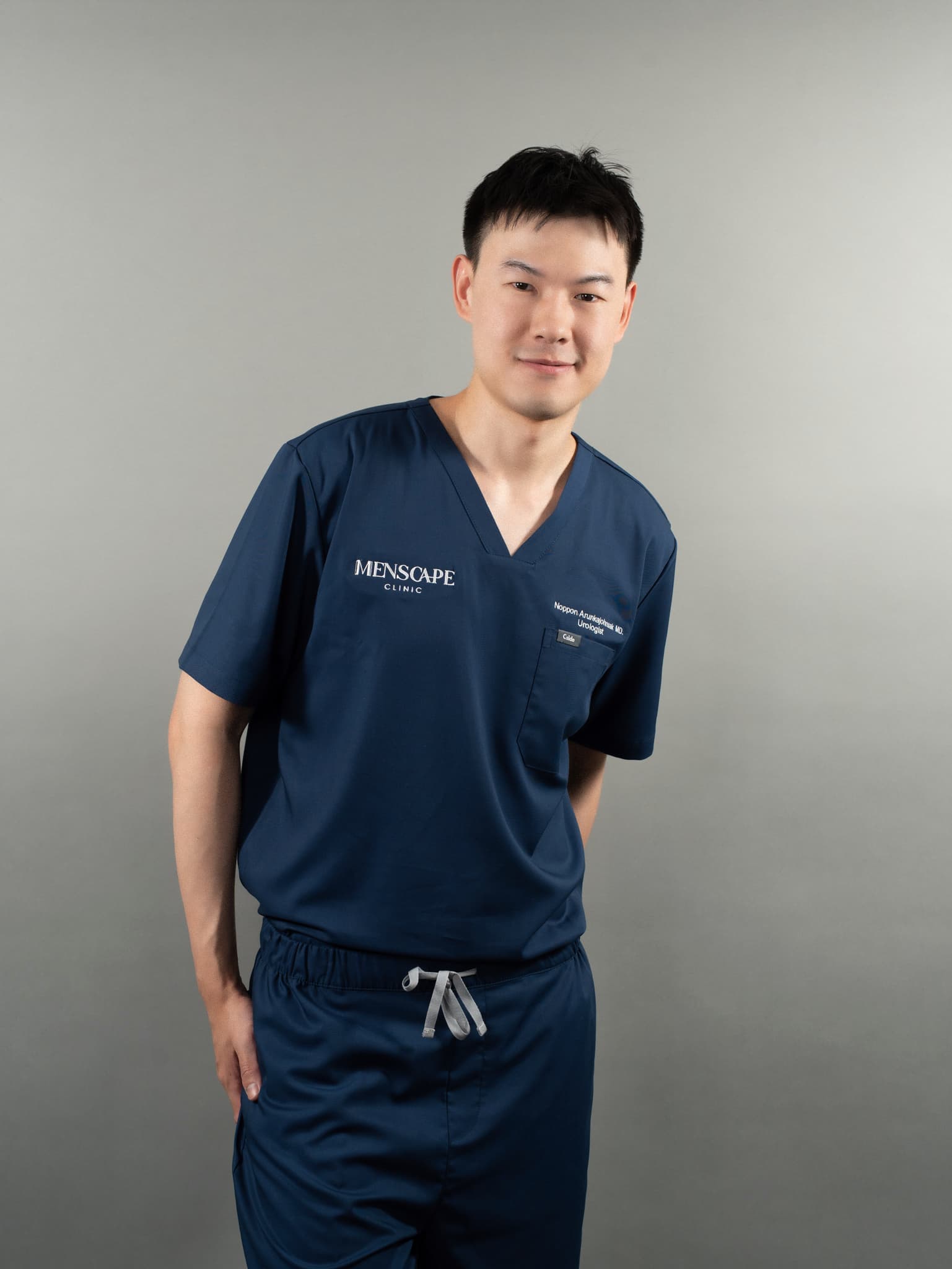
At Menscape in Bangkok, the starting point is a private consultation in which a clinician reviews your history, severity, and goals, and then explains which options are realistic for you, including the possibility that the simplest route is the right one. If you want to map out the path that fits your situation, book a confidential consultation to discuss it properly.
Frequently Asked Questions
Is a penile implant better than shockwave or PRP?
For severe ED, or ED that no longer responds to tablets, an implant is the most reliable option and has the strongest evidence, with satisfaction rates above 90% in long-term data. Shockwave and PRP are gentler, non-surgical options that may help milder, blood-flow-related ED, but their results are smaller, less certain, and often temporary. They are not really better or worse, they suit different situations.
How much do these treatments cost in Bangkok?
As an indicative 2026 guide, a full shockwave course runs roughly 18,000-50,000 THB, a PRP (P-Shot) session roughly 15,000-30,000 THB, and an inflatable penile implant roughly 280,000-650,000 THB all-in. Malleable implants tend to be lower. These vary by device, surgeon, hospital, and package, so confirm an exact quote at your consultation.
Can I try shockwave or PRP before considering an implant?
Often yes, and many men do. Because shockwave and PRP are non-surgical and reversible, they are reasonable to try first if your ED is mild-to-moderate and blood-flow related. If they do not deliver enough benefit, an implant remains available. A clinician should confirm you are a sensible candidate for the regenerative options before you spend on a course.
Does shockwave therapy for ED actually work?
Pooled randomised trials show a real but modest improvement in erection scores for many men with blood-flow-related ED, with the best response in moderate cases. However, the effect can fade over time and major bodies including the AUA still class it as investigational, and it is not FDA-approved for ED. It can help well-selected men but should not be sold as a permanent cure.
Is PRP (the P-Shot) proven for erectile dysfunction?
Not firmly. A high-quality 2023 randomised, placebo-controlled trial found PRP no more effective than a dummy injection for mild-to-moderate ED, although some other trials report benefit. It appears safe, but the evidence that it outperforms placebo is conflicting, so it is best viewed as experimental and discussed honestly rather than relied upon for severe ED.
How long do penile implants last?
Modern penile implants commonly last around 20 years before any revision is needed, and satisfaction among users is high. They can still fail mechanically over time, and like any implanted device they carry a small lifelong risk of infection or the need for surgical revision.
How long is recovery after penile implant surgery?
The operation usually takes one to two hours, and many men go home the same day or after one night. Soreness and swelling settle over one to two weeks. Most clinics ask you to avoid sexual activity for at least four to six weeks, until the surgeon confirms healing is complete and teaches you to use the device.
Which option is the most natural?
Shockwave and PRP aim to work with your own biology, shockwave by encouraging blood vessels and PRP by using plasma from your own blood, so men often see them as the more natural routes. An implant is a mechanical device and is irreversible, but it is also the most dependable. Natural does not always mean more effective, which is the trade-off to weigh.
Are these treatments safe?
Shockwave is generally very well tolerated, and PRP is low-risk because it uses your own blood, with side effects mostly limited to the injection site. A penile implant is major surgery and carries risks of infection, device failure, and erosion, though it is considered safe in experienced hands. Any erection lasting over four hours, spreading redness, fever, or worsening pain needs urgent medical attention.
Do I need a prescription or consultation?
Yes. Shockwave and PRP still require an in-person assessment to confirm the cause of your ED and check for reasons to avoid them. A penile implant requires a full consultation, diagnostic work-up, a prescription, and signed informed consent. ED can also signal underlying heart or vascular disease, so the evaluation protects your wider health, not just your erections.
/)
/)
/)
/)
/)