/)
Prominent ears are one of the most common reasons men quietly avoid certain haircuts. A tight fade or a buzz cut leaves nothing to hide behind, and ears that stand off the head become the first thing the eye lands on, in the mirror and in photos taken from the side. For some men it has been a background irritation since school. For others it only started to bother them once they moved into client-facing work or noticed it in video calls.
Otoplasty, also called ear pinning surgery, reshapes the cartilage so the ears sit closer to the head and the angle looks more natural. It is one of the more predictable procedures in facial plastic surgery, it does not touch hearing, and the incision sits hidden in the crease behind the ear. Bangkok has become a practical place to have it done, partly because of cost and partly because several surgeons here do a high volume of facial work. This guide covers what the surgery involves, transparent pricing in Thai baht and US dollars with a comparison against Western prices, who is and is not a good candidate, recovery week by week, the real risks, and how to choose a clinic without getting burned.
One thing to be clear about up front: otoplasty is a surgical procedure. Nothing below is a substitute for an in-person assessment. A surgeon needs to examine your ears, check the cartilage, and discuss your goals before any plan or price is final.
What otoplasty actually corrects
Most "ears that stick out" come down to one or both of two things in the cartilage, and it helps to know which is yours because it changes the technique.
The first is an underdeveloped antihelical fold. The antihelix is the curved ridge inside the rim of the ear. When it does not fold properly during development, the upper ear flops outward instead of curving back. The second is an overly deep or large conchal bowl, the deep cup of cartilage right next to the ear canal. When the concha is too deep, it pushes the whole ear away from the head. According to the StatPearls otoplasty reference, prominent ears typically result from a combination of these two: an effaced antihelical fold and excess conchal depth, and surgery is usually considered appropriate when the angle between the ear and the head exceeds about 30 degrees.
So otoplasty does some mix of the following, depending on your anatomy:
Recreating or sharpening the antihelical fold so the upper ear curves back naturally
Reducing or repositioning the conchal bowl to bring the ear closer to the skull
Setting the ear back with internal stitches that hold the new angle
Improving symmetry between the two sides
In some cases, addressing a prominent earlobe so the lower third matches
The goal for a man is usually a stronger, cleaner look that holds up under a short haircut, not an ear flattened hard against the head. Overcorrection reads as obvious and, frankly, as feminizing on most male faces. A good result is one nobody can point to.
Otoplasty for men: the specific considerations
The underlying surgery is the same regardless of sex, but the aesthetic targets differ, and a surgeon who does mostly female patients can default to a softer, more pinned-back result than most men want.
A few things matter more for male patients. Men tend to want a slightly larger ear-to-head angle left in place, because an ear pinned flat looks unnatural on a broader, more angular face. Male ears are also often larger with thicker, stiffer cartilage, which can need a stronger reshaping technique and sometimes a small cartilage scoring or excision rather than sutures alone. Short hairstyles raise the stakes both ways: a man who wears a fade has no cover for a poor result, but he also gets the most visible benefit from a good one. And discretion tends to matter; a lot of men would rather the change be noticed only as "you look sharper lately." None of this is exotic, but it is worth raising explicitly at consultation so the plan is built around a masculine outcome.
Bangkok otoplasty pricing: THB, USD, and what you save
Here is the part most people came for. The table below reflects typical ranges at established Bangkok clinics and hospitals as of 2026. Otoplasty is almost always priced for both ears, since prominent ears are nearly always bilateral. These figures are indicative and bundle differently from clinic to clinic, so treat them as a planning guide and confirm the exact inclusions in your written quote.
What you are paying for | Typical Bangkok price (THB) | Approx. USD |
Standard otoplasty, both ears, local anesthesia, day case | 45,000 – 65,000 | ~1,400 – 2,000 |
All-inclusive package (surgery, anesthesia, pre-op tests, meds, nursing, transfers) | 55,000 – 75,000 | ~1,700 – 2,300 |
Complex or revision otoplasty, or general anesthesia | 75,000 – 120,000 | ~2,300 – 3,700 |
Single ear only | 30,000 – 45,000 | ~900 – 1,400 |
USD figures use an approximate rate near 32 to 33 THB per USD and will move with the exchange rate.
Now the comparison that makes Bangkok worth the flight for many men:
Country | Typical otoplasty cost (both ears) | Notes |
Thailand (Bangkok) | ~45,000 – 90,000 THB (~1,400 – 2,800 USD) | Often includes anesthesia and follow-up in package pricing |
United States | ~3,000 – 8,000 USD all-in | ASPS lists a surgeon's-fee average of 4,625 USD, before anesthesia and facility fees |
United Kingdom | ~2,500 – 3,500 GBP (London up to ~6,000) | NHS-quoted private range; consultations extra |
The headline figure for the US comes from the American Society of Plastic Surgeons, which puts the average surgeon's fee at 4,625 USD and is explicit that this "does not include anesthesia, operating room facilities or other related expenses," so the realistic all-in number lands higher. The UK private range of 2,500 to 3,500 GBP is the figure cited by the NHS, with London clinics running higher. Against those, a Bangkok package commonly works out 50 to 70 percent cheaper even before you factor in that anesthesia and aftercare are often already bundled. For a single, relatively quick procedure the travel math only works if you were already inclined to visit Thailand, but for many expats and regional travelers it is a straightforward saving.
What drives the price up or down
Within those ranges, the number you are quoted depends on:
One ear or two. Bilateral is the norm and roughly doubles a single-ear fee, though not always exactly.
Technique and cartilage. Thick, stiff male cartilage that needs scoring or partial excision is more involved than a pure suture (Mustarde/Furnas) approach.
Anesthesia. Local with sedation as a day case is cheaper than general anesthesia with an overnight stay.
Surgeon seniority and clinic tier. A high-volume facial surgeon at an accredited hospital costs more than a budget clinic, and for cartilage work that premium is usually worth it.
Revision vs primary. Correcting a previous otoplasty is harder and priced accordingly.
Package inclusions. Whether pre-op bloods, the compression headband, medications, and follow-up visits are inside the price or added later.
A quote that looks unusually cheap is often cheap because something has been unbundled. Ask what happens to the price if you need general anesthesia or a second night.
Who is a good candidate, and who is not
Otoplasty is one of the more broadly suitable cosmetic procedures, but it is not for everyone, and an honest surgeon will turn some people away.
You are likely a good candidate if you are an adult in reasonable general health, your ears are fully grown, your cartilage still has some flexibility, and you are bothered by genuine prominence rather than chasing perfection. As StatPearls notes, ear cartilage reaches about 80 to 90 percent of adult size by age five or six, which is why the surgery can be done from childhood onward; for the men reading this, that simply means your ears are long since ready. Realistic expectations matter as much as anatomy. The aim is improvement and balance, not two identical ears, because no two ears are ever perfectly symmetric to begin with.
It is probably not the right time, or not right at all, if any of the following apply:
Active infection of the ear or surrounding skin, which needs to clear first.
Poorly controlled diabetes or other conditions that impair healing, which raise the risk of wound and cartilage problems.
Bleeding disorders or blood thinners that cannot be safely paused, given hematoma is the main early risk.
A tendency to keloid or thick hypertrophic scarring, more common in some skin types, which deserves a frank conversation since incisions are near the scar-prone postauricular area.
Active smoking or vaping nicotine, which constricts blood supply to skin and cartilage and is a real problem for healing; most surgeons want you off it for several weeks before and after.
Body image expectations that surgery will not meet, where the prominence is mild and the distress is out of proportion. A careful surgeon will say so.
This list is not exhaustive, and the only way to know your candidacy is an examination. A consultation exists precisely to sort this out.
How the procedure works, step by step
Otoplasty is almost always a day procedure. You arrive, have it done, and go back to your hotel or home the same afternoon in most cases.
1. Consultation and planning. The surgeon examines both ears, assesses the antihelical fold and conchal depth, measures the angle, photographs you, and agrees the target look. This is where you make the male-specific points: how far back you want the ears, your haircut, and how natural a result you are after.
2. Anesthesia. Most adult otoplasty is done under local anesthesia with sedation, which keeps you comfortable and is lower risk and cheaper than general anesthesia. General anesthesia is an option for the anxious or for more complex work.
3. The surgery, about 45 to 90 minutes. The surgeon makes an incision in the crease behind the ear, where it stays hidden. Through that, the cartilage is reshaped: the antihelical fold is recreated or strengthened, often with permanent internal sutures placed between the scaphoid fossa and the concha (the Mustarde technique), and the ear is set back toward the head with sutures anchored to the tissue over the mastoid bone (the Furnas technique), as described in the StatPearls reference. Where the cartilage is thick and stiff, the surgeon may score or remove a small strip so it folds without springing back. There are no incisions on the front of the ear, so nothing shows from straight on.
4. Closure and dressing. The skin is closed, usually with sutures that dissolve or are removed at the first visit, and a supportive head dressing or compression headband is applied to protect the new shape while it settles.
Both ears are done in the same sitting. You will leave with a bulky wrap or headband that you keep on as instructed.
Recovery, week by week
Recovery from otoplasty is generally manageable, and most men underestimate how quickly the visible swelling settles versus how long they should baby the ears.
Days 1 to 3.Expect a throbbing ache, swelling, and a feeling of tightness, controlled with simple pain relief. Keep the head dressing on and dry, sleep on your back with your head slightly improved, and avoid bending forward or any pressure on the ears.
First week. The bulky dressing typically comes off and is swapped for a lighter headband, often worn day and night at first, then at night for several weeks to stop the ears being bent during sleep. Sutures behind the ear are removed or have started to dissolve. Many men with desk jobs return to work around days 5 to 7, accepting that there is still a headband and some swelling. The NHS notes dressings and stitches are usually dealt with within 5 to 10 days.
Weeks 2 to 3. Bruising fades, the worst swelling subsides, and the ears start to look like the intended result. They may feel firm, numb, or oddly sensitive; this is normal as nerves recover. You can usually go about most daily life, still protecting the ears at night.
Weeks 4 to 6. The contour looks close to final. Light exercise is generally fine by now; swimming is typically held until around the 4 to 6 week mark, and contact sports or anything that risks a knock to the ear should wait until roughly 6 to 8 weeks, in line with standard guidance. The cartilage is still consolidating its new position, so caution pays off.
Months 1 to 3 and beyond. Residual swelling resolves, sensation normalizes, and the final shape is settled. The scar behind the ear matures and fades into the crease where it is hard to find.
Healing speed varies between individuals, and your surgeon's specific instructions override any general timeline.
Results: how long they last and how natural they look
Otoplasty results are generally long-lasting. Once the cartilage is reshaped and held by internal sutures, and once it has healed into the new position over the first months, the correction is meant to be permanent for most patients. Ears do not "grow back out" in any normal sense.
What you can realistically expect is ears that sit noticeably closer to the head, a restored or strengthened antihelical fold so the upper ear curves naturally, better symmetry between the two sides, and a profile that no longer draws attention to the ears. The honest caveats: perfect symmetry is not a promise, since no one starts symmetric; a small amount of relapse, where one ear drifts slightly back out, happens in a minority of cases and is the most common reason for a touch-up. In the conchal excision literature review in Plastic and Reconstructive Surgery Global Open, reported series showed low complication rates with partial relapse in the low single-digit percentages and consistently high patient satisfaction on standardized scoring. That matches the general picture: most men are pleased, a small number need a minor revision, and the look holds over the long term.
Have a question about your treatment?
Message our Bangkok clinic on WhatsApp and a doctor replies within minutes during clinic hours.
Risks and side effects
Otoplasty is considered a relatively safe procedure, but it is still surgery and you should go in with the risks clearly in mind. Most issues are minor and settle on their own.
Common and expected, not complications:
Swelling and bruising around the ears for one to a few weeks
Aching or tenderness in the first days
Numbness or altered sensation of the ear that gradually recovers
A feeling of tightness or firmness in the cartilage early on
A small, hidden scar in the crease behind the ear
Less common, and reasons a surgeon's skill matters:
Asymmetry, or a result that is slightly over- or under-corrected
Partial recurrence of prominence as one ear settles back
Suture problems, where a deep stitch becomes palpable, extrudes, or reacts
Noticeable scar or, in scar-prone individuals, keloid formation
Specific shape irregularities surgeons watch for, such as a "telephone ear" deformity
When to seek urgent care
A few signs are not part of normal healing and need prompt medical attention, the same day:
Rapidly increasing pain, swelling, or tightness on one side, especially with a sense of pressure, which can indicate a hematoma (a collection of blood under the skin). This is the main early complication and needs evacuating quickly to protect the cartilage.
Spreading redness, heat, increasing pain, fever, or discharge, which can signal infection, including the cartilage infection (perichondritis) that StatPearls flags as a serious concern after ear surgery and which is sometimes caused by aggressive bacteria.
A part of the skin turning dark, dusky, or losing color, which can suggest compromised blood supply.
Treated early, these problems are usually managed well. Ignored, a hematoma or cartilage infection can damage the shape of the ear, which is exactly why your surgeon will give you a number to call and want to see you fast if something feels wrong. This is also why having the surgery somewhere with proper aftercare access matters, a point that feeds directly into choosing a clinic.
Choosing a safe clinic in Bangkok, and the red flags
Bangkok has excellent surgeons and accredited hospitals, and it also has clinics that compete mainly on price. For cartilage work, where the result and your safety both ride on technique and aftercare, the choice of where matters more than shaving off the last few thousand baht.
What to look for:
A surgeon with genuine facial plastic or plastic surgery training and real otoplasty volume. Ask how many ear procedures they do and ask to see their own before-and-after photos, not stock images.
Accreditation and a proper facility. Hospitals and clinics with recognized accreditation (for example JCI at hospital level, or AACI/ISO standards) have systems for sterility, anesthesia safety, and emergencies.
A real consultation that includes the "no" cases. A surgeon who examines you, explains your specific anatomy, and is candid about limits and risks is a better sign than one who promises perfection.
Clear written pricing with inclusions, so you know what anesthesia, the headband, medications, and follow-ups cost.
A defined aftercare plan, including who you call and where you go if there is a problem in the first days, which is when hematomas appear.
Red flags worth walking away from:
Pressure to decide or pay immediately, or "today only" discounts
A price that is far below everyone else, usually because something is unbundled or the setting is not equipped
No named, qualified surgeon, or refusal to show real case photos
Vague or absent answers about what happens if a complication occurs
No in-person examination before quoting a firm surgical plan
If you are weighing up your face more broadly, it can be worth reading alongside our guides to male facelift surgery and liposuction for men, since some men combine procedures on a single trip, and the clinic-selection logic is the same across all of them.
How otoplasty compares to the alternatives
Ear pinning is the right tool for genuinely prominent ears, but it is worth knowing where it sits next to the other options so you choose deliberately.
Option | What it does | Permanence | Best for |
Surgical otoplasty | Reshapes cartilage and sets ears back through a hidden incision | Generally long-lasting | Adults with true prominence and thicker, set cartilage |
Incisionless (suture-only) otoplasty | Uses needle passes and stitches to fold cartilage without a skin incision | Long-lasting in selected cases, with some higher relapse risk | Milder prominence with flexible cartilage and a good antihelical fold |
Non-surgical ear molding | Splints reshape soft cartilage in newborns | Can be permanent if started very early | Babies in the first weeks of life only, not adults |
Doing nothing / styling | Longer hair or hairstyles that cover the ears | Reversible, no procedure | Men who are not bothered enough to operate, or want to cover rather than correct |
For an adult man with ears that clearly stand out, surgical otoplasty is usually the option that delivers a stable, natural result; incisionless techniques can be excellent in the right, milder cases but are not for everyone. Which suits you is a judgment your surgeon makes after examining the cartilage.
Booking a consultation
If prominent ears have been on your mind, the practical next step is an assessment, not a deposit. A consultation lets a surgeon examine your ears, tell you which of the two anatomical issues you have, set out a realistic result and an honest price, and confirm whether you are a suitable candidate at all. Bring photos of yourself in the haircut you actually wear, and be direct about how subtle or significant a change you want.
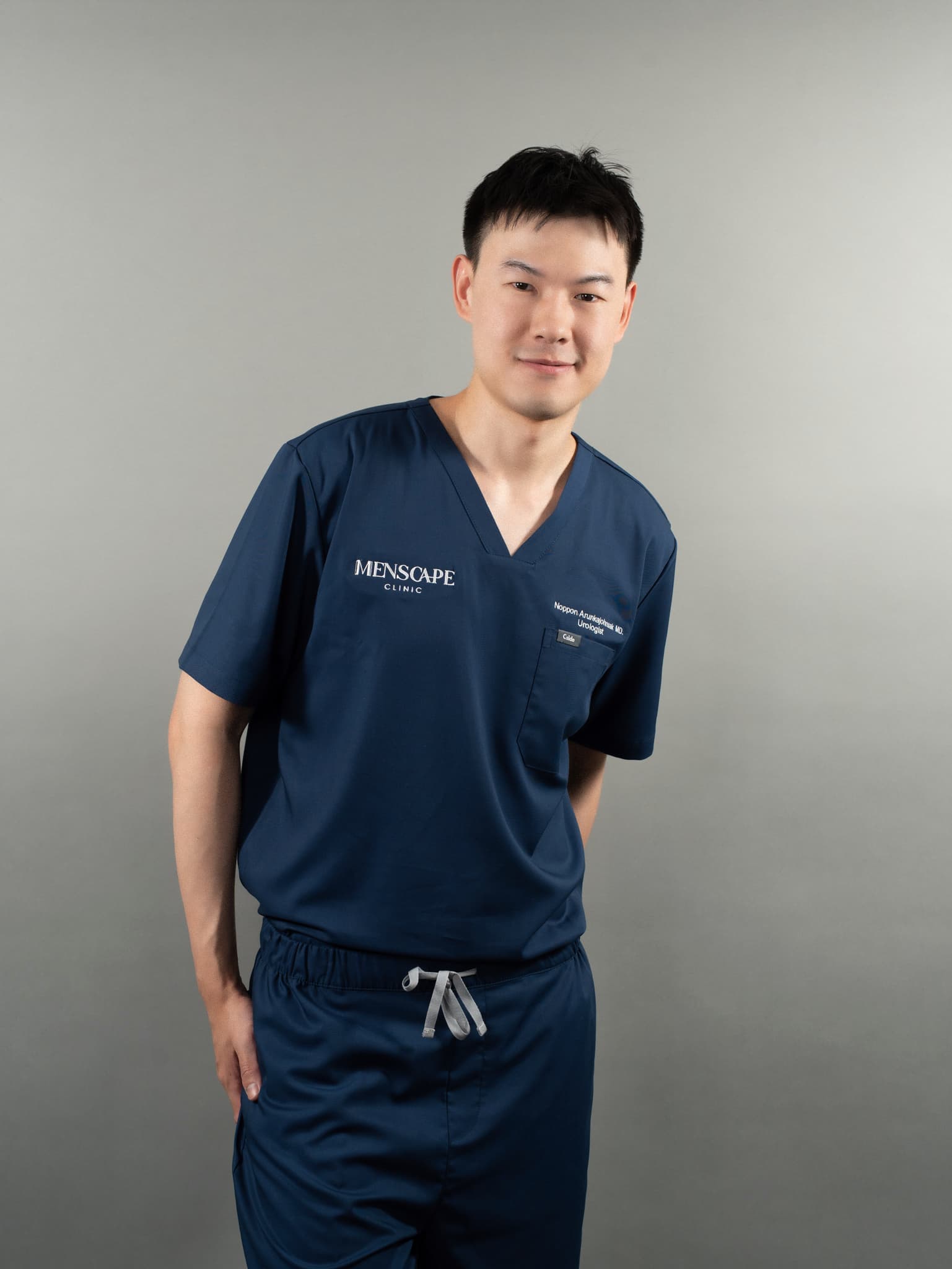
Otoplasty is a medical procedure and requires an in-person consultation and a surgeon's assessment before anything is planned or quoted. To discuss male otoplasty with our team in Bangkok, you can book a consultation with Menscape and have your ears assessed by a surgeon experienced in male facial work.
Frequently Asked Questions
Will people be able to tell I had ear surgery?
Usually not in the way you might fear. The incision sits in the crease behind the ear and is hard to find once healed, and there are no cuts on the front of the ear. In the first weeks there is a headband and some swelling, so the timing is visible, but the long-term result, ears that sit closer to the head, tends to read simply as looking sharper rather than as obvious surgery, provided the surgeon avoids overcorrection.
Does otoplasty affect hearing?
No. Otoplasty reshapes the external ear cartilage only. It does not go near the ear canal, eardrum, or any of the structures involved in hearing, so it does not change how well you hear. Both Cleveland Clinic and standard surgical references are explicit that the procedure does not improve or impair hearing.
How much does otoplasty for men cost in Bangkok?
At reputable Bangkok clinics, both ears typically run about 45,000 to 90,000 THB, roughly 1,400 to 2,800 USD, depending on technique, anesthesia, surgeon seniority, and what the package includes. That is often 50 to 70 percent less than comparable surgery in the US or UK. These figures are indicative; your exact quote depends on an in-person assessment, so confirm inclusions in writing at consultation.
Is it painful?
Most men describe an ache and a feeling of tightness rather than sharp pain, mainly in the first two to three days, and it is generally well controlled with simple pain relief. The ears can feel numb, tender, or oddly sensitive for a few weeks as the nerves recover, which is normal.
How long until I can go back to work and exercise?
Many men with desk jobs return to work around 5 to 7 days, accepting that there is still a protective headband and some swelling. Light exercise is generally fine by 4 to 6 weeks, swimming around the same window, and contact sports or anything that could knock the ear should wait until roughly 6 to 8 weeks. Your surgeon's specific advice takes priority.
Can the ears end up looking too flat or pinned back?
They can if too much correction is done, and an overly pinned look is exactly what most men want to avoid because it appears unnatural on a male face. A surgeon working to a masculine result deliberately leaves a natural ear-to-head angle rather than flattening the ears against the skull. Raising this clearly at consultation is the best way to steer the outcome.
Are the results permanent?
For most patients, yes, results are generally long-lasting. Once the reshaped cartilage heals into its new position over the first months, the correction is meant to be stable. A minority of patients see a small amount of relapse, where one ear drifts slightly back out, which is the usual reason for a minor revision, but the ears do not return to their original prominence in any normal sense.
What is the most serious thing that can go wrong, and how would I know?
The main early complication to watch for is a hematoma, a collection of blood under the skin, which shows up as rapidly increasing pain, swelling, and pressure on one side in the first day or two. Infection of the cartilage (perichondritis) is less common but serious, signalled by spreading redness, heat, fever, or discharge. Both need same-day medical attention and are usually managed well if treated early, which is why aftercare access matters when choosing where to have surgery.
Can I have just one ear done?
Yes, if only one ear is prominent or if the two are markedly different, a single-ear otoplasty is possible and costs less than bilateral, roughly 30,000 to 45,000 THB in Bangkok. That said, surgeons often assess both ears together to get the best symmetry, since a change on one side can make a mild asymmetry on the other more noticeable.
)
/)
/)
/)
/)
/)