/)
A cystoscopy is one of the most useful tools a urologist has for looking directly inside the urethra and bladder. Instead of guessing from a urine test or an ultrasound, the doctor passes a thin telescope with a camera through the urethra (the tube you urinate through) and inspects the bladder lining in real time. For men dealing with blood in the urine, a weak or stop-start stream, repeated urinary infections, or a follow-up after bladder cancer, it often answers questions that scans alone cannot.
If you are searching for the price, the short version is that a cystoscopy is one of the more affordable urology procedures in Bangkok, and considerably cheaper here than in the US, UK, or Australia. But "cystoscopy" covers a range from a five-minute clinic check under numbing gel to a theatre procedure under general anaesthesia with a biopsy, and the cost moves with it. This guide lays out realistic Bangkok pricing in Thai baht and US dollars, explains what changes the number, and walks through who the test is for, what recovery looks like, and how to read a quote so there are no surprises.
A cystoscopy requires a consultation and a doctor's order. It is a diagnostic procedure, not something you can book like a haircut, and the right type for you depends on your symptoms and history. Treat every figure below as indicative and confirm it at your own assessment.
What a cystoscopy actually is
The instrument is called a cystoscope. Your urologist guides it through the urethra into the bladder, fills the bladder with sterile saline to open out the folds of the lining, and looks for anything abnormal: inflammation, stones, narrowings (strictures), or growths. According to the Cleveland Clinic, it is used to investigate symptoms such as blood in the urine, painful urination, incontinence, or trouble emptying the bladder, and to diagnose conditions including bladder cancer, stones, strictures, and recurrent infections.
There are two broad reasons to have one. Most are purely diagnostic, to find out why a symptom is happening. Some are therapeutic, meaning the doctor treats something during the same procedure, such as removing a small stone, snipping a tiny lesion, or taking a tissue sample (biopsy). Whether your procedure is diagnostic only or includes treatment has a direct effect on both the experience and the bill.
For bladder cancer specifically, cystoscopy is the central test. The American Cancer Society notes that if bladder cancer is suspected a doctor will usually recommend cystoscopy, and that most specialists still regard it as the best way to find the disease. Suspicious findings are then confirmed with a transurethral resection (TURBT) and often paired with a urine cytology sample, which is a separate laboratory test.
Flexible versus rigid: the two main options
The choice of scope is the first thing that shapes your cost, so it helps to understand the difference.
Flexible cystoscopy
A flexible cystoscope bends to follow the natural curve of the male urethra. It is usually done awake in a clinic or outpatient room with a local anaesthetic, which is simply a numbing gel placed in the urethra. The Urology Care Foundation, the patient-education arm of the American Urological Association, describes it as a quick outpatient test of roughly 5 to 15 minutes after which you can return to your usual routine. You feel pressure as the scope passes and a strong urge to urinate as the bladder fills, but for most men it is uncomfortable rather than painful. This is the lower-cost route and, for straightforward diagnostic questions in men, it is the default.
Rigid cystoscopy
A rigid cystoscope is a straight metal telescope. Because it does not bend, it is almost always done in an operating theatre under intravenous sedation (sometimes called TIVA) or a general anaesthetic. The trade-off is that the rigid scope has wider working channels, so the urologist can pass larger instruments through it. That makes it the better choice when treatment is likely in the same sitting, for example resecting a tumour, dealing with a larger stone, or taking generous biopsies. The theatre time, the anaesthetist, and the recovery bay all add to the price, which is why rigid procedures sit at the upper end.
A reasonable way to think about it: flexible is for looking, rigid is for looking and doing. Your urologist will recommend one based on what they expect to find and whether they may need to act on it.
Cystoscopy cost in Bangkok: THB and USD price table
The table below gives indicative self-pay ranges for cystoscopy in Bangkok in 2026, alongside what the same procedure commonly costs privately in the US and UK. Thai figures draw on published hospital package pricing and medical-tourism aggregator data, which place the typical cystoscopy in Thailand at around 32,300 THB (about 950 USD), with most cases falling between roughly 22,000 and 42,500 THB. Clinic-based flexible procedures under local anaesthetic sit below that midpoint; theatre-based rigid procedures and anything involving a biopsy sit above it.
Procedure | Setting and anaesthesia | Bangkok (THB) | Bangkok (USD approx) | Typical US/UK private | Indicative saving in Bangkok |
Flexible cystoscopy, diagnostic | Clinic / OPD, local gel | 12,000-25,000 | 330-690 | US in-office ~300-1,200; UK ~595-1,500 | Comparable to in-office US; well below UK |
Flexible cystoscopy with biopsy | OPD or day case, local +/- sedation | 28,000-42,000 | 770-1,150 | US hospital ~2,000-4,000; UK ~1,800-2,800 | ~50-70% |
Rigid cystoscopy | Operating theatre, sedation or GA | 35,000-55,000 | 970-1,500 | US ASC all-in ~2,800-5,700; UK ~2,200-3,500 | ~55-75% |
Add-on: urine cytology | Laboratory test | 1,500-3,500 | 40-95 | Often billed separately | Lower base price |
Add-on: histopathology (per biopsy) | Laboratory analysis | 3,000-8,000 | 80-220 | Often billed separately | Lower base price |
These are planning ranges, not quotes. Your final number depends on the hospital or clinic, the surgeon's fee, the anaesthesia chosen, and how many add-ons apply. The US and UK columns are indicative private self-pay figures and vary widely by city and facility. As a rule of thumb, Bangkok commonly saves international patients between 50 and 80 percent on a comparable diagnostic, and the gap widens when a theatre and general anaesthetic are involved, because that is where Western facility fees climb fastest. Confirm everything at consultation.
What drives the final cost
Five variables explain almost all of the spread in the table.
Scope type and setting. A flexible scope in a clinic room is the cheapest configuration. A rigid scope needs a theatre, which means a facility fee and scheduled theatre time.
Anaesthesia. Numbing gel is inexpensive. Intravenous sedation or a general anaesthetic brings in an anaesthetist's fee and monitoring, and usually an hour or two in a recovery bay. This is frequently the largest single line after the procedure itself.
Biopsy and pathology. If the urologist sees something suspicious and samples it, that tissue goes to a laboratory. Each specimen carries a histopathology charge, and turnaround is usually several days. Biopsy is the most common reason a "simple" cystoscopy quote ends up higher than expected.
Cytology and other labs. A urine cytology test, which checks for abnormal cells under the microscope, is often sent alongside a cystoscopy when bladder cancer is a concern. It is a separate cost, as are any pre-procedure blood tests or urine cultures.
Surveillance frequency. Some conditions, bladder cancer in particular, need repeat cystoscopies on a schedule for years. Each one has its own cost, so it is worth asking your urologist what the longer-term plan looks like rather than budgeting for a single visit.
Who a cystoscopy is for, and who it is not for
Good candidates
A cystoscopy is typically recommended for men with:
Visible or microscopic blood in the urine (haematuria) with no clear cause
Recurrent urinary tract infections
Persistent painful or difficult urination, or a weak, hesitant, or stop-start stream not explained by other tests
Suspected bladder stones, strictures, or a growth seen on a scan
A history of bladder cancer requiring surveillance
Ongoing irritative symptoms such as urgency and frequency that warrant a direct look
When it may be delayed or reconsidered
Cystoscopy is generally safe, but it is not always the right next step. It is usually postponed or avoided when there is:
An active, untreated urinary tract infection. Passing a scope through infected urine can push bacteria upward and cause a more serious infection, so most urologists treat the infection first.
A severe urethral stricture so tight the scope cannot pass safely, which may need a different approach.
Significant uncorrected bleeding problems or blood-thinning medication that has not been reviewed, particularly if a biopsy is planned.
Pregnancy, recent urological surgery, or another acute illness that makes elective timing unwise.
None of these are absolute in every case. They are reasons your urologist may adjust the plan, which is exactly why the procedure cannot be booked without an assessment and a prescription.
What to expect, step by step
For a standard flexible cystoscopy under local anaesthetic, the sequence is short:
Check-in and consent. You confirm your history, any allergies, and current medications. A urine sample may be checked to rule out active infection.
Positioning and numbing. You lie on your back. The urethra is cleaned, and anaesthetic gel is instilled and given a few minutes to work.
Insertion. The urologist passes the lubricated scope gently through the urethra. You feel pressure and, as the bladder is filled with saline, a strong urge to pass urine. The Urology Care Foundation describes this pressure sensation as the main thing patients notice.
Inspection. The bladder lining and urethra are examined systematically. If needed, a biopsy is taken or a small treatment performed, though for a purely diagnostic scope nothing further is done.
Finish. The saline is drained, the scope removed, and you can usually get up and leave shortly afterwards.
If you have a rigid cystoscopy under sedation or general anaesthetic, add pre-operative fasting, an intravenous line, and a stay in the recovery bay until the anaesthetic wears off. You will need someone to take you home and should not drive that day.
Recovery, stage by stage
Recovery from a diagnostic cystoscopy is quick, and most men are back to normal within a day or two.
First few hours. A burning or stinging feeling when you urinate is common and expected. You may see pink-tinged urine. Drinking plenty of water helps flush the bladder and eases the sting. The Cleveland Clinic notes most people recover within one to two days, with mild discomfort, blood-tinged urine, and urinary urgency being normal early symptoms.
First 24 hours. According to the Urology Care Foundation, the soreness, the trace of blood, and the burning on urination usually settle within 12 to 24 hours. Keeping your fluid intake up over this window is the single most useful thing you can do.
Days two to three. Symptoms should be fading or gone. If a biopsy was taken, light spotting can last a little longer. Strenuous exercise and sex are usually fine to resume once you feel comfortable, but follow the specific advice you are given, especially after a biopsy or theatre procedure.
How common are these after-effects? They are the rule, not the exception, but they are mild. A randomised trial in the Irish Journal of Medical Science found that roughly half of patients experience dysuria (burning on urination) after a flexible cystoscopy, with many also reporting urgency, frequency, and some visible blood, and that only about 6.6 percent were bothered enough to see their GP about it.
Results: what the numbers say
Two things make cystoscopy worth the modest discomfort: it is fast, and it is accurate at what it does.
The procedure itself is short. MedlinePlus, the patient resource from the US National Library of Medicine, puts a flexible cystoscopy at about 5 to 20 minutes, and the Urology Care Foundation cites roughly 5 to 15 minutes for a diagnostic scope.
For bladder cancer, the diagnostic value is high. As the American Cancer Society states, most doctors consider cystoscopy the best available way to find bladder cancer, which is why it remains the reference test despite newer urine biomarkers.
Post-procedure problems are usually minor and self-limiting. The data above put bothersome symptoms requiring a doctor visit at well under one in ten.
Serious complications are uncommon. The main risks, covered below, are infection and minor bleeding, both of which are infrequent after a routine diagnostic scope.
Risks and side effects
Most men have nothing more than a day of stinging. Still, it is worth knowing the full picture.
Common and expected
Burning or discomfort when urinating for a day or two
A small amount of blood in the urine, often pink-tinged
A need to urinate more often or more urgently for a short time
MedlinePlus lists exactly these temporary effects, including a burning sensation during urination for a day or two and a small amount of blood in the urine afterward.
Have a question about your treatment?
Message our Bangkok clinic on WhatsApp and a doctor replies within minutes during clinic hours.
Less common
Urinary tract infection, which is why an active infection is treated before the procedure
Bladder spasms or temporary difficulty passing urine
Minor injury to the urethra; rarely, a small tear
Red flags: seek urgent care
Contact your clinic or go to a hospital promptly if, after a cystoscopy, you have any of the following, which both the Cleveland Clinic and MedlinePlus flag as warning signs:
Fever or chills
Heavy bleeding, or blood clots in the urine
Inability to pass urine at all
Severe or worsening lower-abdominal or pelvic pain
Pain or burning that gets worse rather than better after the first day or two
These are uncommon, but they can signal infection or a complication that needs treatment, so do not wait them out.
Choosing a safe clinic in Bangkok
Bangkok is a well-established destination for urology care, and the quality at the better facilities is high. The price advantage is real, but the priority is a safe, accurate procedure, so weigh more than the headline number.
Look for:
A board-certified urologist performing the cystoscopy, ideally one who does them regularly
Clear, itemised quoting that separates the surgeon's fee, facility fee, anaesthesia, and any pathology, so you can see what is and is not included
Proper sterilisation and single-use or fully reprocessed scopes, and a clean procedure room or accredited theatre
A plan for results, including who reviews any biopsy and how you will be told
English-speaking staff and a written aftercare sheet with the warning signs listed above
Red flags worth pausing on: a quote that looks far below everyone else's with no explanation, pressure to add procedures you do not understand, no named doctor, or vague answers about what happens if a biopsy is needed. A transparent clinic will welcome these questions.
How the cost compares: Bangkok vs the West
To put the savings in context, here is the same diagnostic across regions, using indicative private self-pay figures.
Region | Flexible cystoscopy (diagnostic) | Typical setting | Notes |
Bangkok | ~12,000-25,000 THB (330-690 USD) | Clinic / OPD, local gel | Biopsy and pathology extra |
United States | ~300-1,200 USD in-office; 2,800-5,700+ USD at a surgery centre or hospital | Office or facility | Facility and anaesthesia fees drive the spread |
United Kingdom (private) | ~595-2,200+ GBP | Private hospital / clinic | Packages often bundle aftercare |
Australia (private) | Broadly similar to the UK | Private hospital | Out-of-pocket varies with cover |
The pattern is consistent: a basic in-office flexible scope in the US can be competitive on price, but as soon as a facility, an anaesthetist, or a biopsy enters the picture, Western costs rise steeply while Bangkok's stay moderate. For anything beyond the simplest diagnostic, the saving here is typically substantial.
For related procedures, you may also find our guides to kidney stone treatment costs in Bangkok, BPH (enlarged prostate) treatment costs, and varicocelectomy costs useful when planning urology care.
What a Bangkok quote should include
A clear cystoscopy quote usually covers:
The urologist's consultation fee
The cystoscopy procedure itself, flexible or rigid
Anaesthesia, whether local gel, sedation, or general
The facility fee, clinic room or operating theatre
Post-procedure recovery and observation
Pathology, if a biopsy is taken (often itemised per specimen)
A follow-up appointment to discuss results
Ask whether pre-procedure tests such as a urine culture or blood work are included or billed separately, and whether the price assumes a biopsy or not. Getting this in writing is the simplest way to avoid a gap between the quoted figure and the final invoice.
Insurance and payment
If you hold international health insurance, contact your insurer before booking. Many policies cover a medically necessary cystoscopy, but pre-authorisation is often required, and diagnostic procedures can be treated differently from treatments. For self-pay patients, a reputable Bangkok clinic will provide an itemised estimate up front, and many offer card payment and, in some cases, installment options.
Booking your assessment
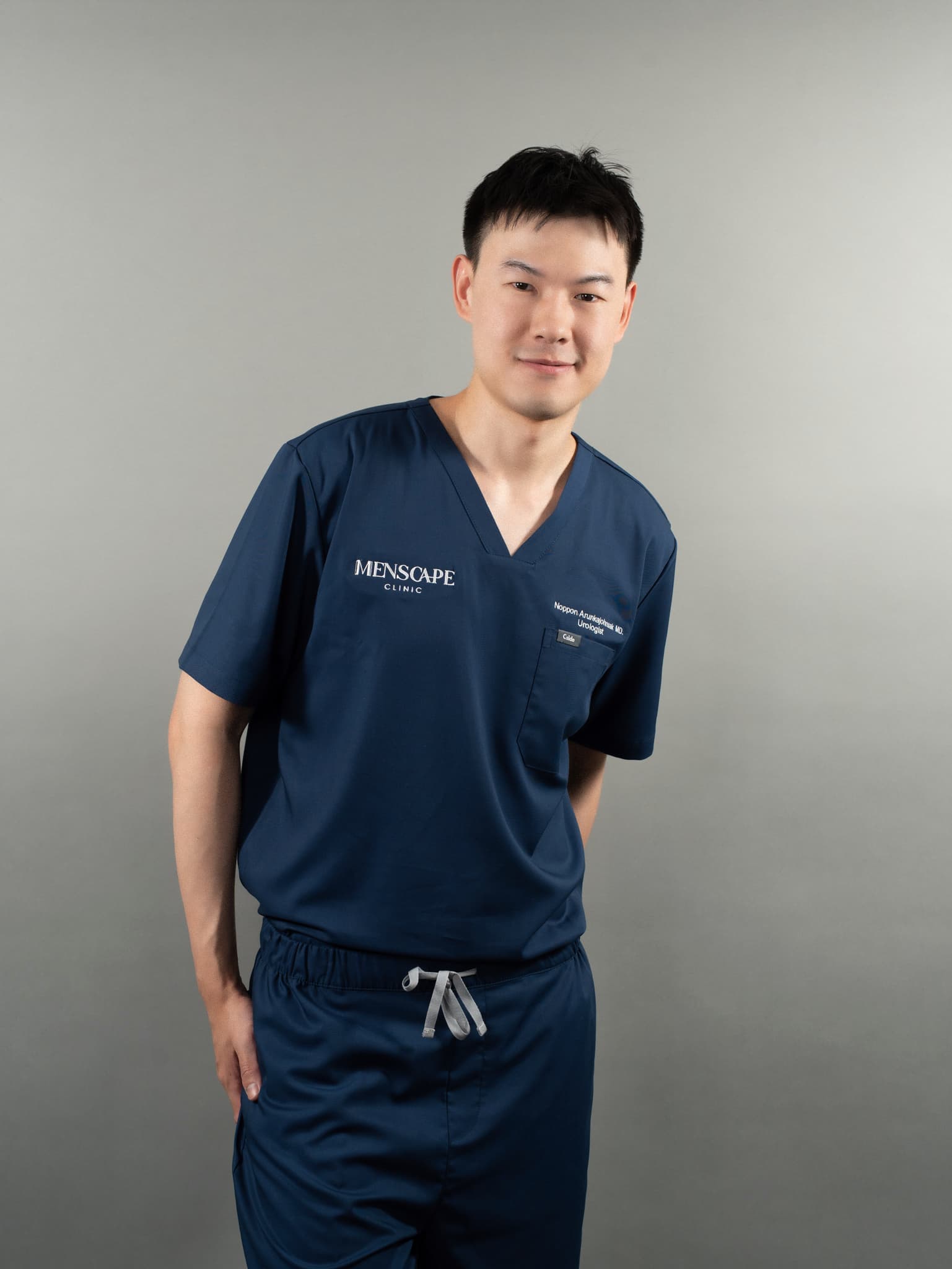
A cystoscopy starts with a consultation, not a booking form. At Menscape in Bangkok, a urologist reviews your symptoms and history, decides whether a flexible or rigid approach fits, and gives you a clear, itemised estimate before anything is scheduled. If you have blood in your urine, recurring infections, or stubborn urinary symptoms, the assessment is the right first step. Book a urology consultation to get a personalised quote and a plan.
This article is general information and does not replace medical advice. A cystoscopy is a diagnostic procedure that requires a consultation, examination, and a doctor's order; the right type, the need for a biopsy, and your final cost can only be confirmed by a qualified urologist.
Frequently Asked Questions
How much does a cystoscopy cost in Bangkok?
As a planning range, a diagnostic flexible cystoscopy under local anaesthetic in Bangkok is typically about 12,000-25,000 THB (roughly 330-690 USD). A rigid cystoscopy in an operating theatre under sedation or general anaesthesia, or a flexible scope with a biopsy, usually costs around 28,000-55,000 THB (about 770-1,500 USD). Aggregated Thailand data puts the typical cystoscopy near 32,300 THB. Pathology and urine cytology are usually extra. These are indicative figures; confirm your exact quote at consultation.
Is a flexible or rigid cystoscopy better for me?
It depends on what your urologist expects to find. A flexible scope is the usual choice for a straightforward diagnostic look in men because it follows the urethra's curve and can be done awake under numbing gel. A rigid scope is preferred when treatment is likely in the same sitting, such as removing a stone, resecting a tumour, or taking larger biopsies, because it has wider channels for instruments, but it needs a theatre and anaesthesia. Your doctor recommends the right one after assessing you.
Does a cystoscopy hurt?
For most men a diagnostic flexible cystoscopy is uncomfortable rather than painful. You feel pressure as the scope passes and a strong urge to urinate as the bladder fills with saline. A numbing gel reduces discomfort. Afterwards, a burning feeling on urination and a little pink-tinged urine are common for a day or so. A rigid cystoscopy is done under sedation or general anaesthetic, so you do not feel the procedure itself.
How long does recovery take?
Recovery from a diagnostic cystoscopy is quick. Most men are back to normal within one to two days. A burning sensation when urinating and a trace of blood usually settle within 12 to 24 hours, and drinking plenty of water helps. If a biopsy was taken or you had a theatre procedure under anaesthesia, follow the specific aftercare advice you are given, as light spotting may last a little longer.
What are the warning signs after a cystoscopy?
Seek urgent care if you develop a fever or chills, heavy bleeding or blood clots in the urine, an inability to pass urine at all, severe or worsening lower-abdominal pain, or burning that gets worse rather than better after the first day or two. These are uncommon but can indicate an infection or a complication that needs prompt treatment. Routine mild stinging and a little pink urine in the first day are normal and not a cause for alarm.
Why is a cystoscopy in Bangkok cheaper than in the US or UK?
The lower price mainly reflects lower facility, staffing, and overhead costs in Thailand, not lower clinical standards at the better hospitals. The gap is widest when a procedure needs an operating theatre and a general anaesthetic, because that is where Western facility fees climb fastest. For a comparable diagnostic, Bangkok commonly saves international patients between 50 and 80 percent, while a basic in-office flexible scope in the US can be more competitively priced.
Do I need a referral or consultation first?
Yes. A cystoscopy is a diagnostic procedure that requires a consultation, an examination, and a doctor's order. It cannot be booked directly like a routine appointment, because the right type of scope, whether a biopsy is needed, and your final cost all depend on your symptoms and history. The consultation also lets the urologist rule out an active urinary infection, which is usually treated before any scope is passed.
Will I get a biopsy during my cystoscopy?
Only if your urologist sees something that needs sampling. A purely diagnostic cystoscopy involves looking, not cutting. If a suspicious area is found, a small tissue sample may be taken and sent to a laboratory, which adds a histopathology charge and a few days for results. Ask in advance whether your quote assumes a biopsy or not, so the final invoice matches your expectations.
How accurate is a cystoscopy for finding bladder cancer?
Cystoscopy is the central test for bladder cancer. Major urology bodies and the American Cancer Society regard it as the best available way to find the disease, because it lets the doctor see the bladder lining directly and sample anything suspicious. Findings are then typically confirmed with a transurethral resection (TURBT) and often paired with a urine cytology test. It remains the reference test even as newer urine biomarker tests become available.
)
/)
/)
/)
/)
/)