/)
/)
/)
/)
/)
Prostate Biopsy · TRUS-Guided and MRI-Fusion in Bangkok
Prostate biopsy is the only way to definitively diagnose prostate cancer. We offer both classic TRUS-guided biopsy (transrectal ultrasound systematic sampling) and modern MRI-fusion biopsy (where pre-biopsy MRI lesions are precisely targeted during the biopsy itself). MRI-fusion gives higher cancer detection rates and lower rates of clinically insignificant findings.
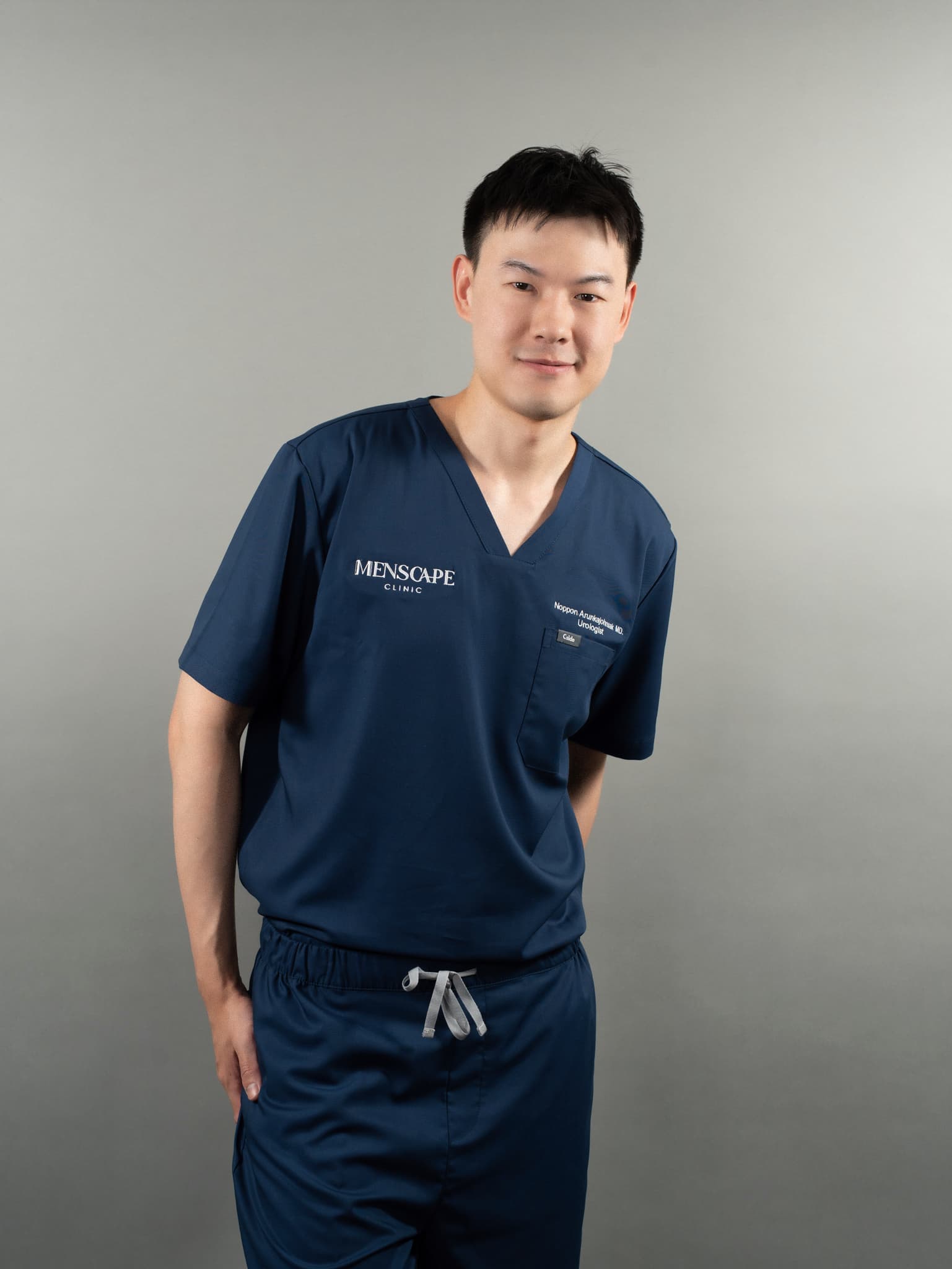
Medically reviewed by Dr. Noppon Arunkajohnsak (Win), Board-certified Urologist
9 years of experience
Our solutions
Why patients choose Prostate Biopsy
What Our Patients Say
Male Surgery
They walked me through every step before they started, so nothing caught me by surprise. It was over quicker than I expected.
Wachirawit, 67
Male Surgery
I was nervous going in, but I felt nothing during the procedure and I was back home the same afternoon. Waiting for the report was the hard part, and they called me as soon as it came in.
Khom, 64
Book your consultation today.
/)
How to Prepare for Prostate Biopsy
Pre-biopsy MRI (if MRI-fusion planned)
Multiparametric prostate MRI 1-4 weeks before biopsy to identify suspicious lesions.Antibiotic prophylaxis
Targeted antibiotics based on rectal swab culture · reduces sepsis risk after transrectal biopsy.Stop blood thinners
5-7 days before biopsy only if cleared by your prescribing doctor.Bowel preparation (transrectal only)
Enema before transrectal biopsy to clear stool.Fast pre-procedure if TIVA
No food or water for 6 hours if you’re having sedation.Plan for transport home
You cannot drive yourself home after sedation.
/)
What Happens During Prostate Biopsy
Anesthesia
Local anesthesia (transrectal) or TIVA / spinal (transperineal).Imaging guidance
Transrectal ultrasound probe (TRUS) or fusion of pre-biopsy MRI with real-time ultrasound (MRI-fusion).Targeted cores
For MRI-fusion: 2-4 cores from each MRI-visible lesion.Systematic cores
10-12 cores sampled across both sides of the prostate to ensure comprehensive coverage.Tissue handling
All cores are labeled by location and sent for pathology with detailed mapping.Discharge
Same day. Mild blood in urine, semen, or stool for 1-3 weeks is normal.
/)
Explore Our Topics
About Prostate Biopsy
/)
MRI-Fusion Biopsy Available
Not all Bangkok urology centers offer MRI-fusion · we use modern fusion platforms for precision-targeted sampling of MRI-visible lesions.
Transperineal Option
For lower infection risk and better access to anterior prostate lesions, transperineal biopsy is offered as an alternative to transrectal.
Pre-Biopsy MRI Interpretation
Our radiology team uses PI-RADS standardized scoring · clear lesion mapping before biopsy reduces unnecessary cores.
Private, Discreet Recovery
Confidential care, WhatsApp recovery support, English-language pathology reports.
Frequently asked questions
Should I have TRUS or MRI-fusion biopsy?
MRI-fusion biopsy is generally preferred if your PSA is abnormally high without a prior biopsy, or if you've had a negative biopsy but your PSA remains persistently high and your MRI shows suspicious lesions. This targeted approach improves cancer detection rates. TRUS-guided systematic biopsy is still appropriate when your MRI is unremarkable but a biopsy is indicated based on your PSA trajectory, family history, or digital rectal exam findings. Your urologist will discuss the best option for your specific situation.
Is the biopsy painful?
You'll experience discomfort more than pain. Transrectal biopsy is performed under local anesthesia, typically a lidocaine block, which numbs the area. Patients often describe the sensation as quick rubber-band snaps. For transperineal biopsies, we use TIVA (Total Intravenous Anesthesia) or spinal anesthesia, ensuring you feel no pain during the procedure itself. You might experience mild perineal soreness for a day or two afterward, which is usually manageable with over-the-counter pain relief.
What are the risks?
The most common risks include blood in your urine, which can last up to 6 weeks, and blood in your semen, also potentially for up to 6 weeks. After a transrectal biopsy, you might notice blood in your stool for a few days. Less common risks include urinary infection (1-3% incidence, significantly reduced with prophylactic antibiotics) and urinary retention. Sepsis is rare, especially with the transperineal approach. Your urologist will discuss all potential risks thoroughly.
How long until I get results?
Pathology results typically take 5-10 business days from the date of your biopsy. Once the pathology report is ready, your urologist will carefully review the findings. We will then schedule a follow-up consultation, either in person or via a secure online platform, to discuss your results in detail, explain their implications, and outline any necessary next steps for your care.
How much does prostate biopsy cost in Bangkok?
The cost of a prostate biopsy in Bangkok varies significantly depending on the type of biopsy, whether it's TRUS-guided or MRI-fusion. Anesthesia choice also impacts the price, including local anesthesia, TIVA, spinal, or general anesthesia. Please note that a pre-biopsy MRI is a separate cost. For a precise and personalized quote tailored to your specific needs, we recommend booking a consultation with our clinic.
What are the success rates and long-term outcomes of prostate biopsy?
Prostate biopsy is highly effective in detecting prostate cancer when present, with MRI-fusion biopsies showing improved detection rates for clinically significant cancers. The "success" of a biopsy is its accuracy in providing a definitive diagnosis. Long-term outcomes depend entirely on the biopsy results. If cancer is found, early detection allows for timely intervention, significantly improving your prognosis and treatment options. If no cancer is found, it provides reassurance and guides future monitoring strategies.
What anesthesia options are available for prostate biopsy?
For transrectal biopsies, we primarily use local anesthesia, typically a lidocaine block, to numb the prostate and surrounding area. This allows you to remain awake but comfortable. For transperineal biopsies, you have options including TIVA (Total Intravenous Anesthesia), which provides sedation and pain relief, or spinal anesthesia, which numbs the lower body. General anesthesia is also available if preferred or medically indicated. Your urologist and anesthesiologist will discuss the best option for your comfort and safety.
What should I expect at the initial consultation for a prostate biopsy?
At your initial consultation, you'll meet with one of our experienced urologists. They will review your medical history, discuss your PSA levels and any prior tests, and perform a digital rectal exam. We'll explain the biopsy procedure, its risks, and benefits in detail. This is your opportunity to ask questions. Based on this comprehensive assessment, we'll decide together if a biopsy is indicated and which type is most appropriate for your situation.
What are the logistics for international patients undergoing prostate biopsy?
We recommend arriving in Bangkok at least 1-2 days before your scheduled biopsy for pre-procedure consultations and tests. After the biopsy, you should plan to stay for approximately 2-3 days for post-procedure monitoring. You can typically fly home after this period. Follow-up consultations for results can be conveniently conducted via secure video call or WhatsApp, ensuring continuity of care regardless of your location.
PRECISE PROSTATE CANCER DIAGNOSIS
PRECISE PROSTATE
CANCER DIAGNOSIS
/)
)
Dr. Noppon Arunkajohnsak (Win)
Board-certified Urologist
- Experience
- 9 years
Dr. Noppon is a board-certified urologist trained at Siriraj Hospital, Mahidol University. With over 9 years of experience, he focuses on urological consultation and men's health, providing discreet, evidence-based, patient-centred care.