/)
Most men are not in the habit of seeing a doctor about plumbing. A weaker stream, an extra trip to the bathroom at night, a twinge after sex, a change in the way the urine looks, these tend to get filed under "probably nothing" until they are hard to ignore. The trouble is that several of the conditions a urologist treats are far easier to manage when they are caught early, and a handful of them announce themselves with symptoms that look minor at first glance.
A urology consultation is simply the first proper conversation about what is going on. It is where a specialist takes your history, examines you when needed, runs a few targeted tests, and tells you in plain terms what is likely causing the problem and what the options are. For men living in or visiting Bangkok, that conversation is unusually accessible: private clinics and hospitals offer same-week appointments, English-speaking urologists, and fees that sit well below comparable private care in the United States, the United Kingdom, or Australia.
This guide walks through what a urologist actually does, when it is worth booking, what happens during the visit, transparent Bangkok pricing in baht and US dollars, the symptoms that should not wait, and how to pick a clinic you can trust. It is written for men weighing whether a visit is warranted, not as a substitute for one. A urology consultation requires an in-person assessment, and any medication or procedure that follows is prescribed after that assessment, not bought off a menu.
What a urologist does, and what a consultation is for
A urologist is a surgeon and physician who specialises in the urinary tract (kidneys, ureters, bladder, urethra) in both sexes and the reproductive organs in men. That scope covers a wide territory: kidney stones, urinary tract infections, an enlarged or inflamed prostate, prostate cancer screening, bladder problems, blood in the urine, erectile dysfunction, low testosterone, male fertility concerns, and conditions of the testicles, scrotum, and penis.
Some urologists sub-specialise. An andrologist focuses on male sexual and reproductive health specifically, while others concentrate on stones, cancer, or reconstructive surgery. If you are unsure which you need, the difference is worth understanding before you book; we cover it in urologist vs andrologist.
The consultation itself has three jobs. The first is to work out what is actually happening, because very different conditions can produce similar symptoms. A weak stream in a man of fifty is usually benign prostate enlargement, but it is the urologist's job to confirm that rather than assume it. The second is to gauge how urgent the situation is, separating the slow-burn nuisance from the small minority of presentations that need quick action. The third is to lay out a plan, which might be reassurance and watchful waiting, a lifestyle change, a prescription, a referral for imaging, or a procedure. Many men leave the first visit with nothing more than an explanation and a follow-up date, which is a perfectly good outcome.
When men should book a urology consultation
You do not need every box ticked to justify a visit. Any one of the following is a reasonable reason to see a urologist, and the earlier the better if it is persistent:
A weak, hesitant, or interrupted urine stream, or having to strain to start
Going more often than usual, a sudden urgent need, or waking repeatedly at night to urinate (nocturia)
Pain, burning, or stinging when passing urine
Blood in the urine or semen, even once, even if it then clears
Pain or a dull ache in the lower abdomen, flank, groin, testicle, or perineum
A lump, swelling, or change in firmness in a testicle
Erectile difficulties, premature ejaculation, or a noticeable drop in libido
Symptoms that point to low testosterone, such as persistent fatigue, low mood, and reduced sexual interest
Trouble conceiving after about a year of trying
A bend, lump, or pain in the penis during erection (possible Peyronie's disease)
A note on age and screening. Even without symptoms, men benefit from a conversation about prostate cancer screening as they enter their mid-forties to fifties. United States guidance suggests offering a baseline PSA discussion to average-risk men between roughly 45 and 50, and earlier (around 40 to 45) for those at higher risk, including men with a strong family history or of African ancestry, according to the AUA early detection of prostate cancer guideline. A consultation is the right place to weigh whether screening is sensible for you; it is a shared decision, not an automatic test.
What happens during a urology consultation
A first visit usually takes 20 to 45 minutes. There is rarely anything to dread, and most of it is conversation.
1. History. The urologist asks about your symptoms, how long they have been present, your urinary and sexual function, past illnesses and operations, current medications, and lifestyle factors such as fluid intake, alcohol, and smoking. For urinary complaints, many clinics use a short validated questionnaire. The International Prostate Symptom Score (IPSS) is the most common, and European guidance recommends using a validated symptom score with a quality-of-life question at the first assessment of male lower urinary tract symptoms, as set out in the EAU non-neurogenic male LUTS guideline. It takes a couple of minutes and helps track whether treatment is working later.
2. Examination. What gets examined depends on the complaint. A man with urinary or prostate symptoms may have a digital rectal examination, a brief check of the prostate through the rectal wall that lasts seconds and is uncomfortable rather than painful. A man with testicular or scrotal symptoms has those examined directly. Not every consultation involves a physical exam, and the urologist will explain what they are doing and why before they do it.
3. Tests, when indicated. The urologist orders only what the picture calls for. Common first-line tests are covered in the next section. The guiding principle in modern urology is selective testing: a urinalysis is recommended for essentially all men with urinary symptoms, while a PSA is measured when the result would actually change management or help the decision, rather than reflexively.
4. Findings and plan. The urologist explains what they think is going on, in plain language, and sets out the options with their pros and cons. Some results are available the same day; blood and certain lab tests may take one to a few working days, after which the clinic follows up. You should leave understanding what the likely diagnosis is, what the next step is, and when to come back.
Diagnostic tests you might encounter
Not every test below is part of every consultation. Think of this as the menu the urologist chooses from.
Test | What it looks at | Typical use |
Urinalysis (dipstick or microscopy) | Infection, blood, glucose, protein | Recommended for almost all urinary symptoms |
Uroflowmetry | Strength and pattern of the urine stream | Weak stream, suspected obstruction; advised before BPH treatment |
Post-void residual (bladder ultrasound) | Urine left after voiding | Incomplete emptying, retention risk |
PSA blood test | Prostate-specific antigen level | Prostate screening or assessment, by shared decision |
Kidney/bladder/prostate ultrasound | Stones, structural changes, prostate size | Flank pain, stones, retention, prostate evaluation |
Bloods (creatinine, testosterone, glucose) | Kidney function, hormones, metabolic health | Tailored to the complaint |
Bladder diary | Frequency and volume over 3 days | Nocturia, frequency, urgency |
Semen analysis | Sperm count and quality | Fertility concerns |
STI screening | Common sexually transmitted infections | Discharge, burning, exposure history |
One test worth singling out is the work-up for blood in the urine. Visible or microscopic blood is never something to shrug off, because while most causes are benign, a minority are not. Urologists follow a risk-stratified approach: low-risk men may simply repeat a urine test, while intermediate and higher-risk men are offered a camera look into the bladder (cystoscopy) and imaging of the upper tract, as described in the AUA/SUFU microhematuria guideline. If you have noticed blood even once, mention it; it changes the plan.
How much a urology consultation costs in Bangkok
Bangkok's appeal for this kind of care is real, and pricing transparency is part of it. The figures below are indicative ranges drawn from private hospitals and men's-health clinics in the city as of 2026. Treat them as a guide and confirm exact fees at the point of booking, since they vary by hospital tier, by the seniority of the urologist, and by whether tests are bundled into a package. US and UK figures are typical private self-pay ranges for comparison and will differ by city and provider.
Item | Bangkok (THB) | Bangkok (USD approx.) | Typical US / UK private | Why Bangkok is lower |
First urology consultation | 1,000-2,500 | ~30-75 | ~150-400 USD / ~150-250 GBP | Lower overheads, competitive private market |
Follow-up consultation | 500-1,500 | ~15-45 | ~100-250 USD | Same |
Urinalysis | 150-500 | ~5-15 | ~30-100 USD | Cheaper lab processing |
PSA blood test | 600-1,500 | ~18-45 | ~60-150 USD | Same |
Kidney/prostate ultrasound | 1,500-4,000 | ~45-120 | ~200-600 USD | Lower imaging costs |
Hormone panel (testosterone +) | 1,500-4,500 | ~45-135 | ~150-400 USD | Same |
Complete prostate screening package | ~8,000-12,000 | ~240-360 | ~500-1,200 USD | Bundled pricing |
For reference, a leading Bangkok international hospital lists a complete prostate screening package at around 10,420 THB, which bundles a PSA with ultrasound imaging for men aged 40 and over. A basic consultation on its own is considerably cheaper. The savings versus Western private care are largest once tests and any subsequent procedure are added, which is why Bangkok has become a destination for men combining a check-up with treatment in a single trip. Conversions use roughly 33 THB to 1 USD; the live rate in mid-2026 sits near 32.7.
What drives the final cost
Three things move the number. The first is the hospital or clinic tier: a flagship international hospital charges more for the same consultation than a focused men's-health clinic. The second is how much testing is needed, which depends entirely on your symptoms; a straightforward stream complaint may need only a urinalysis and a flow test, while blood in the urine triggers a fuller and pricier work-up. The third is whether anything is found that needs treatment, since the consultation fee is separate from the cost of any medication or procedure that follows. If price predictability matters to you, ask the clinic for an itemised estimate and whether a package applies before you commit.
Who a consultation suits, and who should take a different route first
A urology consultation is the right starting point for almost any man with the symptoms listed earlier, and for symptom-free men who want to discuss prostate screening. It does not require a referral at private clinics in Bangkok, and you can self-book.
There are a few situations where a urologist's outpatient clinic is not the first stop. If you genuinely cannot pass urine and your bladder is painfully full (acute urinary retention), that is an emergency department problem now, not a clinic booking for next week. The same goes for sudden, severe one-sided testicular pain of recent onset, which can signal testicular torsion and is time-critical. High fever with flank pain and urinary symptoms may indicate a kidney infection that needs urgent assessment. And if your main concern is purely hormonal wellbeing without urinary or sexual symptoms, a men's-health or endocrine-focused consultation may overlap; many Bangkok clinics, including integrated men's-health practices, handle both under one roof.
A consultation also has limits worth stating plainly. It cannot, by itself, prescribe a treatment you have decided on in advance; the point of the visit is to confirm the diagnosis first. It is not a guarantee of a procedure, and a responsible urologist will sometimes recommend against one. And no online questionnaire or pharmacy counter substitutes for it where prescription medication is involved.
Common conditions a urologist diagnoses
The list below gives a sense of what the consultation is often the gateway to. Each links to a more detailed explainer if it matches your situation.
Area | Common conditions | Learn more |
Prostate | Enlarged prostate (BPH), prostatitis, prostate cancer screening | |
Urinary / stones | Kidney and ureteric stones, infections, incontinence | |
Sexual health | Erectile dysfunction, premature ejaculation, Peyronie's disease | |
Hormonal | Low testosterone, low libido | |
Fertility | Low sperm count, varicocele | |
Minor surgery | Circumcision, frenulectomy, vasectomy |
Results you can reasonably expect
The honest answer is that a single consultation does not "fix" anything on its own; what it delivers is a diagnosis and a plan, and that is where its value lies. Several of the conditions urologists manage respond well once they are correctly identified.
Benign prostate enlargement, the most common reason men develop a weak stream and night-time urination after fifty, is highly treatable. Medical therapy improves symptoms in a large share of men, and where medication is not enough, minimally invasive and surgical options exist; the broader management framework is laid out in the AUA BPH guideline-guideline). Urinary infections clear with appropriate antibiotics. Most kidney stones can be treated and, importantly, recurrence can be reduced with the right follow-up. Erectile dysfunction and low testosterone are manageable in the majority of cases once the underlying driver is identified. And for prostate cancer specifically, the entire rationale for an early conversation is that disease caught at a localised stage carries a far better outlook than disease found late.
What a consultation reliably gives you is clarity: a name for the problem, a sense of how serious it is, and a defined next step. For a lot of men, simply knowing that the weak stream is benign enlargement and not something sinister is itself a meaningful result.
Have a question about your treatment?
Message our Bangkok clinic on WhatsApp and a doctor replies within minutes during clinic hours.
Risks, side effects, and red flags
The consultation itself carries essentially no risk. A digital rectal exam is briefly uncomfortable. Blood draws can leave a small bruise. A cystoscopy, if you go on to need one, can cause some stinging and a little blood in the urine for a day or two, which settles.
The more important safety message is about symptoms, not the visit. Some presentations should not wait for a routine appointment. Seek urgent or emergency care if you have:
A complete inability to pass urine with a painful, full bladder
Sudden, severe pain in one testicle, especially with swelling or nausea
Heavy visible blood in the urine, or passing blood clots
Fever with chills and flank or back pain alongside urinary symptoms
A rigid, painful erection lasting more than about four hours (priapism)
These are uncommon, but each is time-sensitive. When in doubt, the safer choice is to be seen sooner rather than later. For non-urgent but persistent symptoms, a booked consultation is the right channel, and putting it off rarely helps.
How to choose a urology clinic in Bangkok
Standards across Bangkok's private sector are generally high, but they are not uniform, and a sensitive men's-health visit is worth getting right. A few things separate a good choice from a regrettable one.
Look for:
A urologist with recognised specialist qualifications, not a general practitioner offering urology as a sideline
A clinic that examines and tests before recommending treatment, rather than steering you toward a procedure on the first visit
Transparent, itemised pricing you can see before you commit, including what a package does and does not cover
Clear English-language communication if that is what you need
A clinic that respects discretion and confidentiality, which matters for these concerns
The ability to follow up, interpret results, and coordinate any procedure rather than handing you a one-off appointment
Be wary of:
Pressure to commit to expensive treatment on the spot, or "today only" pricing
A diagnosis offered before any examination or test
Vague or moving costs, or reluctance to itemise
Heavy marketing of a single high-margin procedure regardless of your actual symptoms
Any offer to prescribe restricted medication without a proper consultation
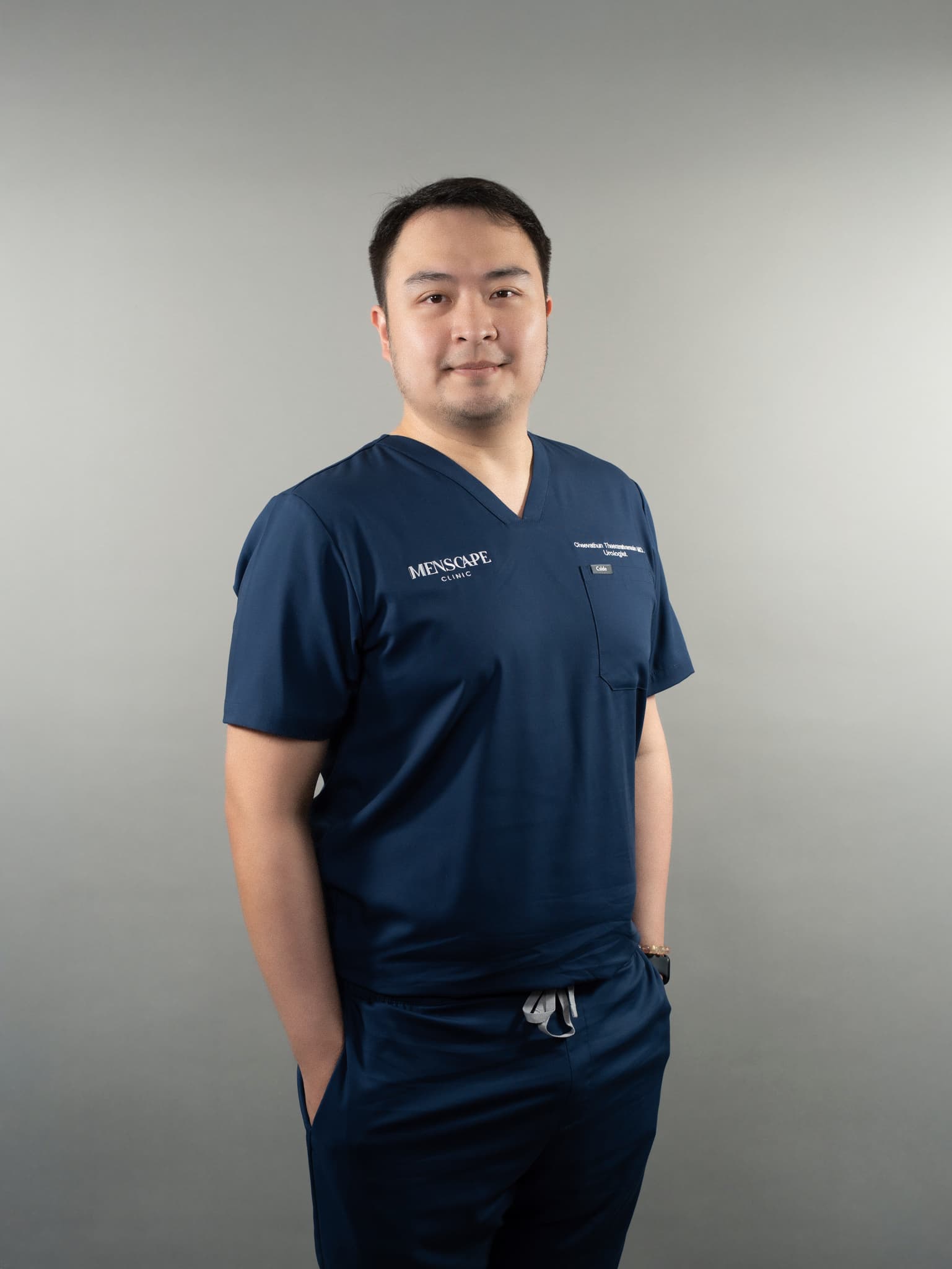
It is reasonable to ask who will perform any recommended procedure, how many they do, and what the realistic range of outcomes is. A clinic confident in its care will answer plainly. Menscape is a men's-health clinic in Bangkok structured around exactly this kind of consultation-first, discreet approach, with English-speaking urology care and itemised pricing.
A quick comparison: where to start
Your situation | Best first step | Why |
Weak stream, night-time urination, age 50+ | Urology consultation | Likely BPH; needs flow test and prostate check |
Blood in urine, even once | Urology consultation, promptly | Needs risk-based work-up; do not ignore |
Erectile or libido concerns only | Urology or men's-health consultation | Identifies cause before any treatment |
Symptom-free, age 45-55, screening question | Urology consultation | Shared decision on PSA screening |
Cannot pass urine / severe testicular pain | Emergency department now | Time-critical, not a clinic booking |
Fertility concern after ~1 year trying | Urology consultation + semen analysis | Structured fertility assessment |
The bottom line
A urology consultation is a low-stakes, high-value visit: a conversation, a focused exam, a few targeted tests, and a clear plan. In Bangkok it is affordable, discreet, and quick to arrange, which removes most of the practical reasons men delay. The conditions behind urinary, prostate, and sexual symptoms are, for the most part, very manageable when they are caught and named early, and a handful of them genuinely reward not waiting.
If something has felt off, getting it checked is rarely the wrong move. Any medication or procedure that follows is decided with a urologist after a proper assessment, which is exactly what the consultation is for. To book a private, confidential urology consultation in Bangkok, contact the Menscape team and a clinician will talk you through the next step.
Frequently Asked Questions
Do I need a referral to see a urologist in Bangkok?
No. At private clinics and hospitals in Bangkok you can book a urology consultation directly without a referral from a general practitioner. This applies to both Thai residents and international patients, and many clinics offer same-week appointments.
How much does a urology consultation cost in Bangkok?
A first specialist consultation typically costs about 1,000-2,500 THB (roughly 30-75 USD), depending on the hospital tier and the seniority of the urologist. Tests such as a urinalysis, PSA, or ultrasound are charged separately, and some clinics bundle them into screening packages. Always confirm exact fees at booking.
Is a urology consultation confidential?
Yes. Urology visits are private and medical confidentiality applies. This matters for the sensitive nature of many men's-health concerns, and clinics that focus on men's health are generally set up with discretion in mind. Ask about their privacy practices if it is a concern for you.
How long does a urology appointment take?
A first consultation usually takes 20 to 45 minutes, covering your history, any necessary examination, and a discussion of the plan. Some test results are available the same day, while blood and certain lab tests may take one to a few working days, after which the clinic follows up.
Will the urologist examine me at the first visit?
It depends on your symptoms. A man with urinary or prostate symptoms may have a brief digital rectal examination of the prostate, and a man with testicular or scrotal symptoms has those examined directly. Not every consultation involves a physical exam, and the urologist will explain what they are doing and why beforehand.
Do urologists treat erectile dysfunction and low testosterone?
Yes. Erectile dysfunction, premature ejaculation, and low testosterone are core areas of urology and andrology. The consultation identifies the underlying cause first, since these symptoms can have several different drivers, before any treatment is recommended.
When should I go to the emergency room instead of booking a consultation?
Seek urgent care rather than a routine appointment if you cannot pass urine and your bladder is painfully full, if you have sudden severe pain in one testicle, if you are passing heavy visible blood or clots, if you have a fever with flank pain and urinary symptoms, or if you have a painful erection lasting more than about four hours. These are time-critical.
Can foreigners and expats book a urology consultation easily in Bangkok?
Yes. Many Bangkok private hospitals and men's-health clinics routinely serve expat and international patients and have English-speaking urologists and international patient services. Self-booking is straightforward, and combining a consultation with any subsequent treatment in one trip is common.
At what age should men start prostate cancer screening?
Guidance suggests a shared decision about a baseline PSA test for average-risk men around ages 45 to 50, and earlier (about 40 to 45) for higher-risk men, including those with a strong family history or of African ancestry. Screening is a personal decision made with your urologist, not an automatic test, so a consultation is the right place to weigh it up.
)
/)
/)
/)
/)
/)