/)
Most men who ask about UroLift in Bangkok are weighing two things at once: how much it costs here compared with home, and whether it will protect their sex life the way the marketing promises. Both are fair questions. UroLift, known clinically as the prostatic urethral lift, has become one of the more sought-after minimally invasive options for benign prostatic hyperplasia (BPH), the non-cancerous enlargement of the prostate that makes urination slow, frequent and frustrating. It earned that reputation mainly because, unlike the older surgical standard, it does not cut or burn prostate tissue and tends to leave ejaculation intact.
This guide lays out realistic Bangkok pricing in Thai baht and US dollars, shows how that compares with the United States and United Kingdom, and then works through the parts that actually decide whether UroLift is right for you: who qualifies, who does not, what recovery looks like, what the published results really show, and how to tell a careful clinic from a careless one. Prices here are indicative and move with promotions, exchange rates and your individual anatomy, so treat every figure as a starting point to confirm at consultation, not a quote.
A note before the numbers: UroLift is a medical procedure that requires an in-person urological assessment and a prescription. No honest article, this one included, can tell you it is suitable for you. Only a urologist who has examined your prostate, reviewed your flow study and looked at your scans can do that.
What UroLift is and how it works
The prostate sits below the bladder and wraps around the urethra, the tube that carries urine out. When it enlarges with age, it squeezes that tube and obstructs flow. UroLift does not shrink the gland or remove tissue. Instead, a urologist passes a delivery device through the urethra and places small permanent implants, essentially tiny sutures held by a nitinol (nickel-titanium alloy) capsular tab on the outer prostate and a stainless-steel urethral end-piece, joined by a polyester (PET) suture, that pull the enlarged lobes apart and hold the channel open, a bit like tying back a pair of curtains. Bangkok hospitals offering the procedure describe placing roughly four to six implants, with the exact number set by prostate size and shape (Bumrungrad International Hospital).
Because nothing is resected or heated, there is no raw surgical surface inside the prostate to heal, which is the mechanistic reason the procedure tends to spare ejaculation and usually avoids a urinary catheter afterward. For context on the underlying condition and the full menu of BPH treatments, from alpha-blocker medication through to TURP and newer minimally invasive options, the Cleveland Clinic's benign prostatic enlargement overview is a clear, non-commercial starting point.
UroLift cost in Bangkok: THB and USD price table
The single most useful thing on this page is a transparent price range, so here it is up front. The figures below reflect what private Bangkok hospitals and men's-health clinics have advertised and quoted for the prostatic urethral lift, including a publicised promotional price of THB 275,000 from one Bangkok hospital in late 2024 (The Thaiger). USD conversions use an approximate rate of THB 36 to USD 1 and will shift with the exchange rate.
Item | Bangkok (THB) | Bangkok (USD approx) | What it usually covers |
UroLift procedure (typical all-in range) | 180,000 – 320,000 | 5,000 – 8,800 | Urologist fee, implants, day-case theatre, sedation or spinal anaesthesia |
Lower end / fewer implants or promotional | from ~180,000 | from ~5,000 | Smaller prostate, 2–4 implants, package pricing |
Higher end / premium hospital or more implants | up to ~320,000+ | up to ~8,800+ | Larger gland, 5–6 implants, top-tier JCI hospital |
Pre-procedure workup (PSA, uroflowmetry, ultrasound, urine tests) | 5,000 – 20,000 | 140 – 560 | Often billed separately; confirm if bundled |
Follow-up review and any medication | 1,500 – 6,000 | 40 – 170 | Symptom check, repeat flow test |
These ranges are indicative and should be confirmed at your consultation. Hospitals price UroLift in different ways: some quote a single package, others itemise the implants (the implants themselves are the largest single cost driver), so a like-for-like comparison matters more than the headline number.
How Bangkok compares with the US and UK
Cost is the reason many international patients look at Bangkok in the first place, so the savings column deserves its own view. The comparison below is approximate and intended to show order-of-magnitude differences, not a guaranteed quote anywhere.
Location | Typical UroLift cost (USD) | Notes |
Bangkok, Thailand | ~5,000 – 8,800 | Private hospital, self-pay, day case |
United States | ~9,000 – 20,000+ | Self-pay/uninsured for facility, implants and physician fees combined |
United Kingdom (private) | ~£5,500 – 9,000 (~7,000 – 11,500) | Self-pay at private hospitals; NHS access varies by region and waiting list |
Potential saving in Bangkok vs US self-pay | up to ~50% or more | Before travel and accommodation |
Even after factoring in flights and a week's stay, the arithmetic often still favours Bangkok for self-funded patients, particularly those facing long waits or high out-of-pocket costs at home. That said, savings should never be the deciding factor on their own. A poorly selected case, for example a very large prostate or a prominent median lobe, can fail regardless of how little you paid, so candidacy comes first.
What drives the cost
Five factors move a UroLift quote up or down, and understanding them helps you read a price sheet critically.
Number of implants. This is the dominant variable. Each implant has a real per-unit cost, so a prostate needing six implants will cost meaningfully more than one needing two. Be wary of any quote that looks too cheap to include enough implants for your gland.
Prostate size and anatomy. Larger glands and those with an obstructing median lobe (a portion of prostate bulging up into the bladder) need more implants and a more skilled placement, which raises both cost and technical demand.
Surgeon experience. A urologist with a high UroLift case volume typically charges more. For a procedure where patient selection and implant placement decide the result, that premium is usually money well spent.
Hospital tier. A JCI-accredited international hospital carries higher theatre and facility fees than a smaller surgical centre. You are partly paying for accreditation, nursing ratios and back-up if something goes wrong.
Pre-existing conditions and workup. Urinary retention, recurrent infection or anticoagulant medication can add tests, monitoring or a short admission, all of which add cost.
Who is a candidate, and who is not
UroLift is not a universal fix for an enlarged prostate. The published indications and the criteria Bangkok hospitals actually apply are reasonably specific.
You may be a reasonable candidate if you:
Are a man, generally aged 45 or older, with bothersome moderate-to-severe BPH symptoms (weak stream, hesitancy, frequency, getting up at night).
Have a prostate up to roughly 100 grams. The FDA-cleared upper size limit was raised to 100 cc, having previously been restricted to smaller glands (Teleflex/UroLift, FDA expanded indication).
Can still pass urine, or have a post-void residual (urine left in the bladder after you go) under about 350 cc, a threshold Bangkok hospitals cite for suitability (BNH Hospital).
Want to preserve ejaculation and avoid the recovery and risks of more invasive surgery.
Are an older or higher-surgical-risk patient for whom a quick, low-anaesthesia procedure is attractive.
UroLift is usually not the right choice, or needs careful rethinking, if you:
Have a very large prostate beyond the cleared size range, where tissue-removing options may relieve obstruction more reliably.
Are in complete urinary retention or cannot empty your bladder, where outcomes are less predictable.
Have a markedly elongated or unusually configured urethra, which some hospitals flag as a limiting factor (Vejthani Hospital).
Have an active urinary tract infection or untreated bladder stones, which should be sorted first.
A note on the median lobe: an obstructing median lobe (prostate tissue bulging up into the bladder) was once treated as essentially disqualifying for UroLift. That has changed. The FDA has cleared an expanded indication that uses a dedicated implant to treat an obstructive median lobe, so it is no longer an automatic exclusion. A very large or unusually prominent median lobe still warrants case-by-case judgement from an experienced operator, and in some men a tissue-removing procedure remains the more reliable choice, but a median lobe alone no longer rules UroLift out.
Contraindications
There are firm reasons not to proceed. UroLift implants contain nickel, titanium and stainless steel, so a known allergy to any of those metals is a contraindication, and Bangkok hospitals screen for it explicitly (BNH Hospital). The procedure is also not intended for men with a current urinary tract infection, which the manufacturer lists as a contraindication and which should be treated and cleared before any implant is placed (Cleveland Clinic). A prostate larger than the cleared size can be a relative or absolute reason to choose a different procedure. This is exactly why a proper workup, not just a price comparison, has to come first.
The procedure step by step, and staged recovery
UroLift is normally a day case. Here is the realistic sequence.
Assessment. History, symptom score (the International Prostate Symptom Score, or IPSS), a PSA blood test to help rule out other prostate problems, a uroflowmetry test to measure your stream, a post-void residual measurement and usually an ultrasound to size the gland and check for a median lobe.
Anaesthesia. Most centres use light sedation or spinal anaesthesia rather than full general anaesthesia, which is part of why recovery is quick (Bumrungrad International Hospital).
Implant placement. Through a scope passed up the urethra, the urologist places the implants to retract each prostate lobe. The procedure typically takes around 30 to 60 minutes.
Recovery and discharge. Many men go home the same day, often without a catheter, and are given simple advice on fluids and any short course of medication.
Staged recovery generally looks like this, though individuals vary:
First 1 to 3 days: Light activity only. Some burning on urination, urgency, and a little blood in the urine or semen are common and usually settle. Most men return to desk work and everyday activities within two to three days (The Thaiger).
First 1 to 2 weeks: Avoid strenuous exercise, heavy lifting and cycling. Mild irritative symptoms taper off. Many men notice flow improving within this window. Resume sexual activity only once your urologist advises, often after about a week.
Two to four weeks and beyond: Irritation should have largely resolved and symptom relief stabilises. If you have travelled to Bangkok, plan to stay long enough for at least one post-procedure review before flying home.
What the results actually show
It is worth separating marketing from evidence. The best long-term data come from the randomised LIFT study, which followed men out to five years. At five years, the prostatic urethral lift delivered durable improvements: symptom scores (IPSS) improved by about 36 percent, quality of life by about 50 percent and peak urine flow (Qmax) by about 44 percent, with men returning to preoperative activity in an average of 8.6 days (five-year LIFT study, PubMed).
Two numbers deserve honesty. First, durability is good but not permanent for everyone: surgical retreatment was about 13.6 percent over those five years, meaning roughly one in seven men needed a further procedure within that window. Second, on the sexual-function question that draws so many men to UroLift, the study found no sustained new erectile or ejaculatory dysfunction over five years. A separate single-centre series focused on younger, sexually active men reinforced that point, reporting that ejaculatory function was preserved in every patient with no retrograde ejaculation, alongside an 11.4 percent retreatment rate over a median follow-up of about 34 months (prostatic urethral lift in young patients, PMC). In plain terms: most men keep normal ejaculation and get meaningful, lasting symptom relief, but a minority will need more treatment down the line. A good clinic will tell you both halves of that.
Risks and side effects
UroLift is low-risk relative to traditional prostate surgery, but no procedure is free of side effects.
Common and usually short-lived:
Burning or stinging when passing urine
Urgency or more frequent urination for a week or two
Blood in the urine or semen
Mild pelvic or perineal discomfort
Less common:
Temporary difficulty urinating, occasionally needing a short-term catheter
Urinary tract infection
Need for retreatment over time, as the numbers above show
Red-flag symptoms, seek urgent care: Go to a hospital promptly if you cannot pass urine at all (acute retention), have heavy or persistent bleeding with clots, develop a fever with chills or worsening pain suggesting infection, or have severe ongoing pain. These are uncommon, but they need same-day medical attention rather than waiting for your scheduled review.
Have a question about your treatment?
Message our Bangkok clinic on WhatsApp and a doctor replies within minutes during clinic hours.
How to choose a safe clinic in Bangkok, and the red flags
Bangkok has genuinely excellent urologists working in internationally accredited hospitals, and it has marketing that oversells. Use these checks.
Green flags worth confirming:
A urologist who personally performs UroLift regularly and can tell you their case volume and how they handle median-lobe prostates.
A full diagnostic workup before any price is quoted: PSA, uroflowmetry, post-void residual, ultrasound and urine tests.
A frank discussion of implant numbers and total cost, with what is and is not included spelled out in writing.
A clear follow-up protocol, including flow re-testing and a point of contact for problems.
An accredited operating environment, ideally JCI, with proper anaesthesia cover.
Red flags to walk away from:
A suspiciously low price that almost certainly cannot cover enough implants for your prostate.
A clinic that cannot explain the implant type or that skips sizing your prostate before recommending the procedure.
Pressure to choose UroLift for a very large prostate, or to dismiss alternatives for an obstructing median lobe without weighing them properly.
No named, trained urologist actually performing the procedure.
No mention of retreatment rates or risks. Anyone who promises a permanent cure with zero chance of further treatment is overselling.
UroLift versus the alternatives
UroLift is one option among several. The right one depends on your prostate, your priorities and your tolerance for downtime. The AUA's 2023 guideline amendment lists prostatic urethral lift among the surgical options that can be considered in appropriate patients, alongside techniques with varying degrees of ejaculation preservation (AUA BPH guideline amendment).
Feature | UroLift (PUL) | Rezum (water-vapour) | TURP (resection) |
How it works | Implants retract prostate lobes | Steam ablates prostate tissue | Tissue surgically removed |
Removes/destroys tissue | No | Yes (gradual) | Yes (immediate) |
Ejaculation typically preserved | Usually yes | Often yes | Often no (retrograde common) |
Anaesthesia | Sedation or spinal | Sedation or local | Spinal or general |
Catheter afterward | Often none | Usually for a few days | Yes, typically |
Symptom relief onset | Often within 1–2 weeks | Builds over weeks | Rapid |
Best suited to | Small-to-moderate gland; median lobe now treatable with a dedicated implant | Moderate gland | Larger glands, severe obstruction |
Relative cost in Bangkok | Higher per result for ejaculation-sparing | Often lower than UroLift | Varies; well established |
The honest summary: if preserving ejaculation is your priority and your prostate is within the suitable size range, UroLift is a strong candidate, and an obstructing median lobe no longer rules it out thanks to a dedicated implant. If your gland is very large or you want the most definitive de-obstruction, a tissue-removing procedure such as TURP may serve you better despite the higher chance of retrograde ejaculation.
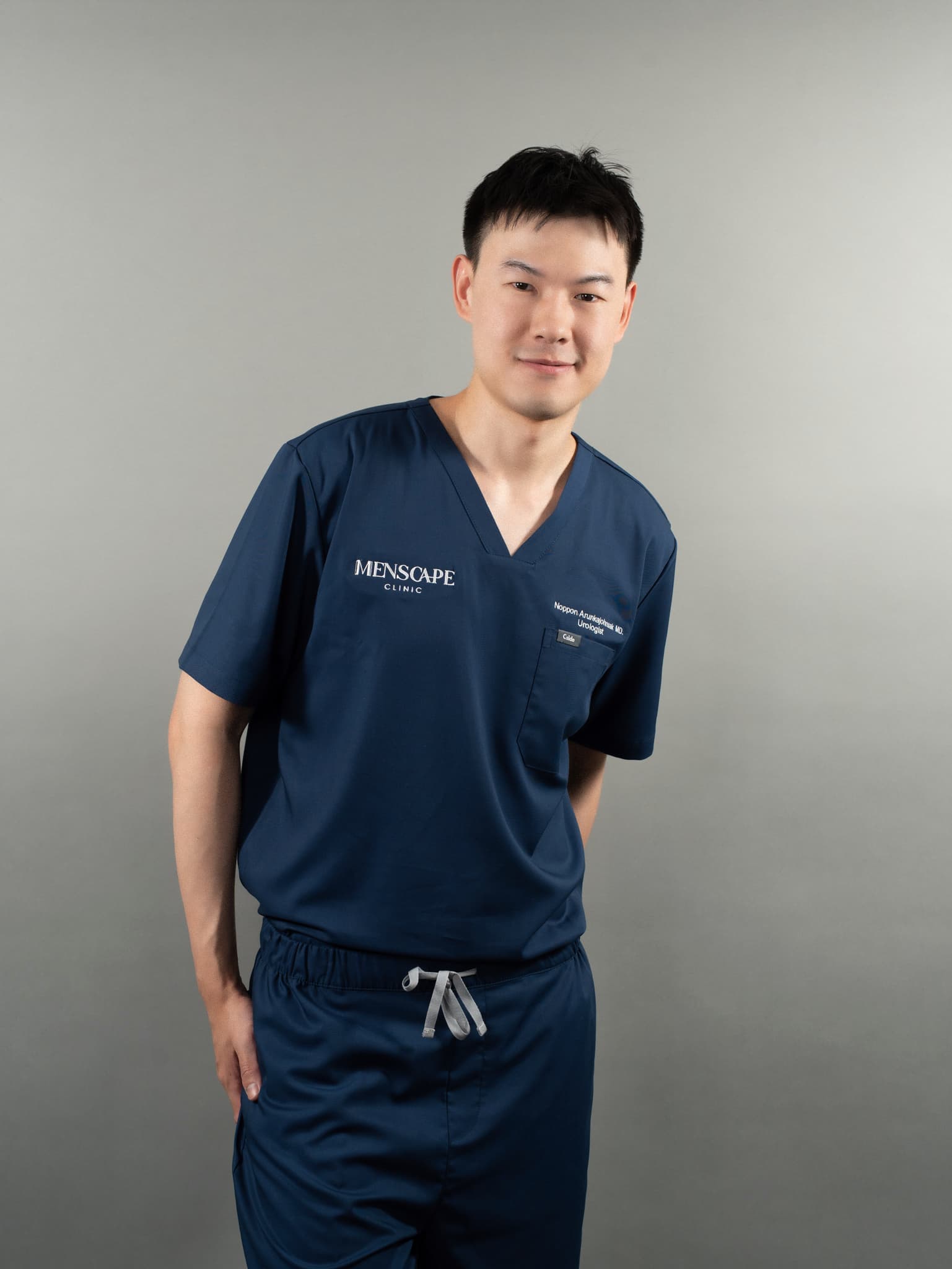
Booking a consultation at Menscape
UroLift cannot be prescribed from a price list. The sensible next step is a confidential urology consultation where a clinician scores your symptoms, measures your flow, sizes your prostate and tells you, honestly, whether UroLift, Rezum, TURP or simply optimising medication fits your situation, and what the all-in cost would be for your anatomy. At Menscape in Bangkok we focus on men's health in a private setting, give transparent pricing once we know your case, and will say so plainly if UroLift is not your best option. Book a discreet consultation to get a personalised assessment and a clear, itemised quote.
Frequently Asked Questions
How much does UroLift cost in Bangkok?
As a guide, the prostatic urethral lift typically runs about THB 180,000 to 320,000 (roughly USD 5,000 to 8,800) at private Bangkok hospitals, with the implant count and prostate size being the main cost drivers. One Bangkok hospital publicised a promotional price of THB 275,000 in late 2024. Pre-procedure tests are often billed separately. These figures are indicative and should be confirmed at consultation.
Is UroLift cheaper in Bangkok than in the US or UK?
Generally yes. US self-pay pricing often falls in the region of USD 9,000 to 20,000 or more once facility, implant and physician fees are combined, and private UK pricing commonly sits around 7,000 to 11,500 USD-equivalent. Bangkok can represent a saving of roughly half or more for self-funded patients, even after travel, though candidacy and clinic quality should drive the decision, not price alone.
Does UroLift affect erections or ejaculation?
This is its main selling point. The five-year randomised LIFT study reported no sustained new erectile or ejaculatory dysfunction, and a separate series in younger men found ejaculation was preserved in every patient with no retrograde ejaculation. Most men keep normal sexual function, but you should discuss your individual risk with your urologist.
Who is not suitable for UroLift?
Men with a prostate larger than about 100 grams, those in complete urinary retention or unable to empty the bladder, men with a markedly elongated urethra, and anyone with an active urinary tract infection are generally not candidates or need a different approach. A known allergy to nickel, titanium or stainless steel is a contraindication because the implants contain those metals. An obstructing median lobe used to be disqualifying, but UroLift now has an FDA-cleared indication using a dedicated implant to treat it, so a median lobe alone no longer rules the procedure out; a very large or prominent one still warrants case-by-case judgement.
How many implants will I need, and does that change the price?
Bangkok hospitals describe placing roughly four to six implants, set by your prostate's size and shape. Because each implant carries a real per-unit cost, the number needed is the biggest single factor in the final price. A larger gland or one with a median lobe usually needs more implants.
How long is recovery after UroLift?
Most men go home the same day, often without a catheter, and return to desk work and everyday activity within two to three days. Strenuous exercise, heavy lifting and cycling are usually avoided for one to two weeks, and sexual activity is resumed once your urologist advises, often after about a week. Mild burning, urgency or a little blood in the urine or semen in the first days is common.
How long do UroLift results last?
The implants are permanent and the LIFT study showed durable symptom, quality-of-life and flow improvements at five years. However, about 13.6 percent of men needed a further surgical procedure within those five years, so it is durable for most but not a guaranteed lifelong fix. Your urologist can give a more personalised estimate based on your prostate.
Is UroLift painful?
It is usually done under light sedation or spinal anaesthesia, so you should not feel pain during the procedure. Afterwards, most men report only mild discomfort, some burning on urination and temporary urgency that settle within one to two weeks.
Do I need a consultation before booking UroLift?
Yes. UroLift is a prescription medical procedure and requires an in-person urological assessment, including a symptom score, flow test, post-void residual measurement and usually an ultrasound, before it can be recommended or priced for you. No article or price list can confirm you are a suitable candidate.
)
/)
/)
/)
/)
/)