/)
If you are getting up several times a night to urinate, straining for a stream that used to be effortless, or feeling like your bladder never fully empties, an enlarged prostate is the usual cause. Benign prostatic hyperplasia (BPH) is one of the most common conditions in men over 50, and when tablets stop controlling the symptoms, surgery becomes a sensible conversation rather than a last resort.
GreenLight laser PVP, short for photoselective vaporisation of the prostate, is one of the modern alternatives to the traditional "roto-rooter" operation (TURP). It uses a high-energy laser passed up the urethra to vaporise the tissue that is squeezing your urine channel shut. Because the laser wavelength is tuned to be absorbed by blood, it seals vessels as it cuts, which keeps bleeding low and makes it a reasonable choice for men who cannot safely stop blood thinners.
This guide explains how the procedure works, who it suits and who it does not, what it costs in Bangkok with US and UK comparisons, what recovery actually feels like week by week, and the risks worth weighing, including the effect on ejaculation that matters to many men. None of this replaces a face-to-face assessment. GreenLight PVP is a prescription surgical procedure that requires a urology consultation, a flow study, and usually a prostate size measurement before anyone can tell you it is right for you.
What GreenLight Laser PVP Is
GreenLight PVP is an endoscopic operation, meaning it is done entirely through the natural opening of the urethra with no external cuts. A thin telescope (cystoscope) carries a laser fibre to the prostate, and the surgeon uses the laser to vaporise the overgrown tissue that is blocking the flow of urine out of the bladder.
The "GreenLight" name comes from the colour of the beam. The system uses a 532-nm wavelength (in current practice usually a 180 W XPS platform) that is strongly absorbed by haemoglobin, the red pigment in blood. That selective absorption is the whole point: the energy goes into the tissue and the blood vessels feeding it, vaporising the obstruction while simultaneously sealing the vessels. The result is a wider channel for urine and very little blood loss during the operation.
It helps to be clear about what PVP does and does not do. It removes obstructing tissue to relieve symptoms; it is a treatment for BPH, not for prostate cancer, and it does not remove the whole gland. Unlike some tissue-removing methods, vaporisation does not leave a specimen to send to the lab, so men who need tissue analysed for other reasons should discuss that with their surgeon beforehand.
How the procedure works, step by step
You are positioned and given anaesthesia (spinal or general, decided with your anaesthetist).
A cystoscope is passed through the urethra so the surgeon can see the prostate and bladder neck directly.
The laser fibre is advanced through the scope.
The surgeon sweeps the beam across the obstructing tissue, vaporising it layer by layer and opening the channel.
Vessels are sealed as the work proceeds, keeping bleeding low.
A catheter is placed at the end to drain urine while the area settles.
The active part of the operation commonly takes somewhere around 30-60 minutes, though this varies with prostate size and surgeon. Many men stay one night; some centres manage smaller cases as a short stay.
Who GreenLight Laser PVP Is For
PVP is generally considered when bothersome moderate-to-severe BPH symptoms persist despite medication, or when medication is not tolerated, and the obstruction is significant enough on testing to justify surgery. It tends to fit best in a particular range of situations:
Prostates in the medium range, commonly cited as roughly 30-100 g. Very large glands are often better served by enucleation techniques (see the comparison below).
Men who take anticoagulants or antiplatelet drugs, because the laser's vessel-sealing keeps bleeding low. In a study of 233 men, photoselective vaporisation with the 180 W laser was effective and safe even in patients on anticoagulant medication, with no blood transfusions required in the cohort (Eken & Soyupak, 2018).
Men who want a shorter catheter time and hospital stay than traditional surgery typically involves.
Men for whom symptom relief, not tissue sampling, is the goal.
A consultation will usually include an International Prostate Symptom Score (IPSS) questionnaire, a urine flow test (uroflowmetry), a prostate size estimate by ultrasound, a PSA blood test, and a check of how well your bladder empties. Those numbers, not a web page, decide whether PVP is appropriate.
Who it is not for, and contraindications
PVP is not the right first move for everyone. Caution or an alternative is usually warranted when:
The prostate is very large (often quoted above 80-100 g). Vaporisation can be slow and incomplete in large glands, and laser enucleation or open/robotic surgery may give a more durable result. Note that some Bangkok package prices are written specifically for glands up to 80 g, and larger glands are quoted separately.
There is suspected or untreated prostate cancer, which needs its own pathway.
There is an active urinary tract infection, which should be treated first.
There is a neurological cause for the bladder symptoms (for example a neurogenic bladder), where surgery on the prostate may not fix the underlying problem.
A urethral stricture or other anatomical obstruction is contributing, which may need addressing in its own right.
Fertility through natural ejaculation is a current priority, given the high likelihood of retrograde ejaculation discussed below.
This is exactly the kind of judgement that a urologist makes with your scans and history in front of them. The honest answer to "am I a candidate?" is often "let's measure and see."
GreenLight Laser PVP Cost in Bangkok (2026)
Bangkok is a well-established destination for prostate surgery, and pricing is more transparent here than in many places, though it still varies widely by hospital tier, prostate size, anaesthesia, and how many nights you stay. The figures below are indicative ranges drawn from Thai hospital packages and international quotes; always confirm the exact, itemised quote at your consultation, because the final number depends on your scans and your length of stay.
Setting | Indicative price (THB) | Indicative price (USD) | Notes |
Bangkok, international-facilitator quotes | ~90,000-150,000 | ~$2,700-4,400 | Often includes pre-op tests, the procedure, anaesthesia, 1-2 nights, medication and follow-up |
Bangkok, premium JCI hospital package | ~230,000-260,000 | ~$6,800-7,700 | Published packages around THB 250,000 commonly apply to prostates up to ~80 g, at the hospital's discretion |
Larger prostate / complex case | Quoted individually | Quoted individually | Bigger glands and added nights raise the price |
United States (private) | ~$10,000-16,000+ | varies | Facility, anaesthesia and surgeon billed separately |
United Kingdom (private) | ~£7,000-12,000+ | varies | NHS may cover it for eligible patients with a wait |
For many international patients the headline is the gap: a premium Bangkok package frequently lands at roughly a third to a half of comparable US private pricing, and a facilitator-tier quote can be lower still. That said, the cheapest quote is rarely the right way to choose prostate surgery. Surgeon experience with the 180 W platform, the quality of pre-operative assessment, and the standard of aftercare matter far more to your result than a few thousand baht.
What drives the cost
Prostate size. Bigger glands take longer and use more laser time and consumables, and may push you out of a fixed-price package.
Hospital tier. A large JCI-accredited private hospital prices differently from a smaller facility, reflecting nursing ratios, equipment and overheads.
Anaesthesia type and length of stay. General anaesthesia and an extra inpatient night add cost.
Pre-operative workup. Flow studies, ultrasound, PSA, and sometimes cystoscopy are part of doing this properly.
Whether the quote is a package or itemised. Package prices bundle the predictable items; complications or extra investigations are usually extra.
What is genuinely excluded. Ask specifically about surgeon fees, the laser fibre, anaesthesia, and follow-up visits, since these are the line items most often quoted separately.
What the Results Look Like
The reason PVP is offered at all is that the outcomes hold up well against the long-standing benchmark, TURP. In the GOLIATH trial, a European multicentre randomised study, the 180 W GreenLight XPS system was non-inferior to TURP for symptom score (IPSS) and peak flow (Qmax) at six months, while time to a stable health status, length of catheterisation and length of hospital stay were all superior with the laser (Bachmann et al., European Urology, 2014).
A systematic review pooling 1,640 men found that functional outcomes and prostate volume reduction after GreenLight vaporisation were similar to TURP, with shorter catheter time and hospital stay (around 41 and 66 hours versus 60 and 97 hours respectively for catheter and stay) (Brunken et al., BJU International, 2014).
Durability is a fair question for any vaporisation technique, since no tissue is sent to the lab and the gland can regrow over years. A long-term series with a mean follow-up around five years reported an overall retreatment rate of about 23%, the majority of which was a return to medication; surgical reintervention was needed in roughly 7% of men, and symptom and flow improvements were largely sustained (Ghobrial et al., Arab Journal of Urology, 2023). In plain terms: most men get a lasting improvement, a minority need tablets again over time, and a smaller minority need a further procedure.
What men typically notice in the first weeks is a stronger stream and less straining, though some irritation while passing urine is normal early on as the raw surface heals.
Risks and Side Effects
PVP is generally safe, but no prostate operation is risk-free, and being told the trade-offs honestly is part of good care.
Common and usually temporary:
Burning or stinging when passing urine, plus urgency and frequency, often for a few weeks as the channel heals.
Blood in the urine, usually light, sometimes on and off for a couple of weeks.
Urinary tract infection, which is treatable with antibiotics.
Temporary need to re-pass a catheter if the bladder is slow to empty at first.
Specific to consider:
Retrograde ejaculation (dry orgasm). This is the side effect most men ask about. After the bladder neck is opened, semen can flow backwards into the bladder at climax instead of outward. The sensation of orgasm is usually preserved and it is not physically harmful, but it does affect natural fertility. Reported rates with conventional vaporisation vary widely in the literature, and newer "ejaculatory hood-sparing" techniques aim to preserve forward ejaculation in a larger share of men. One randomised comparison found that an ejaculation-preserving approach maintained antegrade ejaculation, semen volume and sexual satisfaction significantly better than the conventional technique, though symptom relief was somewhat greater with the standard method (Emam et al., Arab Journal of Urology, 2024). If preserving ejaculation matters to you, raise it before surgery so the surgeon can discuss technique and realistic expectations.
Erectile function is generally not made worse by PVP for most men, but discuss your baseline and any concerns.
Urethral stricture or bladder neck contracture, scar tissue narrowing the channel, is uncommon but can need a further minor procedure.
Seek urgent medical care if, after going home, you:
Cannot pass urine at all and your bladder feels increasingly full and painful (acute retention).
Pass heavy bleeding or large clots, or your urine looks like undiluted blood rather than rosé-coloured.
Develop a fever, shivering or feel generally unwell, which can signal infection.
Have worsening lower abdominal pain that is not settling.
These are not the everyday twinges of recovery; they are reasons to call your clinic or go to an emergency department promptly.
Recovery, Week by Week
Recovery varies between men, but a typical path looks like this. Treat it as a guide, not a promise, and follow your own surgeon's instructions where they differ.
Stage | What usually happens |
Day 0 (surgery) | Procedure done under spinal or general anaesthesia; catheter placed; commonly one night in hospital |
Day 1-2 | Catheter often removed within 24-48 hours; most men go home once passing urine reliably |
Week 1-2 | Stronger stream, but expect burning, urgency and some light blood in urine; avoid heavy lifting, cycling and strenuous exercise; keep fluids up |
Week 2-4 | Most men back to desk work and everyday activity; irritation settles gradually |
Week 4-6 | Full activity, including exercise, usually resumed; ejaculation changes (if present) become apparent as sexual activity resumes |
Practical tips that help: drink enough water to keep the urine pale, avoid constipation and straining, hold off on alcohol and heavy caffeine early while the bladder is irritable, and do not return to cycling or the gym until your surgeon clears you. If you take blood thinners, your team will tell you exactly when to restart them; one of PVP's advantages is that this is often simpler than with bleeding-heavy operations.
Have a question about your treatment?
Message our Bangkok clinic on WhatsApp and a doctor replies within minutes during clinic hours.
How GreenLight PVP Compares to Other BPH Procedures
There is no single best operation for an enlarged prostate, only the best fit for your gland size, your priorities, and your surgeon's expertise. This table sketches the main options at a high level.
Procedure | Best suited to | Bleeding profile | Effect on ejaculation | Notes |
GreenLight PVP | Medium prostates (~30-100 g), men on blood thinners | Low; vessels sealed by laser | Retrograde common | No tissue specimen; outcomes comparable to TURP at medium size |
TURP | Long-standing benchmark for many sizes | Higher than laser methods | Retrograde common | Provides tissue specimen; more bleeding, often longer catheter |
HoLEP (laser enucleation) | Large prostates, including very large glands | Low | Retrograde common | Often the preferred option for big glands; durable; steeper learning curve |
UroLift (prostatic urethral lift) | Smaller glands without an obstructing middle lobe | Very low | Usually preserved | Tissue-sparing; less suited to large prostates; symptom relief generally milder |
Rezum (water vapour therapy) | Smaller-to-moderate glands | Very low | Usually preserved | Minimally invasive; aims to protect sexual function; not for very large glands |
The practical reading: if your gland is medium-sized and you are on anticoagulation, PVP is a strong candidate. If your gland is very large, enucleation tends to win on completeness. If protecting ejaculation is your single biggest priority and your prostate is on the smaller side, the tissue-sparing options (UroLift, Rezum) deserve a serious look, accepting that symptom relief may be more modest. A good urologist will lay these trade-offs out for your specific anatomy.
Choosing a Clinic Safely in Bangkok
Bangkok has excellent urology, but standards vary, and a few checks protect you:
Confirm the surgeon's volume with the 180 W GreenLight platform specifically. Laser vaporisation has a real learning curve; experience with this exact system matters.
Ask for an itemised quote, not just a headline package, and confirm what happens to the price if your prostate is larger than the package assumes or if you need an extra night.
Check the pre-operative workup is thorough: IPSS, flow study, prostate size, PSA, and a plan for your medications.
Clarify aftercare and follow-up, especially if you are travelling home soon after; know who to contact and where to go if a red-flag symptom appears.
Confirm accreditation and anaesthetic cover at the facility.
Be wary of any clinic that quotes a fixed price without measuring your prostate, downplays retrograde ejaculation, promises surgery with no flow study or size assessment, or cannot tell you the surgeon's name and experience. Transparency about the things that can vary is a good sign, not a red flag.
Booking a Consultation in Bangkok
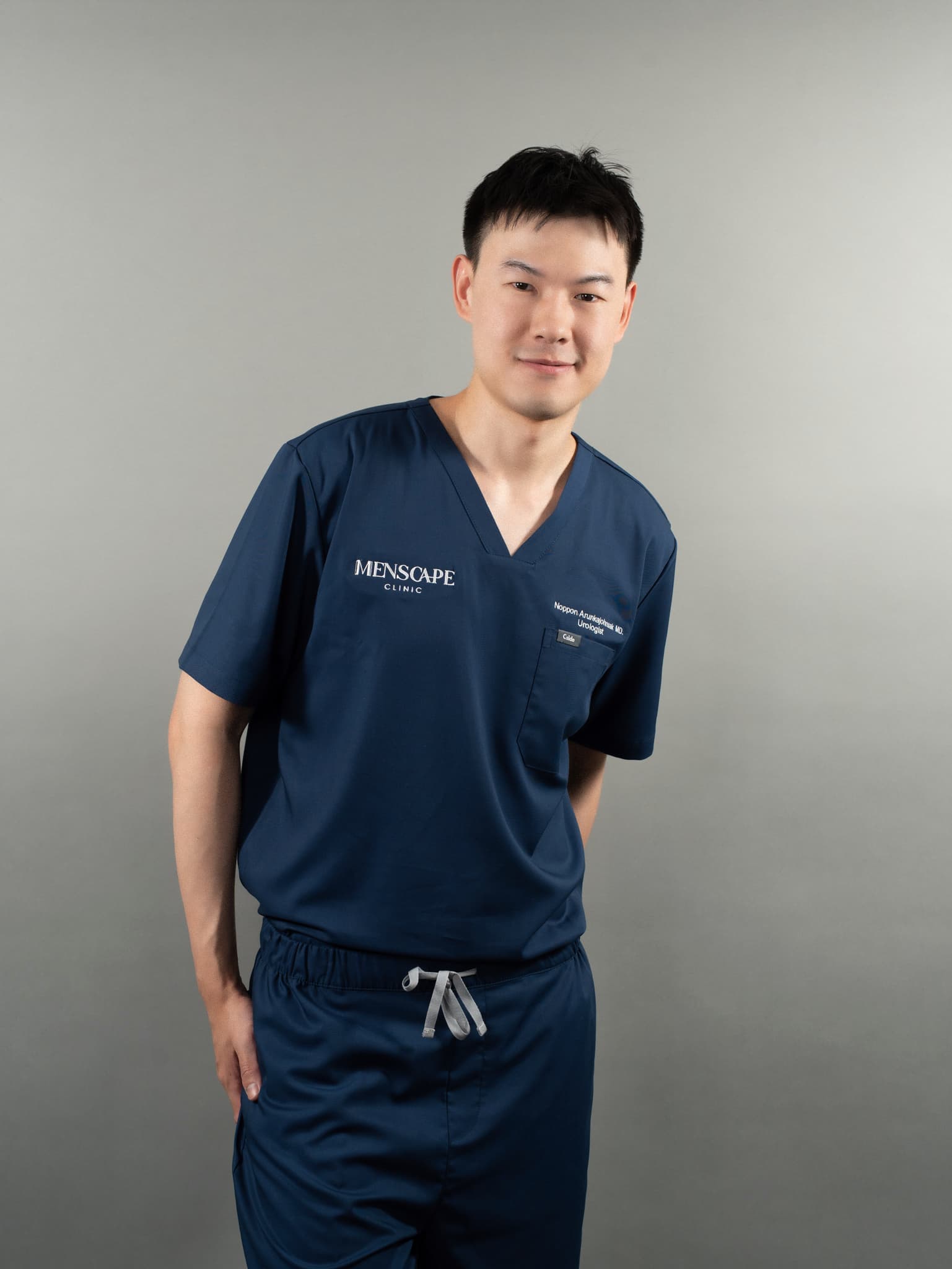
If night-time trips to the bathroom, a weak stream, or incomplete emptying are wearing you down and medication is not cutting it, a urology consultation is the next step. At Menscape in Bangkok, an assessment for GreenLight PVP includes a symptom score, a flow study, a prostate size measurement and the tests needed to confirm whether the procedure suits you, followed by a clear, itemised quote. You can book a consultation to get a personalised assessment and pricing for your situation.
GreenLight laser PVP is a prescription surgical procedure. It can only be recommended after a medical consultation and the appropriate investigations, and the final plan and quote depend on your individual assessment.
Frequently Asked Questions
Is GreenLight laser PVP painful?
The procedure itself is done under spinal or general anaesthesia, so you do not feel it. Afterwards, most men have burning or stinging when passing urine and some urgency for one to a few weeks while the channel heals. This is usually manageable with simple measures and settles steadily; persistent or severe pain should be reported to your clinic.
How long is the catheter in after GreenLight PVP?
Often less than 24 to 48 hours. Pooled data show catheter times are shorter than with traditional TURP, around 41 hours versus 60 hours on average in one large review. Your surgeon decides exactly when to remove it based on how clear your urine is and how well you are emptying.
Will GreenLight PVP affect my sex life?
Erections are usually not made worse by PVP. The main change is retrograde ejaculation, where semen goes backwards into the bladder at climax, producing a dry or low-volume orgasm. The sensation of orgasm is generally preserved and it is not harmful, but it does affect natural fertility. Rates vary, and ejaculation-preserving techniques can help some men, so discuss this before surgery if it matters to you.
Does GreenLight PVP cause permanent erectile dysfunction?
For most men, PVP does not cause new long-term erectile dysfunction, and the operation is generally considered to have a low impact on erections compared with its effect on ejaculation. If you already have erection concerns, raise them at consultation so your baseline is documented and expectations are realistic.
How much does GreenLight laser PVP cost in Bangkok?
Indicatively, roughly THB 90,000 to 150,000 through international-facilitator quotes and around THB 230,000 to 260,000 for premium JCI hospital packages, with the higher packages commonly written for prostates up to about 80 grams. Larger glands and longer stays are quoted separately. These are guide figures only; confirm an itemised quote at your consultation.
Is GreenLight PVP cheaper than in the US or UK?
Usually, yes. A premium Bangkok package often lands at roughly a third to a half of comparable US private pricing, and facilitator-tier quotes can be lower. That said, surgeon experience with the 180 W platform and the quality of assessment and aftercare should drive your choice more than price alone.
Can I have GreenLight PVP if I take blood thinners?
Often, yes, and this is one of its advantages. Because the laser seals blood vessels as it vaporises tissue, bleeding is low. A study of men on anticoagulants found 180 W vaporisation was safe and effective with no transfusions required. Your team will still review each medication and tell you whether and when to pause or continue it around surgery.
How does GreenLight PVP compare to TURP?
For medium-sized prostates, symptom relief and flow improvement are comparable, but PVP generally involves less bleeding and shorter catheter and hospital times. TURP provides a tissue specimen and remains a well-proven option. The right choice depends on your prostate size, bleeding risk, and your surgeon's experience.
How long until I can return to work and exercise?
Many men return to desk work within one to two weeks and to full activity, including exercise and cycling, by around four to six weeks. Avoid heavy lifting and strenuous exercise early on, and follow your surgeon's specific clearance, since recovery varies between individuals.
Will my prostate symptoms come back after PVP?
Most men get a lasting improvement, but the gland can slowly regrow over years. In a five-year series, about a quarter of men needed some retreatment, mostly a return to medication, and roughly 7% needed a further procedure. Ongoing follow-up helps catch any return of symptoms early.
Is GreenLight PVP a treatment for prostate cancer?
No. PVP treats the urinary obstruction caused by benign enlargement (BPH). It is not a cancer operation and does not remove the whole gland. Because vaporisation leaves no tissue to send to the lab, tell your surgeon if there is any reason your prostate tissue should be examined, so the right plan can be made.
)
/)
/)
/)
/)
/)