/)
Dark spots, patchy tone, and shadows that linger after a breakout are some of the most common reasons men book a skin consultation in Bangkok. The two treatments that come up most often are chemical peels and laser. Both can fade pigmentation, but they work differently, suit different skin, and carry different risks, especially for the medium-to-tan complexions common across Thailand and much of Asia.
This guide compares laser and chemical peels for men's hyperpigmentation the way a clinician would in the room: what each actually does, who is a good candidate and who is not, honest Bangkok pricing against US and UK rates, how recovery really goes day by day, what results to expect, and the warning signs that mean you should be seen urgently. Pigmentation is a medical condition with several causes, so the right plan depends on a proper diagnosis. Nothing here replaces a consultation with a doctor who has examined your skin.
Why men's pigmentation is its own problem
Men tend to arrive later than women, often once spots are well established, and frequently with a history of sun exposure from sport, riding a motorbike, or working outdoors. Male skin is also thicker, oilier, and has higher hair density, which changes how peels penetrate and how lasers behave near follicles, particularly around the beard line.
The bigger factor in Bangkok is skin tone. Most Thai and many resident men sit at Fitzpatrick skin types III to V, meaning more melanin in the skin. That melanin is exactly what makes darker skin more prone to a frustrating complication called post-inflammatory hyperpigmentation, or PIH, where the skin responds to heat, injury, or inflammation by making even more pigment. A review of pigmented-lesion treatment in Asian skin notes that "Asian skin, with its higher epidermal melanin content, tends to develop adverse pigmentary reactions following laser surgery" (Wang et al., Laser Therapy, 2016). In practical terms, an aggressive setting that clears a spot on pale skin can leave a fresh brown mark on tan skin. This is why, for men here, the question is rarely "which is stronger" and more often "which is least likely to backfire on my skin."
If you want the broader picture of causes and the full menu of options, see our overview of hyperpigmentation treatment for men. This article focuses specifically on the peel-versus-laser decision.
What chemical peels do
A chemical peel applies a controlled acid solution to loosen and remove the outer, pigment-laden layers of skin so fresher, more even skin surfaces over the following days. Strength is graded:
Superficial peels use alpha and beta hydroxy acids such as glycolic, lactic, mandelic, or salicylic acid. They work on the epidermis, brighten dull tone, smooth texture, and help surface pigment. Downtime is minimal.
Medium-depth peels typically use trichloroacetic acid (TCA), sometimes layered over glycolic acid. They reach the upper dermis and tackle more stubborn spots, but recovery is longer and the PIH risk is higher on darker skin.
Deep peels (high-strength phenol) are rarely appropriate for Fitzpatrick III-V men because the risk of pigment change and scarring is significant. They are not a routine pigmentation tool here.
For men in Bangkok, the workhorses are superficial and selected medium peels. A current review of glycolic acid peeling reports that "complete resolution of post-inflammatory hyperpigmentation is commonly seen after six to eight peel treatments," with the same series noting improvement in melasma and sun-related lentigines (Sharad, Clin Cosmet Investig Dermatol, 2013). Salicylic acid is often favoured for oilier, acne-prone male skin and appears comparatively gentle on darker complexions: one comprehensive review concluded that "a salicylic acid peel is safer in individuals of darker ethnicity" (Arif, Clin Cosmet Investig Dermatol, 2015).
Peels also pair naturally with prescription creams (for example a retinoid plus a pigment-suppressing agent) between sessions. If your concern is overall dullness rather than discrete spots, the lines between treatments blur, and our comparison of facials versus chemical peels and of skin brightening versus whitening may help you frame the goal correctly.
What laser pigmentation treatment does
Laser uses light at wavelengths that melanin absorbs preferentially. The energy is delivered in extremely short pulses that shatter pigment particles, which the body then clears over the following weeks. The devices most relevant to men's pigmentation in Bangkok are:
Q-switched Nd:YAG (nanosecond) lasers, a long-standing standard for sun spots, some melasma, and dermal pigment. Effective, widely available, and usually the lower-cost laser option.
Picosecond lasers (for example 755 nm or 1064 nm picosecond systems), which deliver energy in trillionths of a second. The shorter pulse relies more on a photomechanical shattering effect and less on heat, which matters on darker skin. A retrospective review of a 755 nm picosecond laser in Fitzpatrick III-IV Asian skin found meaningful clearance of dermal pigment with "no permanent hyper/hypopigmentation" seen across the series (Wong et al., Dermatol Surg, 2020). For a deeper look at how the two families differ, see Q-switched Nd:YAG versus diode lasers and our pico laser cost guide for Bangkok.
Fractional lasers (non-ablative or ablative), used more for texture, acne scarring, and resurfacing than for flat pigment. If your pigment sits inside old acne scars, the right tool may be a scar-focused approach instead; see pico laser for acne scars in men and acne scar treatment for men.
The reason picosecond technology gets so much attention for Asian skin is the PIH problem above. Older nanosecond lasers, while effective, carry a higher rate of pigment reactions in darker skin, and resolving deeper lesions can require several sessions spaced months apart. Newer picosecond settings aim to clear pigment with less collateral heat. That said, no laser is "safe" by default on tan skin. The settings, the operator, and the aftercare decide the outcome.
Bangkok pricing: peels vs laser (with US and UK comparison)
The single biggest reason men travel to or treat in Bangkok is cost. The table below shows indicative per-session ranges. Thai prices are drawn from current Bangkok clinic and hospital pricing; US and UK figures are typical private rates converted for comparison. All numbers are indicative and should be confirmed at your consultation, because the right device, the size of the area, and the number of sessions change the total.
Treatment | Bangkok (THB) | Bangkok (USD approx) | Typical US / UK (USD approx) | You save vs US/UK |
Superficial chemical peel (glycolic, salicylic, mandelic) | THB 1,500-4,000 | USD 45-115 | USD 150-300 | ~50-75% |
Medium-depth peel (TCA) | THB 3,000-6,000 | USD 85-170 | USD 300-600 | ~55-75% |
Q-switched Nd:YAG laser (per session) | THB 3,000-7,000 | USD 85-200 | USD 250-500 | ~50-65% |
Picosecond laser (per session) | THB 5,000-12,000 | USD 145-345 | USD 400-900 | ~50-65% |
Multi-session course (3-6 sessions) | often 20-40% off per-session | varies | rarely discounted | adds to the gap |
Conversions use roughly THB 34-35 to USD 1 and are for orientation only; check the live rate. As a rough sense check, a full course that might run several thousand US dollars in London or Los Angeles often lands in the high hundreds to low four figures in Bangkok. Our standalone pico laser in Bangkok cost guide breaks the laser side down further.
What actually drives your cost
Device and pulse technology. Picosecond systems cost more than older Q-switched lasers. Medium TCA peels cost more than superficial AHA peels.
Area and number of spots. A few sun spots on the cheeks is very different from full-face melasma plus the neck.
Number of sessions. Peels usually run a course of 4-8; lasers often 2-5 for sun spots and more for dermal or mixed pigment.
Who performs it. A board-certified dermatologist or experienced physician costs more than a junior operator, and on darker skin that experience is worth paying for.
Diagnosis. Melasma, PIH, and sun spots respond differently. Treating the wrong one wastes money and can make things worse.
Who is a good candidate, and who is not
You may be a reasonable candidate for a chemical peel if you have mild to moderate, fairly even surface pigmentation or dullness, tolerate gentle acids, and can commit to daily sunscreen and a short series of sessions.
You may be a better fit for laser if you have discrete, stubborn sun spots, dermal or mixed pigment, or marks that have not budged with topicals and peels, and you accept the slightly higher cost and the need for careful settings on darker skin.
Pigmentation treatment is not appropriate, or needs to be delayed or modified, in several situations. Treat these as reasons to pause and discuss, not a checklist to self-clear:
A recent tan or sunburn, or sun exposure you cannot avoid in the coming weeks. Treating tanned skin sharply raises the PIH risk. Many clinics ask you to avoid the sun for two to four weeks before and after.
Active infection in the area, including cold sores or herpes simplex. Lasers and peels can trigger a flare; a history of facial cold sores often means antiviral cover beforehand.
Isotretinoin (oral acne medication) use, recently or currently. Most clinicians wait around six months after stopping before medium peels or ablative treatments because of impaired healing. If you are on or recently finished acne medication, mention it; our note on acne medication in Bangkok gives context.
A tendency to keloid or hypertrophic scarring.
Melasma that is actively flaring, which is notoriously easy to worsen with heat and aggressive settings and is usually managed conservatively first.
Pregnancy, where many agents and devices are avoided as a precaution.
Unrealistic timelines, for example wanting a wedding-ready result in a week. Pigment clears over months, not days.
A doctor will also assess your Fitzpatrick type honestly, because the darker your skin, the more conservative the starting plan should be. None of these treatments are sold over the counter for a reason: they require a medical consultation and, where prescription creams or anaesthetic are involved, a prescription.
What the procedure and recovery actually look like
Chemical peel, step by step
A typical superficial peel takes 20-40 minutes. The skin is cleansed and degreased, the acid is applied and left for a set time, you may feel tingling or mild stinging, and the solution is neutralised or timed out. There is usually no need for numbing with superficial peels. Medium TCA peels sting more and may need cooling.
Staged recovery for a superficial-to-medium peel:
Day 0-1: redness, a tight or sunburned feeling, sometimes mild stinging.
Day 2-4: the classic flaking and light peeling as the old surface sheds. Do not pick.
Day 4-7: new skin settles, redness fades. Most men are socially presentable within a few days for superficial peels; medium peels can run a week or more.
Ongoing: strict sunscreen, bland moisturiser, and pausing retinoids until the skin calms.
Laser, step by step
A laser session for pigment usually takes 15-45 minutes depending on area. Numbing cream may be applied for sensitive zones. During treatment you feel quick snaps, often described as hot rubber-band flicks. Pigment spots may darken or take on a grey "frosting" immediately, which is expected.
Staged recovery after pigment laser:
Day 0-2: redness, mild swelling, and treated spots looking darker or crusted.
Day 3-7: tiny crusts or "coffee-ground" flecks lift off naturally. Again, do not scrub or pick.
Week 1-2: spots fade as the body clears the shattered pigment. Some lasers leave only a day or two of redness; others a week.
Week 2-6: continued lightening; this is also the window when PIH, if it is going to appear, may show, which is why sunscreen is non-negotiable.
For both treatments, the most important recovery instruction is the same and is backed by dermatology bodies: protect the skin from the sun. The American Academy of Dermatology states plainly that "sunscreen is essential" when treating dark spots, and that even left alone, a spot a few shades darker "will usually fade within 6 to 12 months," which sets a realistic pace for what treatment is accelerating (American Academy of Dermatology). Use a broad-spectrum SPF 30 or higher daily, reapply, and add a hat outdoors.
Results: how much, how fast
Honest expectations matter more than marketing percentages, but some useful anchors:
Chemical peels typically need a course. Surface tone and texture often look brighter after two to three sessions, while pigment clearance builds over the series. As above, complete clearance of post-inflammatory marks is commonly seen after roughly six to eight glycolic peels in the published review (PMC, 2013). Results are real but gradual, and maintenance peels keep them.
Laser tends to show change faster for discrete sun spots, sometimes after one or two sessions, with deeper or dermal pigment needing several. In the picosecond Asian-skin series cited above, treated lesions improved markedly on standardised scoring with a favourable safety profile (Dermatol Surg, 2020).
Melasma is the exception for both. It is chronic and relapsing. Treatment can lighten it considerably, but recurrence is common, especially with sun and heat, and the published melasma literature reports high relapse rates within weeks to months of stopping. Think management, not cure.
In other words, laser is often quicker for stubborn spots, peels are a strong gradual and maintenance tool, and neither makes pigment permanently immune to coming back if you do not protect your skin.
Have a question about your treatment?
Message our Bangkok clinic on WhatsApp and a doctor replies within minutes during clinic hours.
Risks and side effects
Most side effects of well-performed peels and lasers are temporary. The ones below are common and expected:
Redness, mild swelling, and a sunburned feeling.
Flaking, peeling, or small crusts.
Temporary dryness or sensitivity.
Brief darkening of spots before they lighten (laser).
The complication that matters most for men with darker skin is post-inflammatory hyperpigmentation: new brown marks where the skin was treated, driven by heat, inflammation, or sun. It is usually temporary but can take months to resolve, and it is the single best argument for conservative settings, test patches, and an experienced operator. Less commonly, treatments can cause hypopigmentation (lighter patches), prolonged redness, infection, or, with overly aggressive medium or deep peels and ablative lasers, scarring.
Seek urgent medical care if you notice
Spreading redness, warmth, swelling, pus, or a fever, which can signal infection.
Blistering, raw weeping skin, or skin turning white or grey beyond the expected immediate frosting.
Clustered painful blisters that could be a herpes (cold sore) outbreak.
Severe or worsening pain rather than the mild tightness expected.
Do not wait these out. Contact your clinic the same day or seek medical attention. Reputable clinics give you a direct aftercare contact precisely for this reason.
Choosing a safe clinic in Bangkok
Bangkok has excellent dermatology, and it also has a long tail of discount "laser deals" that are risky on tan skin. Use these as filters:
A real diagnosis first. A good clinic examines your skin, identifies whether you have sun spots, PIH, or melasma, and explains why a particular device or peel fits. Be wary of anyone who recommends laser before assessing your skin type.
Physician involvement and credentials. Procedures on Fitzpatrick III-V skin should be performed or directly supervised by a doctor experienced with darker skin. Ask who actually operates the device.
Test patches and conservative starting settings, especially for laser. The Asian-skin review above explicitly recommends treating "several test areas" to balance results and safety before committing the whole face (Laser Therapy, 2016).
Named devices, maintained and genuine. Picosecond and Q-switched systems should be identified by name and properly serviced.
Clear consent and aftercare, including a direct contact for problems and a written plan.
Transparent pricing, with the full course quoted, not just a teaser single-session price.
Red flags: pressure to buy a large package on the spot, no skin-type discussion, "guaranteed" permanent results, no doctor on site, and prices that look too good to be a properly run medical service.
Comparison at a glance
Feature | Chemical peels | Laser (Q-switched / picosecond) |
How it works | Acid exfoliates pigment-bearing surface layers | Light shatters melanin for the body to clear |
Best for | Mild, even surface pigment; dullness; texture; oily acne-prone skin | Discrete or stubborn sun spots; deeper/dermal or mixed pigment |
Speed of result | Gradual over a course | Often faster for spots, 1-2 sessions can show change |
Typical course | 4-8 sessions | 2-5+ sessions depending on depth |
Downtime | 0-3 days (superficial); up to ~1 week (medium) | 0-2 days to ~1 week depending on device |
PIH risk on tan skin | Lower with superficial peels; rises with TCA | Real; lower with modern picosecond settings, higher with aggressive nanosecond |
Bangkok cost / session | THB 1,500-6,000 | THB 3,000-12,000 |
Melasma | Useful as part of a conservative plan | Useful but recurrence common; settings critical |
Combining | Pairs well with topicals between sessions | Often combined with peels and topicals |
For many men, the honest answer is not one or the other. A common Bangkok plan is gentle peels plus prescription topicals for overall tone and maintenance, with targeted laser reserved for the spots that refuse to fade. Which sequence suits you depends on your diagnosis, skin type, budget, and how much downtime you can take.
How Menscape approaches it
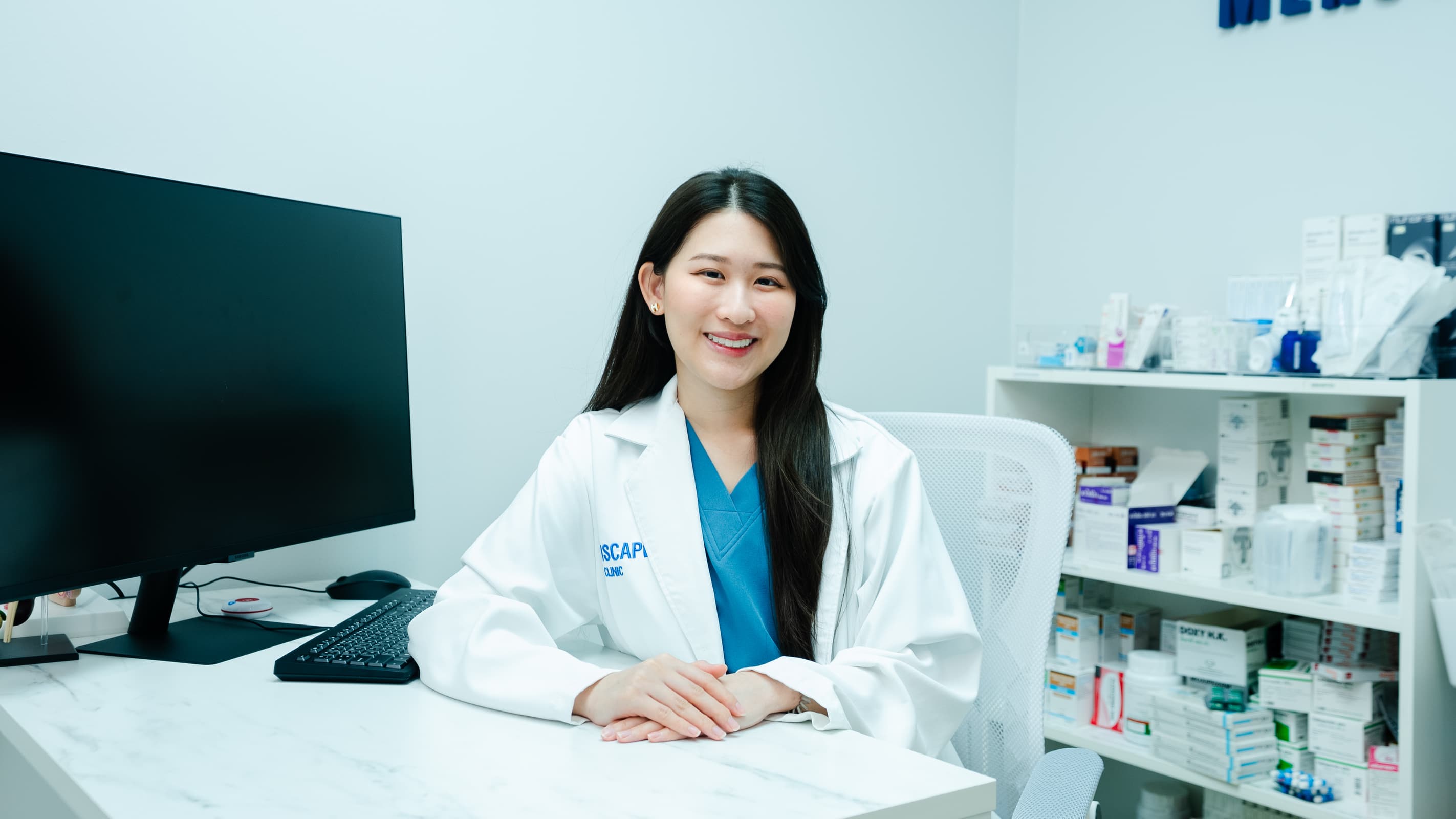
Menscape is a men's health and aesthetics clinic in Bangkok, and pigmentation in male, often tan, skin is a daily part of the work. A consultation starts with identifying what your pigment actually is, assessing your Fitzpatrick type, and building a plan that errs on the conservative side to protect against PIH. Depending on findings, that may involve a skin brightening protocol, a facial treatment or peel, pico laser for stubborn spots and scars, or a combination, alongside daily sun protection. Any prescription cream, anaesthetic, or laser plan follows a medical consultation, because these are medical treatments, not retail products.
If dark spots or uneven tone are bothering you, the most useful first step is a private assessment so the plan matches your skin rather than a generic package. You can book a consultation at Menscape Bangkok to talk through laser, peels, or a combined approach in confidence.
Frequently Asked Questions
Which is better for men, laser or chemical peels?
Neither is universally better. Chemical peels suit mild, even surface pigment, dullness, and oily acne-prone skin, and they work gradually over a course. Laser is usually quicker for discrete or stubborn sun spots and for deeper pigment. For men with the tan skin common in Thailand, the safer choice is whichever your doctor can deliver with the lowest risk of post-inflammatory hyperpigmentation, which often means a conservative, combined plan rather than one aggressive option.
How much do laser and chemical peels cost in Bangkok?
Indicative Bangkok pricing is roughly THB 1,500-4,000 for a superficial peel, THB 3,000-6,000 for a medium TCA peel, THB 3,000-7,000 per Q-switched Nd:YAG laser session, and THB 5,000-12,000 per picosecond laser session. Multi-session courses are often discounted. These are typically 50-75% below comparable US and UK private rates. Figures are indicative and should be confirmed at your consultation, since device, area, and number of sessions change the total.
Is laser or peeling safe for darker, tan skin?
Both can be done safely on Fitzpatrick III-V skin, but the margin for error is smaller because darker skin is more prone to post-inflammatory hyperpigmentation. Safety depends on conservative settings, test patches, an experienced operator, and strict sun protection before and after. Modern picosecond lasers and gentle superficial peels (salicylic or glycolic) tend to be lower risk than aggressive nanosecond settings or deep peels. A skin-type assessment should come before any treatment.
How many sessions will I need?
Chemical peels are usually a course of about four to eight sessions for pigmentation, often spaced two to four weeks apart. Laser for discrete sun spots may need two to five sessions; deeper or mixed pigment can take more. Melasma needs ongoing maintenance for either treatment. Your exact number depends on the type, depth, and extent of pigment, which is why a diagnosis matters before quoting a plan.
How long is the downtime?
Superficial peels usually involve zero to three days of redness and light flaking. Medium TCA peels can mean up to about a week of peeling. Laser ranges from one to two days of redness for some devices to around a week of small crusts for others. None of these are pleasant to pick at, and doing so raises the risk of marks. Most men plan treatments around a few quieter days.
Will the dark spots come back?
They can, especially with sun exposure. Sun spots and post-inflammatory marks usually stay away if you protect your skin and treat the underlying cause, but melasma is chronic and relapsing and commonly returns within weeks to months without maintenance and sun protection. Daily broad-spectrum SPF 30 or higher is the single most important habit for keeping results, and it also helps existing spots fade faster.
Can I combine peels and laser?
Yes, and many men do. A typical plan uses gentle peels plus prescription topicals to improve overall tone and provide maintenance, with targeted laser reserved for stubborn individual spots. They are usually staged rather than done on the same day, and the sequence is set by your doctor based on your skin type and how it reacts. Combining without medical guidance, particularly on tan skin, raises the risk of irritation and pigmentation.
Do these treatments hurt?
Most men tolerate both well. Superficial peels cause tingling or mild stinging for a few minutes. Medium peels sting more and may need cooling. Laser feels like quick hot rubber-band flicks, and numbing cream can be applied for sensitive areas. Discomfort is brief and ends with the session. Lingering or worsening pain afterwards is not normal and should be reported to your clinic.
Do I need a doctor's consultation before treatment?
Yes. Laser and chemical peels are medical procedures, not over-the-counter products, and any prescription cream, anaesthetic, or laser plan requires a medical consultation. A doctor needs to confirm what your pigmentation actually is, assess your Fitzpatrick skin type, check for contraindications such as recent sun exposure, active cold sores, or recent acne medication, and tailor settings to your skin. Skipping that step is where most preventable complications start.
)
/)
/)
/)
/)
/)