/)
/)
/)
/)
/)
Spermatocelectomy · Spermatocele Removal in Bangkok
Spermatocelectomy is a scrotal outpatient procedure to remove a spermatocele · a benign fluid-filled cyst arising from the epididymis. Most spermatoceles are small, asymptomatic, and don’t require treatment. Surgery is reserved for symptomatic cases (pain, growing size, cosmetic concern) where conservative management has failed.
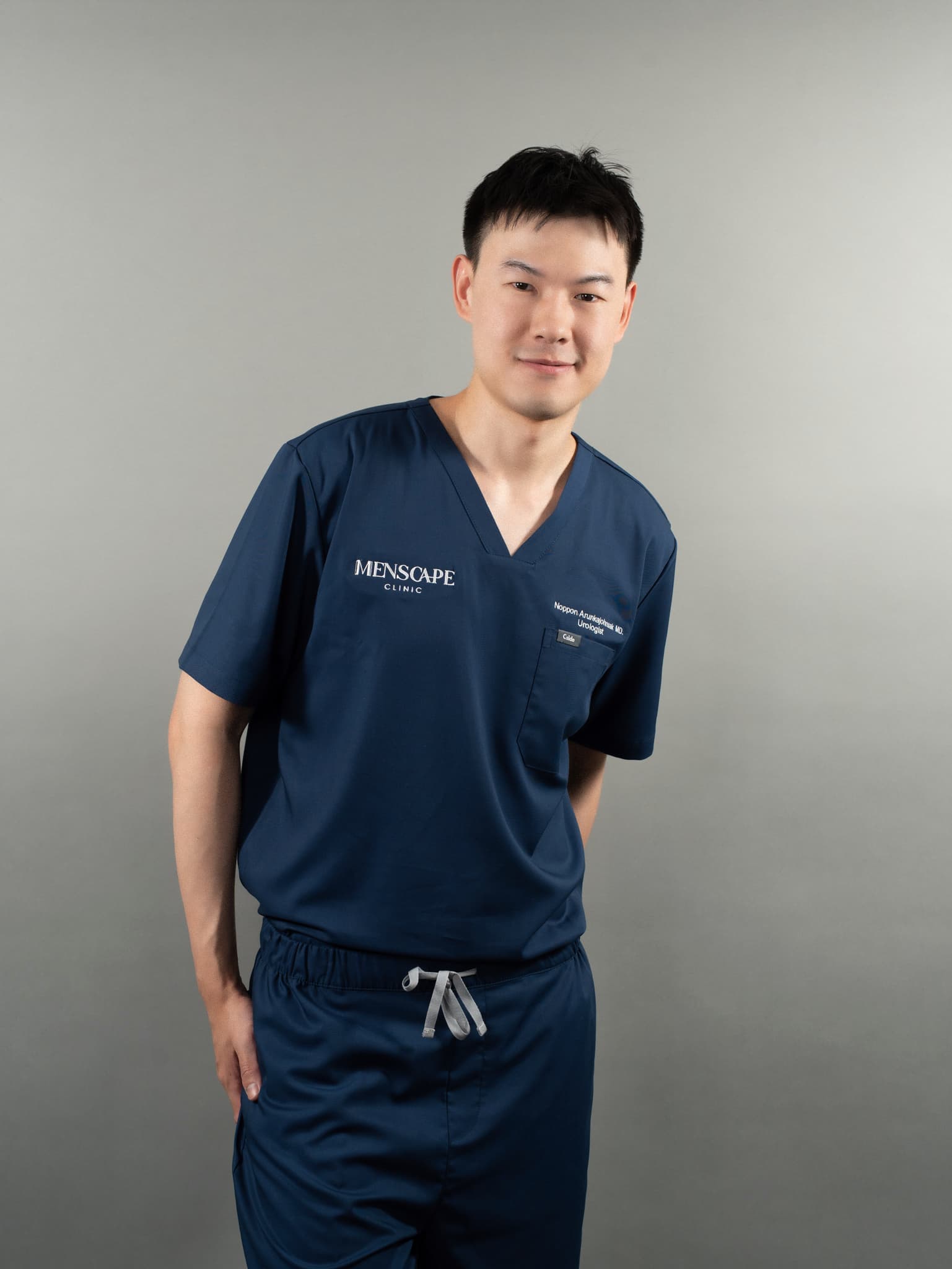
Medically reviewed by Dr. Noppon Arunkajohnsak (Win), Board-certified Urologist
9 years of experience
Our solutions
Why patients choose Spermatocelectomy
What Our Patients Say
Male Surgery
I lived with the lump for months and kept worrying about it. It was done as a day case and I went home the same afternoon.
Wachirawit, 67
Male Surgery
I was nervous about surgery, but the team explained every step and I was home the same day. The heavy, dragging feeling on that side settled over the following weeks.
Khom, 64
Book your consultation today.
/)
How to Prepare for Spermatocelectomy
Confirm symptoms warrant surgery
Asymptomatic spermatoceles don’t need treatment. Surgery is for pain, significant growth, or cosmetic concern that bothers you.Scrotal ultrasound
Confirms spermatocele location, size, and rules out other scrotal pathology (tumor, hydrocele, epididymitis).Fertility counseling
Spermatocelectomy can damage the epididymis and affect fertility on that side · if future fertility matters, we discuss this carefully and may recommend conservative management.Stop blood thinners
5-7 days before surgery only if cleared by your prescribing doctor.Pre-anesthesia assessment
Brief screening for TIVA or local + sedation.Plan transport home
You cannot drive yourself home after anesthesia.
/)
What Happens During Spermatocelectomy
Anesthesia
Local + sedation, TIVA, or general anesthesia depending on patient preference and cyst size.Scrotal incision
2-3 cm incision in the scrotum over the spermatocele.Spermatocele exposure
The testis and epididymis are gently delivered out of the incision · the spermatocele is identified.Cyst dissection
The spermatocele is carefully separated from the epididymis and removed intact.Closure
Layers closed with absorbable sutures · no external stitch removal needed.Recovery
Scrotal support, ice, and pain medication for 5-7 days. Light activity in 5-7 days, full activity in 2-3 weeks.
/)
Explore Our Topics
About Spermatocelectomy
Conservative First, Surgery Only When Needed
Most spermatoceles don’t need surgery. We confirm symptoms warrant intervention before recommending the procedure.
Fertility-Preserving Discussion
For men who want future fertility, we discuss the potential epididymal impact carefully before surgery · sometimes conservative management remains the right answer even with symptoms.
Specialist Scrotal Surgery
Scrotal surgery requires careful technique to avoid testicular ischemia, hematoma, and chronic pain · our urology team performs these procedures routinely.
Private, Discreet Recovery
Confidential care, WhatsApp recovery support, English-language follow-up.
Frequently asked questions
Should I remove an asymptomatic spermatocele?
Generally, no. Asymptomatic spermatoceles, meaning those not causing you any pain or significant discomfort, do not require surgical treatment. We typically recommend surgery only if you experience persistent pain, notice significant growth impacting your daily life, or have cosmetic concerns that genuinely bother you. For asymptomatic cases, a watch-and-wait approach with periodic ultrasound monitoring every 6-12 months is usually sufficient to track any changes.
Will surgery affect my fertility?
Spermatocelectomy carries a small risk of damaging the epididymis on the affected side, which could potentially impair sperm transport from that testicle. For men actively planning future conception, this is a crucial consideration. We will thoroughly discuss conservative management options and your personal fertility goals during your consultation. It's important to remember that the unaffected testicle and epididymis will continue to function normally, preserving overall fertility potential.
What are the risks?
The most common risks include hematoma, which presents as scrotal swelling and bruising, and wound infection, occurring in about 5-10% of cases. Recurrence of the cyst is also possible, though less frequent. Less common but more serious risks include chronic scrotal pain, affecting a small percentage of patients, and testicular ischemia, which is very rare with our careful surgical techniques but could impact testicular function.
How long is recovery?
You can typically resume light activities, such as desk work, within 5-7 days after your spermatocelectomy. We advise avoiding strenuous exercise and heavy lifting for 2-3 weeks to allow for proper healing. Sexual activity can usually be resumed after 2 weeks. You should expect some mild scrotal swelling and bruising for 1-2 weeks, which is a normal part of the healing process and gradually subsides.
How much does spermatocelectomy cost in Bangkok?
The cost of spermatocelectomy in Bangkok varies depending on several factors. These include your choice of anesthesia, the size and complexity of the cyst, and whether you opt for an outpatient procedure or a short-stay hospital admission. For a precise and personalized quote tailored to your specific needs, we highly recommend booking a consultation with our specialist.
What are the success rates and long-term outcomes for Spermatocelectomy?
Spermatocelectomy has a high success rate in resolving symptoms like pain and discomfort, with most patients experiencing significant relief. The recurrence rate for spermatoceles after surgery is relatively low, estimated to be around 5-10%. Long-term outcomes are generally excellent, with the majority of men reporting satisfaction with the results and no further issues. Our goal is to provide a lasting solution to your symptoms.
What anesthesia options are available for Spermatocelectomy?
For spermatocelectomy, you typically have a choice between local anesthesia with sedation or general anesthesia. Local anesthesia numbs the surgical area while you remain awake but relaxed, often preferred for smaller cysts. General anesthesia means you are completely asleep during the procedure. We will discuss which option is best suited for your comfort, the complexity of your case, and your overall health during your consultation.
What should I expect at the consultation?
During your consultation, you will meet with our experienced urologist who specializes in men's health. They will perform a thorough physical examination, review your medical history, and discuss your symptoms and concerns in detail. An ultrasound of your scrotum will likely be performed to confirm the diagnosis and assess the spermatocele's size. Based on these findings, we'll discuss all treatment options, including surgical and non-surgical approaches, helping you make an informed decision.
What are the logistics for international patients traveling for Spermatocelectomy?
For international patients, we recommend arriving in Bangkok at least 1-2 days before your scheduled surgery for pre-operative assessments. You should plan to stay in Bangkok for approximately 7-10 days post-surgery for initial recovery and a follow-up check-up. We can facilitate remote follow-up via WhatsApp or video call once you return home. You can typically fly home safely 7-10 days after your procedure, provided your recovery is progressing well.
DEFINITIVE TREATMENT FOR SYMPTOMATIC SPERMATOCELE
DEFINITIVE TREATMENT FOR
SYMPTOMATIC SPERMATOCELE
/)
)
Dr. Noppon Arunkajohnsak (Win)
Board-certified Urologist
- Experience
- 9 years
Dr. Noppon is a board-certified urologist trained at Siriraj Hospital, Mahidol University. With over 9 years of experience, he focuses on urological consultation and men's health, providing discreet, evidence-based, patient-centred care.