/)
/)
/)
/)
/)
DVIU · Direct Vision Internal Urethrotomy in Bangkok
DVIU is an endoscopic procedure that cuts open a short urethral stricture under direct vision with a cold knife or laser, restoring normal urinary flow without open surgery. It’s the first-line endoscopic option for short (under 1.5 cm), primary, bulbar urethral strictures. Recurrence is common for longer or recurrent strictures · for those, formal urethroplasty (open reconstruction) is the more durable option.
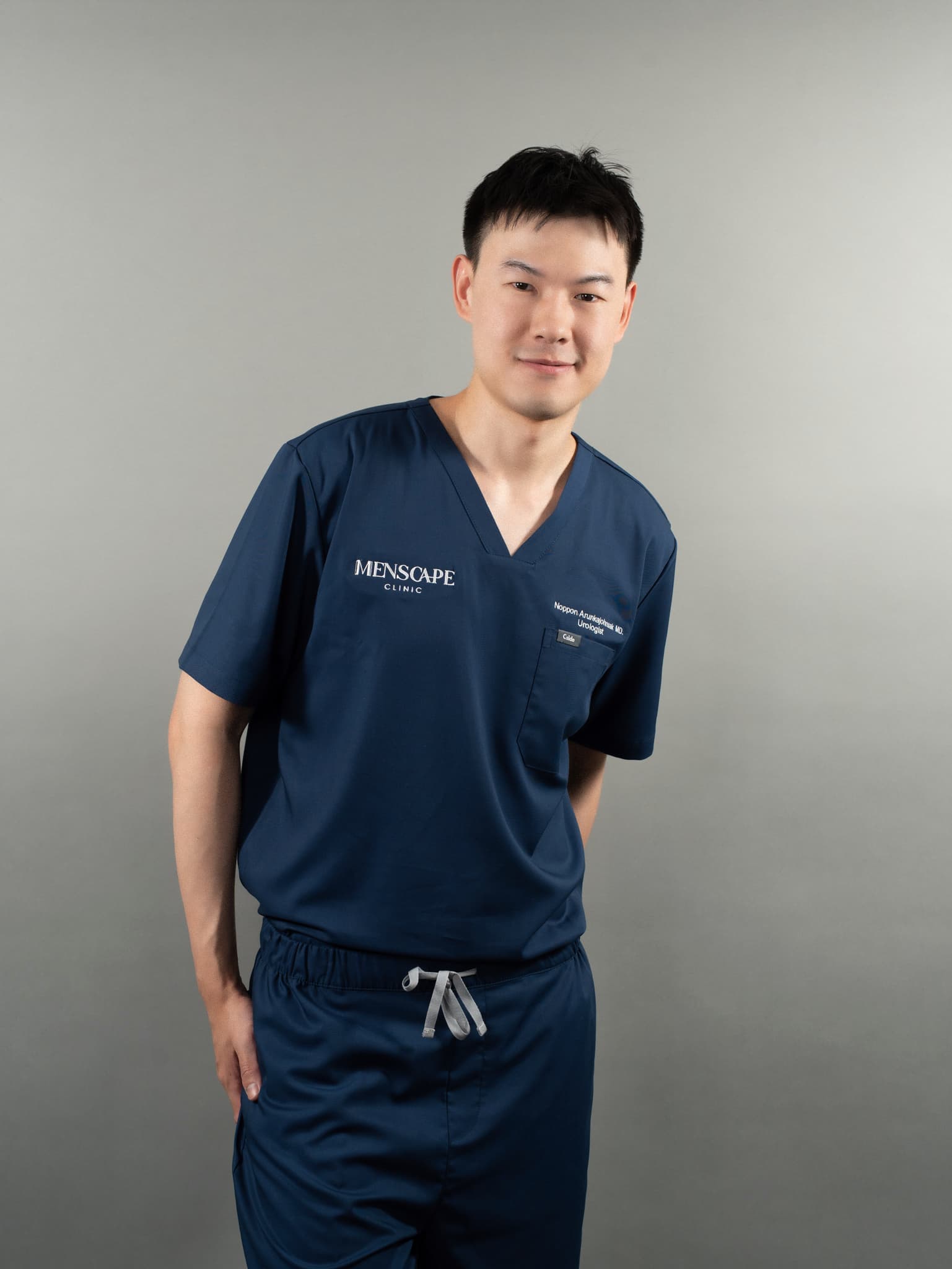
Medically reviewed by Dr. Noppon Arunkajohnsak (Win), Board-certified Urologist
9 years of experience
Our solutions
Why patients choose DVIU
What Our Patients Say
Male Surgery
The difference was night and day. I hadn’t felt a strong stream like that in years.
Wachirawit, 67
Male Surgery
I was nervous about surgery, but the relief was almost instant. Sleeping through the night feels incredible again.
Khom, 64
Book your consultation today.
/)
How to Prepare for DVIU
Urethrography
Retrograde urethrogram maps stricture length, location, and severity.Cystoscopy
Direct visualization of the stricture and assessment of the urethra above and below.Urine culture
Treat any urinary infection before surgery.Stop blood thinners
5-7 days before surgery only if cleared by your prescribing doctor.Pre-anesthesia assessment
Brief screening for spinal or general anesthesia.Plan for short admission
Same-day or single-night stay.
/)
What Happens During DVIU
Anesthesia
Spinal or general anesthesia.Cystoscope insertion
A urethroscope is passed through the urethra to the stricture under direct vision.Stricture incision
The stricture is cut open along its length with a cold knife or holmium laser at the 12-o’clock position under direct vision.Inspection
Once the stricture is opened, the urethra above is inspected for any additional pathology.Catheter placement
A urethral catheter is left in for 3-7 days to keep the urethra open during initial healing.Follow-up
Catheter removed at 3-7 days. Uroflowmetry at 3 months and 6 months confirms patency · cystoscopy if symptoms suggest recurrence.
/)
Explore Our Topics
About DVIU
Stricture-Strategy Triage
DVIU is right for short primary bulbar strictures · for longer, recurrent, or anterior-urethral strictures, urethroplasty is more durable. We recommend the right option based on stricture characteristics, not technology preference.
Honest Pre-Op Counseling
DVIU has 50-60% recurrence at 5 years for many strictures · we discuss this openly so you can choose between DVIU now (with risk of needing urethroplasty later) vs urethroplasty up front.
Holmium Laser Option
For appropriate strictures, holmium laser urethrotomy is an alternative to cold knife · similar outcomes with potentially less bleeding.
Private, Discreet Recovery
Confidential care, WhatsApp recovery support, English-language follow-up.
Frequently asked questions
When is DVIU the right choice?
DVIU is an excellent option for short, primary bulbar urethral strictures, typically under 1.5 cm, where there's no prior treatment history and minimal peri-urethral fibrosis. If your stricture is longer, has recurred previously, is located in the anterior urethra, or involves significant surrounding scar tissue, a urethroplasty generally offers a more durable and definitive solution. We will assess your specific stricture characteristics to determine if DVIU is suitable for you.
What’s the recurrence rate?
Recurrence after DVIU is a significant consideration, with rates ranging from 40-60% within 1-3 years. This variability depends on factors like your stricture's length, its exact location, and the number of prior treatments you've had. While a second DVIU can be considered, the success rates diminish significantly with each attempt. After one or two failed DVIUs, we typically recommend urethroplasty for a more lasting outcome.
Why not just urethroplasty first?
Urethroplasty boasts a higher long-term success rate, often exceeding 85%, making it a very durable solution. However, it is an open surgical procedure requiring a longer recovery period, including a catheter for 2-3 weeks and a return to work in 2-3 weeks. DVIU is an endoscopic procedure with a much quicker recovery. The choice between DVIU and urethroplasty depends on your stricture's characteristics and your personal tolerance for potential repeat procedures versus a more extensive initial surgery.
How long is recovery?
Your recovery from DVIU is typically swift. You will have a catheter in place for 3-7 days. Most patients can resume light activities within a few days. For desk-based work, you can usually return within 5-7 days. Sexual activity can generally be resumed after your catheter is removed and the initial healing period is complete, usually within 1-2 weeks. We will provide detailed post-operative instructions tailored to your recovery.
How much does DVIU cost in Bangkok?
The cost of your DVIU procedure in Bangkok will vary based on several factors. These include your chosen anesthesia type, whether you opt for a holmium laser for the incision, and the length of your hospital admission. We aim to provide transparent pricing. For a personalized quote tailored to your specific needs and treatment plan, we encourage you to book a consultation with our specialist.
What are the long-term outcomes and success rates for DVIU?
While DVIU offers immediate relief, its long-term success rates are lower compared to urethroplasty. Initial success, meaning no recurrence within the first year, is seen in approximately 50-70% of cases. However, recurrence rates increase over time, reaching 40-60% within 1-3 years. The best long-term outcomes are typically observed in patients with very short, primary bulbar strictures. We will discuss your individual prognosis based on your specific stricture characteristics.
What anesthesia options are available for DVIU?
For your DVIU procedure, we offer a choice of anesthesia to ensure your comfort. You can opt for spinal anesthesia, which numbs the lower half of your body while you remain awake but sedated. Alternatively, general anesthesia will put you completely to sleep during the procedure. Your urologist and anesthesiologist will discuss the best option for you, considering your health status and personal preferences, to ensure a safe and comfortable experience.
What should I expect at the DVIU consultation?
During your consultation, you'll meet with our experienced urologist specializing in urethral stricture disease. We will review your medical history, perform a physical examination, and likely order diagnostic tests such as a uroflowmetry, post-void residual ultrasound, or even a retrograde urethrogram to precisely map your stricture. Based on these findings, we will discuss your treatment options, including DVIU, its pros and cons, and help you make an informed decision about your care.
I'm an international patient. What are the logistics for DVIU?
As an international patient, we recommend arriving in Bangkok at least 1-2 days before your scheduled procedure for pre-operative assessments. You can typically fly home 7-10 days after your DVIU, once your catheter is removed and your urologist confirms you are stable. Post-operative follow-up can often be managed remotely via secure messaging platforms like WhatsApp, allowing you to recover comfortably at home while staying connected with our team.
ENDOSCOPIC TREATMENT FOR SHORT URETHRAL STRICTURES
ENDOSCOPIC TREATMENT FOR
SHORT URETHRAL STRICTURES
/)
)
Dr. Noppon Arunkajohnsak (Win)
Board-certified Urologist
- Experience
- 9 years
Dr. Noppon is a board-certified urologist trained at Siriraj Hospital, Mahidol University. With over 9 years of experience, he focuses on urological consultation and men's health, providing discreet, evidence-based, patient-centred care.