/)
Walk through Thong Lo or Ekkamai and you will pass several wellness studios glowing with banks of red panels. Red light therapy has moved from a niche dermatology tool to a mainstream recovery and longevity service, and a lot of men now ask us whether it actually does anything or whether it is just an expensive warm glow.
The honest answer sits in the middle. Red light therapy, known more precisely as photobiomodulation, has solid evidence for some uses, promising-but-early evidence for others, and a fair amount of marketing that runs well ahead of the science. This guide separates those buckets clearly, gives you transparent Bangkok pricing against what you would pay in the US or UK, and walks through who it suits, who should be cautious, and how to pick a clinic that is using real medical-grade equipment rather than a cheap consumer panel marked up tenfold.
One thing to set straight at the top: red light therapy is a wellness and adjunct treatment. It is not a replacement for medical care. If your underlying concern is low testosterone, erectile dysfunction, or significant hair loss, those deserve a proper consultation and, where appropriate, a prescription. Red light can complement that care, but it should not be the whole plan.
What red light therapy actually is
Photobiomodulation delivers specific wavelengths of light, broadly in the red (around 600-700 nm) and near-infrared (around 800-1000 nm) bands, onto skin and the tissue beneath it. Red wavelengths are absorbed more superficially, which is why they are used for skin, while near-infrared penetrates deeper toward muscle and joints.
The leading explanation for how it works centres on the mitochondria, the energy plants inside your cells. Light in these wavelengths is thought to be absorbed by an enzyme called cytochrome c oxidase in the mitochondrial respiratory chain. According to a mechanistic review by de Freitas and Hamblin, this absorption may dissociate inhibitory nitric oxide from the enzyme, nudging up electron transport, mitochondrial membrane potential and ATP production, then triggering downstream signals that support cell survival, repair and reduced inflammation (de Freitas & Hamblin, 2016).
That same review makes a point worth keeping in mind for the rest of this article: photobiomodulation follows a biphasic dose response. Too little light does nothing, an appropriate dose helps, and too much can actually blunt the effect. In plain terms, more is not better, and the device settings and protocol matter more than the marketing wattage on the box.
The treatment itself is non-invasive and painless. You feel gentle warmth, there is no recovery time, and you walk out and carry on with your day.
What the evidence supports, and what it does not
This is the section most clinics skip, and it is the most important one. Grouping the claims by how strong the evidence is keeps your expectations realistic and your money well spent.
Reasonably well supported
Skin quality, fine lines and collagen. A controlled trial by Wunsch and Matuschka treated people with red and energizing polychromatic light (611-650 nm and 570-850 nm arms) and found measurable improvements in skin complexion, a reduction in fine lines and wrinkles, and an objective increase in intradermal collagen density measured by ultrasound, compared with untreated controls (Wunsch & Matuschka, 2014). For skin texture and early ageing, this is one of the better-evidenced cosmetic uses.
Muscle recovery and exercise performance. A review of 46 clinical trials covering more than a thousand participants concluded that photobiomodulation applied before or after exercise can improve performance, reduce muscle soreness and limit markers of muscle damage and oxidative stress (Ferraresi, Huang & Hamblin, 2016). If you train hard, this is a credible reason to consider it.
Promising but use realistic expectations
Pattern hair loss (androgenetic alopecia). A meta-analysis of randomised controlled trials found that low-level laser and light therapy significantly increased hair density compared with sham devices, with a sizeable pooled effect (Liu et al., 2019). The authors note the overall quality of evidence is still modest and that it works best as part of a plan rather than alone. It pairs well with proven options like minoxidil or finasteride, which is why we usually frame it as an add-on. See our guide to hair loss treatments for men for the bigger picture.
Popular claims that outrun the evidence
Testosterone. You will see a lot of confident marketing here. The reality is that there are no published, peer-reviewed randomised controlled trials in men showing that shining red or near-infrared light on the body or testicles raises testosterone. The enthusiasm traces back to animal studies and a few small pilots looking at sexual desire rather than hormone levels directly. We think it is honest to say the testosterone benefit is unproven in humans. If your testosterone is genuinely low, the appropriate path is testing and, where indicated, medical treatment, not a light panel. Our overview of testosterone therapy for men explains the evidence-based options.
Erectile function. Plausible on paper because of circulation effects, but the human evidence is thin. For ED, far better-studied options exist, from medication to shockwave therapy for erectile dysfunction. Red light is not a primary treatment.
Fat loss and longevity. Often marketed, weakly evidenced. Treat any "burns fat" or "adds years" framing as a claim to be sceptical of.
None of this means red light is useless. It means you should buy it for the things it is good at, mainly skin and recovery, and treat the rest as a bonus that may or may not materialise.
Red light therapy cost in Bangkok (THB and USD)
Bangkok pricing varies widely by device type and venue. A targeted LED panel session at a recovery studio is inexpensive; a full-body near-infrared bed at a medical or longevity clinic costs more, as does a clinical dermatology-grade treatment. The figures below are indicative ranges from our market research as of 2026, and you should always confirm the exact price at consultation because promotions and package terms change.
Service | Bangkok price (THB) | Approx. USD | Typical US/UK price | You save in Bangkok |
Single targeted panel session (10-20 min) | THB 500-1,500 | ~USD 15-45 | USD 50-150 | Roughly 60-80% |
Full-body LED/NIR bed session | THB 1,500-3,500 | ~USD 45-105 | USD 100-250 | Roughly 50-65% |
10-session package | THB 4,000-10,000 | ~USD 120-300 | USD 400-1,200 | Roughly 60-75% |
Monthly unlimited membership | THB 6,000-15,000 | ~USD 180-450 | USD 250-600 | Often cheaper, varies |
Clinical dermatology-grade course | THB 8,000-25,000+ | ~USD 240-750+ | USD 600-2,000+ | Roughly 50-70% |
USD conversions use an approximate rate of THB 33 to USD 1 and will shift with the exchange rate. The savings column compares typical Bangkok pricing against common US and UK self-pay rates; medical-tourism analyses generally put Thailand around 40-70% cheaper than those markets for comparable wellness procedures.
For context, an aggregator survey of red light therapy across Thailand quoted a typical range of roughly USD 200-400 per clinical session (average around USD 275) at the higher, medical end, which lines up with the dermatology-grade row above rather than the everyday recovery-studio price. Aggregator figures update frequently, so treat that as a snapshot accessed in 2026 and confirm current pricing directly.
Bangkok venue comparison
Prices and positioning differ by venue type. This is indicative and worth verifying directly.
Venue type | Example positioning | Indicative single session (THB) | Best for |
Recovery/fitness studio (Thong Lo, Ekkamai) | Panels alongside ice baths and sauna | 500-1,500 | Athletes, post-workout recovery |
Wellness and longevity centre | Full-body NIR beds, often bundled with IV or sauna | 1,500-3,500 | Recovery plus relaxation |
Aesthetic/dermatology clinic | Medical LED for skin, acne, scarring | 2,000-5,000 | Skin quality, targeted face work |
Men's health clinic (Menscape) | Protocol-led, integrated with men's programs | Confirm at consult | Men combining recovery, skin and longevity care |
What drives the price
A few factors explain why one "red light session" costs THB 500 and another costs THB 5,000:
Device grade. A consumer-grade panel is very different from a calibrated medical LED array or a full-body near-infrared bed. Output, wavelength accuracy and treatment area all affect both price and results.
Treatment area and time. A 10-minute face panel is cheaper than a 20-minute full-body bed session.
Venue tier. A boutique longevity clinic in central Bangkok carries higher overheads than a gym recovery corner.
Packages and membership. Per-session cost usually drops sharply when you buy a 10-pack or a monthly membership, which suits the fact that benefits accumulate over weeks rather than in one visit.
Bundling. Many clinics combine red light with other longevity services such as IV therapy for men or hyperbaric oxygen therapy, which changes the headline number.
Who it suits, and who should be cautious
Red light therapy is low risk for most healthy men, which is part of its appeal. It tends to suit men who want to support skin quality and early anti-ageing, recover faster between hard training sessions, or add a non-drug option to a broader hair-loss or longevity plan.
It is less appropriate, or needs medical sign-off first, in several situations. This is not an exhaustive list, and a consultation is the place to confirm your individual case:
Active or recently treated cancer, particularly in or near the treatment area, unless your oncologist has specifically cleared it. Stimulating cell activity is not something to do blindly over a tumour.
Photosensitising medication. Some antibiotics, acne medications such as isotretinoin, certain diuretics and other drugs increase light sensitivity. Mention everything you take.
Photosensitivity disorders such as lupus or porphyria.
Open wounds, active skin infections or undiagnosed skin lesions in the area, which should be assessed first.
Eye conditions or treatment near the eyes without proper eye protection. Bright near-infrared light and the eyes do not mix; goggles are non-negotiable for facial work.
Recent injectables or aggressive aesthetic procedures, where you should wait and follow your provider's guidance on timing.
If any of these apply, do not self-prescribe a course off the back of an online ad. Get it checked.
What a session looks like, and how a course is structured
A single visit is straightforward.
Before. Expose the area being treated and remove makeup, sunscreen or heavy lotions, which can block or scatter the light. No numbing or special prep is needed.
During. You sit or stand close to a panel, or lie in a full-body bed, for roughly 10-20 minutes. You will feel mild warmth and nothing more. Wear the eye protection provided, especially for face treatments.
After. There is no downtime. You may notice slight, temporary skin warmth or pinkness that settles quickly. You can train, work or head out straight away.
Because the effect builds up, a typical course rather than a one-off is where results show.
Loading phase: roughly 3-5 sessions per week for the first 2-4 weeks.
Maintenance: around 2-3 sessions per week thereafter.
Timeline: skin and recovery changes often appear within 2-6 weeks; hair density changes, where they occur, take longer, commonly 12-24 weeks of consistent use before a fair assessment.
Consistency matters more than intensity, which ties back to that biphasic dose response: a sensible regular dose beats occasional marathon sessions.
Realistic results and what to expect
Quantified expectations help you judge whether a course is worth it.
Skin: in the Wunsch and Matuschka trial, participants showed improved complexion and a measurable rise in collagen density over roughly 30 sessions across about 15 weeks, alongside reduced fine lines (Wunsch & Matuschka, 2014). Expect gradual refinement of texture rather than a dramatic overnight change.
Recovery: across the trial evidence, men commonly report less soreness 24-48 hours after hard sessions and a subjective sense of faster bounce-back, consistent with the pooled findings on reduced muscle damage markers (Ferraresi, Huang & Hamblin, 2016).
Hair: the meta-analysis reported a statistically significant increase in hair density versus sham, though individual responses vary and the effect is modest, which is why it works best alongside proven therapies (Liu et al., 2019).
If a clinic promises a guaranteed testosterone jump, dramatic fat loss or a quick ED fix from light alone, that is a signal to be sceptical rather than excited.
Have a question about your treatment?
Message our Bangkok clinic on WhatsApp and a doctor replies within minutes during clinic hours.
Risks and side effects
For healthy men using appropriate equipment, side effects are usually mild and short-lived. The common ones are:
Temporary skin warmth or redness in the treated area
Mild tightness or dryness of the skin
Eye strain or discomfort if protection is not used properly
Occasional headache after facial sessions, usually from light exposure near the eyes
These typically settle within hours.
A few situations warrant prompt medical attention rather than waiting it out. Seek care if you notice:
A blistering burn, persistent significant pain, or skin that does not settle within a day or two
A spreading rash, swelling or other signs of an allergic or photosensitive reaction
New or changing skin lesions in the treated area
Eye pain or visual changes after a session
These are uncommon, but they are worth taking seriously, particularly the eye symptoms.
How to choose a safe clinic in Bangkok, and the red flags
Because red light therapy is unregulated as a wellness service, quality ranges from genuinely clinical to a cheap panel in a back room. A few checks separate the two.
Look for:
Medical-grade, well-maintained devices with stated wavelengths and output, not vague "infrared" marketing.
A proper intake that asks about your medications, skin type and any conditions before booking a course.
Clear, itemised pricing for single sessions and packages, with no pressure to prepay a large bundle on the spot.
Honest claims. A trustworthy provider will tell you red light is good for skin and recovery and will not promise to cure low testosterone or ED.
Clinical oversight where treatments overlap with skin conditions or are bundled with medical services.
Red flags worth walking away from:
Guarantees of testosterone, fertility or ED "cures" from light alone
No questions about your health history or medications
Hard-sell tactics for expensive multi-month memberships before you have tried a session
No eye protection offered for facial treatments
Unwillingness to tell you the device specifications
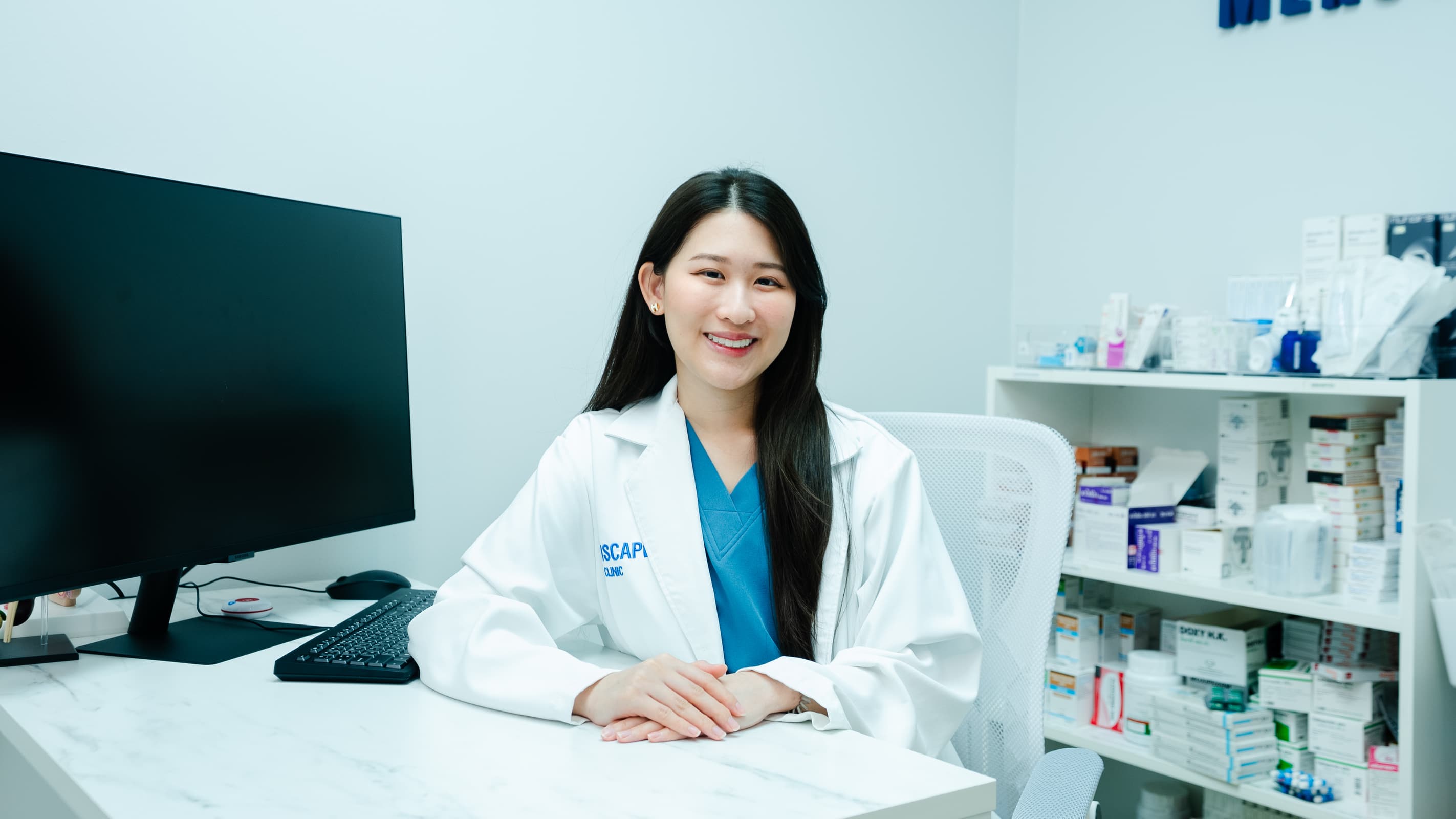
At Menscape, red light therapy is offered as part of a men's aesthetics and longevity approach, with the treatment framed around what it genuinely does and integrated with the rest of your care rather than sold as a cure-all.
Where red light fits among men's longevity options
Men often ask how red light compares with, or stacks alongside, other popular options. The short version: each does a different job, and they are frequently combined rather than chosen between.
Option | Main use | Evidence strength | Bangkok session cost (THB) | Downtime |
Red light therapy | Skin, recovery, adjunct hair | Good for skin/recovery, modest for hair | 500-3,500 | None |
Recovery, wound healing, select indications | Strong for approved indications, mixed for wellness claims | 1,500-6,000 | None | |
Hydration, targeted nutrient repletion | Limited for general wellness, useful in deficiency | 1,500-6,000 | None | |
Diagnosed low testosterone | Strong when clinically indicated | Consult and labs required | None |
Red light slots in as a low-risk, no-downtime layer that supports skin and recovery. It is not a substitute for medical treatments like TRT, which require testing and a prescription.
Book a consultation
If you want to use red light therapy for the right reasons, with realistic expectations and proper screening for the few situations where it is not advisable, the sensible first step is a consultation. We will look at your goals, review your history and medications, and build a protocol that fits, whether that is red light on its own or as one piece of a broader recovery, skin or longevity plan.
Book a consultation with Menscape in Bangkok to talk through whether red light therapy makes sense for you. Where your concern is hormonal, sexual or hair-related, the same visit can point you toward the evidence-based treatments that actually move those needles.
*This article is for general education and does not replace a medical consultation. Treatments that overlap with medical conditions, and any prescription medication, require assessment by a qualified clinician.*
Frequently Asked Questions
Does red light therapy boost testosterone in men?
There is no good human evidence that it does. The popular claim comes from animal studies and a handful of small pilots that mostly looked at sexual desire rather than measured hormone levels. No published randomised controlled trial in men shows that red or near-infrared light raises testosterone. If your testosterone is low, the right approach is blood testing and, where indicated, medical treatment, not a light panel.
How much does red light therapy cost in Bangkok?
A single targeted panel session typically runs THB 500-1,500, while a full-body near-infrared bed is usually THB 1,500-3,500. Ten-session packages commonly fall in the THB 4,000-10,000 range, and clinical dermatology-grade courses can run higher. These are indicative ranges as of 2026; confirm the exact price at consultation because promotions and package terms change.
Is red light therapy cheaper in Bangkok than in the US or UK?
Usually yes. Bangkok sessions often cost roughly 50-80% less than typical US or UK self-pay prices for comparable treatments, in line with broader medical-tourism cost differences. The gap is largest at the everyday recovery-studio level and narrows somewhat for clinical dermatology-grade courses.
What is red light therapy actually good for?
The strongest evidence is for skin quality, including reduced fine lines and increased collagen density, and for muscle recovery and exercise performance. There is reasonable, if modest, evidence for pattern hair loss when used alongside proven treatments. Claims about fat loss, testosterone and curing erectile dysfunction run ahead of the human evidence.
Is red light therapy safe, and does it have side effects?
For healthy men using appropriate equipment, it is low risk. The common side effects are mild and temporary: skin warmth or redness, slight dryness, and eye strain if protection is not used. Seek medical attention if you develop a blistering burn, a spreading rash, new skin changes, or any eye pain or visual change after a session.
Who should avoid red light therapy?
Caution or medical sign-off is needed if you have active or recent cancer near the treatment area, take photosensitising medication such as isotretinoin or certain antibiotics, have a photosensitivity disorder like lupus or porphyria, have open wounds or undiagnosed skin lesions in the area, or are treating near the eyes without protection. A consultation is the place to confirm your individual situation.
How many sessions do I need before I see results?
Benefits build up rather than appearing in one visit. A common pattern is 3-5 sessions per week for the first few weeks, then 2-3 per week for maintenance. Skin and recovery changes often show within 2-6 weeks, while hair density changes, where they occur, usually need 12-24 weeks of consistent use before a fair assessment.
Can I combine red light therapy with other treatments?
Yes, and many men do. It is frequently stacked with recovery and longevity services such as hyperbaric oxygen or IV therapy, and it works well as an add-on to proven hair-loss treatments like minoxidil or finasteride. It is not a replacement for medical treatments such as TRT for low testosterone, which require testing and a prescription. A consultation can help sequence things sensibly.
)
/)
/)
/)
/)
/)